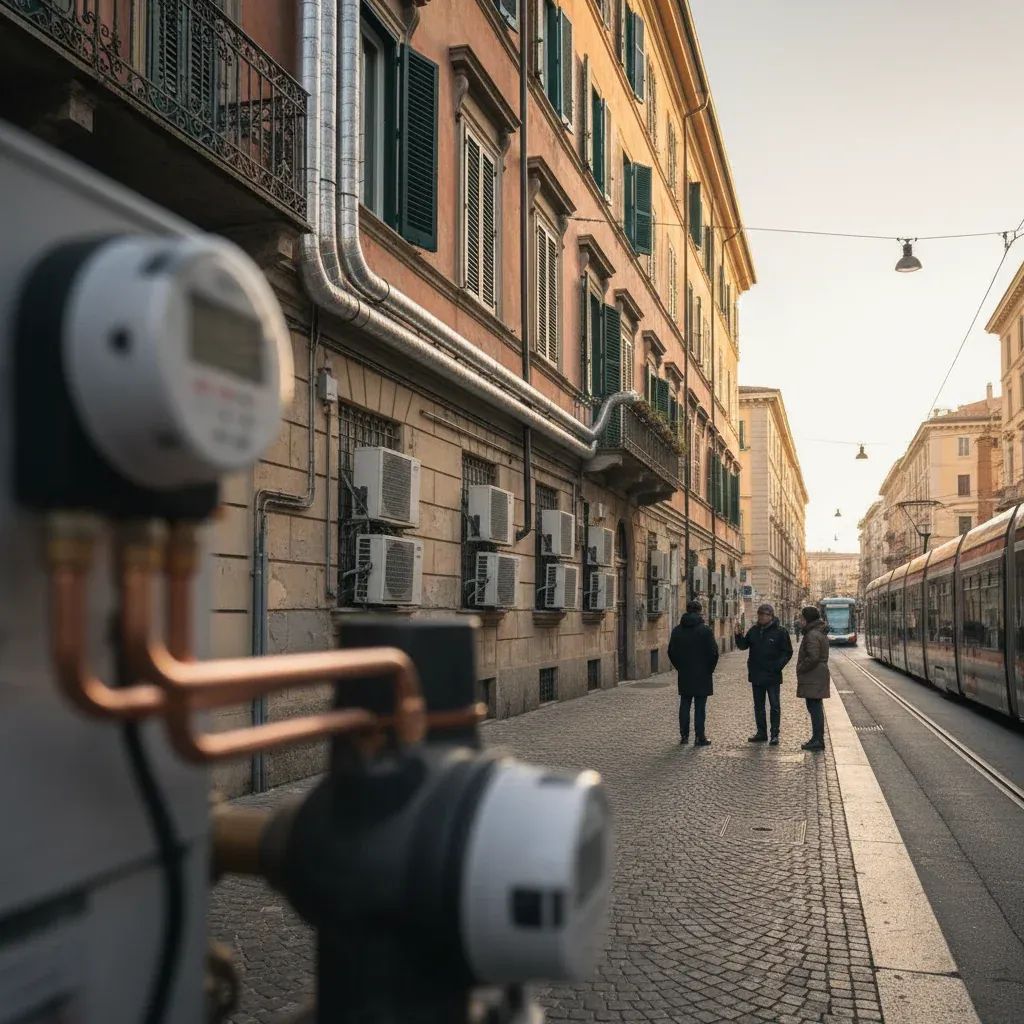
The Italy stock exchange and gas markets are absorbing a sharp blow as military confrontation between the United States and Iran in the Strait of Hormuz sends ripple effects across European trading floors. The Italy benchmark FTSE MIB is expected to open lower alongside other European indices.
Monday's trading in Asia-Pacific offered a preview of what Italian investors can expect. With Tokyo closed for a public holiday, Seoul's KOSPI shed 4.46% as investors reassessed elevated valuations amid geopolitical turbulence. Hong Kong's Hang Seng bucked the trend with an 1.8% gain, but the broader regional picture remained grim for equities exposed to energy shocks.
Why This Matters:
• Gas prices have spiked 4.6% to €60 per megawatt-hour at the Amsterdam TTF hub, the highest level in four months, directly impacting Italian household and industrial energy bills.
• Equity futures signal a red opening for Milan's Piazza Affari, with Wall Street futures also sliding as the conflict threatens global oil trade.
• ECB meeting Thursday becomes critical as the European Central Bank weighs monetary policy amid the dual pressures of geopolitical shock and inflation risk.
• Supply chain delays loom for Italy-based manufacturers reliant on Gulf raw materials and components transiting the now-disrupted Strait of Hormuz corridor.
The Hormuz Chokepoint Paralysis
The strategic waterway connecting the Persian Gulf to global markets has become a focal point after what US President Donald Trump described as strikes that hit Iran "very hard." The US Central Command has conducted sustained aerial operations targeting Iranian command centers, coastal surveillance installations, air defense sites, and missile launch facilities. Iran has retaliated by launching drones and missiles at American bases in Kuwait and Jordan, claiming to have intercepted two tankers following explosions in the strait, with at least one vessel reported ablaze near Oman.
This military escalation threatens a channel through which roughly 20 million barrels of crude oil and petroleum products flow daily. Nearly 20% of global liquefied natural gas shipments from Qatar and the United Arab Emirates also depend on this 21-mile-wide passage, with no alternative export routes available for these suppliers.
Brent crude has breached the $90-per-barrel threshold, climbing to four-month highs, with some analysts projecting prices could exceed $100 should the waterway face prolonged closure. The conflict has already reduced transit volumes to roughly 14 million barrels daily—significantly below pre-conflict levels—according to energy market monitors.
Italy's Energy Exposure
For Italy, which imports the overwhelming majority of its natural gas, the TTF contract climbing to €60/MWh represents a tangible threat to both consumer wallets and industrial competitiveness. The Italy Ministry of Economy has monitored energy markets closely since the Ukraine crisis reshaped European supply chains, and this latest shock compounds the challenge of maintaining stable prices while transitioning away from Russian imports.
Italian households heating with gas could see material increases in monthly bills if current wholesale prices persist through autumn, while energy-intensive sectors—ceramics manufacturers in Sassuolo, steel plants in Brescia, and chemical facilities across Lombardy—face margin compression that could force production slowdowns or temporary shutdowns. Industry analysts warn that sustained energy costs could trigger widespread operational challenges for smaller firms dependent on imported feedstocks.
The broader risk extends to food costs, as higher fuel prices cascade through logistics networks. Trucking firms and agricultural operations dependent on diesel are already grappling with volatility, and a sustained crude rally would accelerate inflation in categories that directly affect Italian families' cost of living.
Currency and Broader Financial Pressures
The euro has shown relative stability against the dollar, but analysts warn that prolonged conflict could pressure the European Central Bank to maintain current policy levels for longer, limiting fiscal space for Italy's government as it manages a debt-to-GDP ratio still hovering near 140%.
The Italy banking sector presents a mixed picture. On one hand, higher rates theoretically support net interest margins. On the other, deteriorating credit quality among energy-intensive borrowers and small-to-medium enterprises squeezed by input costs could trigger provisioning increases that offset margin gains.
What Central Banks Face Thursday
The ECB governing council convenes in Frankfurt on Thursday facing a policy dilemma that crystallizes the tension between growth support and inflation containment. Markets expect no change to the 3.75% deposit rate, but President Christine Lagarde's press conference will be scrutinized for signals on how policymakers balance the competing forces of geopolitical supply shocks and weakening growth momentum.
Research into central bank responses to geopolitical crises suggests a tendency toward anchoring inflation expectations during acute shocks, with potential accommodation if economic damage becomes evident. The ECB has emphasized the importance of monitoring geoeconomic risks, and the institution's most recent stress tests examine scenarios involving supply disruptions.
For Italy, the stakes are particularly acute. Higher policy rates amplify debt servicing costs for the Italy Treasury, which refinances hundreds of billions annually. If energy-driven inflation forces the ECB to delay rate cuts anticipated for later this year, the Italy Ministry of Economy will face tougher arithmetic in drafting next year's budget, potentially constraining infrastructure investment and social spending.
The ECB toolkit extends beyond interest rates. The bank can inject liquidity through targeted operations, activate currency swap lines with other central banks, and deploy macroprudential buffers to fortify the banking system against shocks. Whether these measures will be necessary depends on how the Hormuz situation evolves in coming weeks.
Investment Implications for Italy-Based Portfolios
Portfolio managers operating in Italy confront a shifting risk landscape. Energy stocks, particularly utilities with diversified supply contracts, may offer partial hedges against further commodity price gains. Conversely, transportation-linked equities—airlines, logistics firms, freight operators—face margin pressure as jet fuel and diesel costs climb.
Defensive positioning appears prudent given the uncertainty. Italian government bonds, despite their sovereign risk premium, offer relative stability compared to equities, while gold has regained its safe-haven appeal with investors rotating out of emerging market assets. The Swiss franc and US Treasury bonds also attract flows during geopolitical stress, though currency hedging costs must be factored into any cross-border moves.
Supply Chain Realities for Italian Firms
Beyond financial markets, the Hormuz disruption threatens the physical flow of goods that underpin Italy's manufacturing economy. Textile producers in Prato source synthetic fibers with petrochemical origins; automotive parts suppliers in Turin depend on aluminum and steel alloys shipped through Gulf ports; pharmaceutical companies in Milan import active ingredients manufactured in India and transited via Middle Eastern hubs.
Increased transit times, higher fuel consumption, port congestion, and elevated insurance premiums create a compounding drag on competitiveness. Some Italy-based multinationals maintain strategic inventory buffers, but smaller firms operating on lean just-in-time models face potential production interruptions if the crisis extends beyond several weeks.
The Italy Confederation of Industry has flagged supply chain resilience as a priority, urging government support for alternative sourcing strategies and inventory financing. Whether the Italy Cabinet will allocate emergency support remains unclear, though precedent from the pandemic era suggests political willingness to intervene if economic disruption becomes severe.
What Italian Residents and Investors Should Monitor
Trading this week will likely remain volatile as markets digest each development from the Gulf. Thursday's ECB meeting represents the central event for European investors, but daily updates on tanker movements, crude production estimates, and diplomatic efforts will drive market swings. For Italian residents and investors, monitor energy bill notifications for increases, review portfolio allocations to ensure adequate diversification, and prepare for the possibility that economic growth expectations for the remainder of 2026 may be revised downward if energy costs remain elevated.