
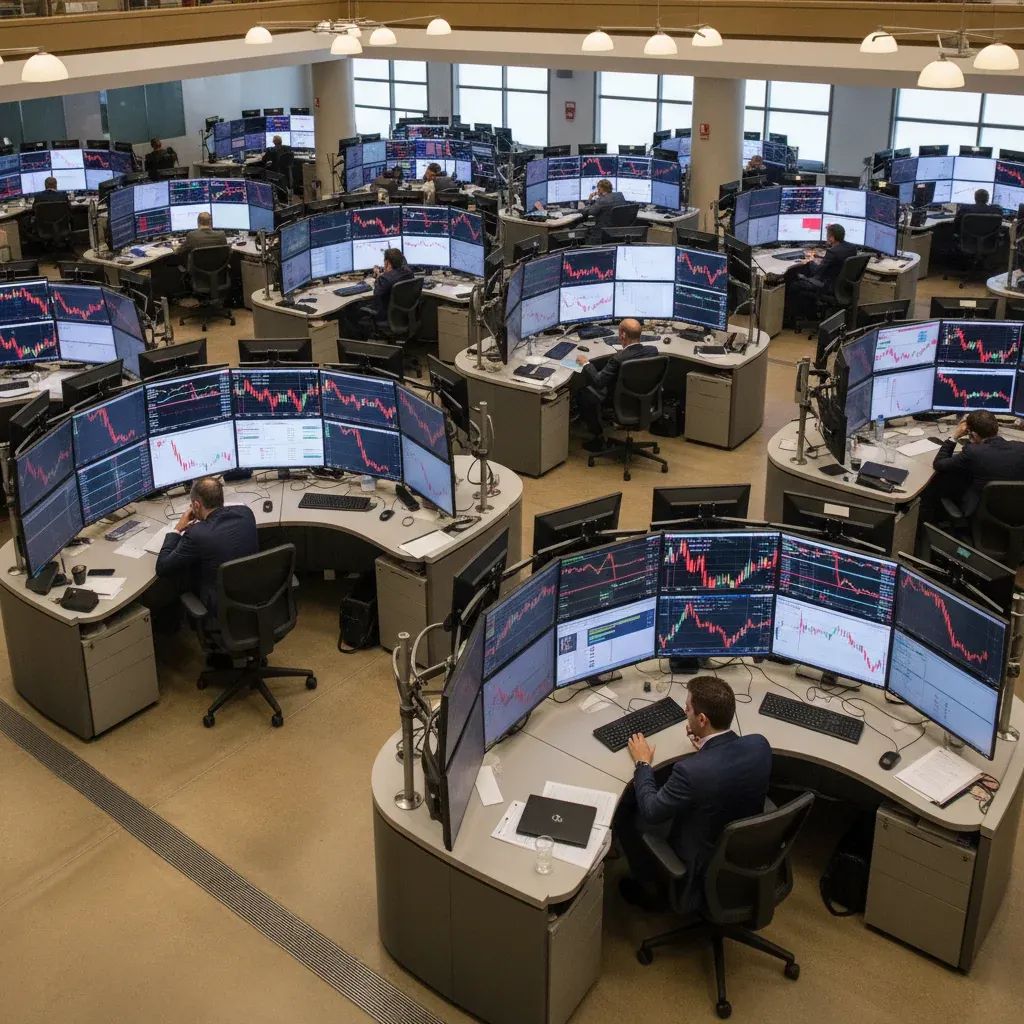
The Italy industrial sector is holding steady through a turbulent geopolitical environment, but the financial toll of the Middle East conflict is mounting fast. A survey by Confindustria's Centro Studi released this week shows that major manufacturers are maintaining stable production forecasts for June 2026—yet nearly every firm flags war-driven cost pressures as the single biggest drag on operations.
Almost half of the country's largest industrial enterprises—47.3%—expect output to remain unchanged in the coming months, up modestly from 43.9% in May. Another 43.9% anticipate moderate or significant increases, while only 8.8% foresee a contraction, down sharply from 14.3% the previous month. On the surface, it is a picture of cautious stability. Beneath it lies a cost crisis tied directly to conflict zones thousands of kilometers away.
Why This Matters
• Energy surcharges: Italian manufacturers face an extra 7 billion to 21 billion euros in energy bills in 2026, depending on how long the Middle East war lasts and whether Brent crude stays above $100 per barrel.
• Freight and insurance shock: Transport, logistics, and war-risk premiums have become the second-largest cost burden for 21.4% of surveyed companies, behind only energy.
• Export collapse: Sales to the Middle East fell 52.5% in March alone, erasing 1.6 billion euros in the first two months of the crisis.
• Recession risk acknowledged: The Italy Finance Ministry has publicly warned that prolonged energy inflation could tip the economy into contraction.
The Cost Breakdown: Where the Pain Is Concentrated
When Confindustria's research center asked large firms which problem hurt most, 28.2% pointed to energy commodities. That was the top answer. Transport, logistics, and insurance came second at 21.4%, and non-energy raw materials plus intermediate inputs ranked third at 15%.
The war's impact on shipping lanes and insurance markets is now a systemic concern. The virtual closure of the Strait of Hormuz in March 2026—after Iran declared the waterway off-limits—has stranded thousands of vessels and sent war-risk premiums to record highs. Roughly 20% of global oil and 25% of liquefied natural gas normally transit that strait. When it shut, container availability tightened across Europe, delays cascaded, and freight rates spiked.
Regional disparities are stark. Lombardy faces an estimated 2.3 billion euros in additional energy costs this year, followed by Emilia-Romagna at 1.2 billion and Veneto at 1.1 billion. Sectors with high energy intensity—metallurgy, chemicals, food processing, hotels, and transport—are absorbing the heaviest blows. CGIA di Mestre calculates that Italian businesses will pay nearly 10 billion euros more for electricity and gas in 2026 versus 2025, a jump of 13.5%.
What This Means for Investors and Business Owners
If geopolitical tensions fail to ease, companies warn of three cascading risks. Nearly 20% of respondents told Confindustria that further increases in freight and insurance costs are their primary worry. Another 19.4% fear continued spikes in non-energy commodities, and 17.9% see export routes to conflict-affected countries closing or shrinking.
Italy's export performance to the Middle East has already crumbled. March saw a 52.5% year-on-year drop; Kuwait fell 89.6%, Qatar 66.1%, and the United Arab Emirates 65.9%. Over the first two months of the crisis, aggregate sales to the region contracted 33%, wiping out 1.586 billion euros in revenue.
The International Monetary Fund downgraded Italy's growth forecast to 0.5% for both 2026 and 2027, citing Middle East uncertainty as a primary driver. Business insolvencies are projected to rise 5% this year, reaching approximately 12,750 cases, with manufacturing and construction especially vulnerable. In March, financial-sector sentiment on the Italy economy plunged to −79.2 points, the lowest reading since 2015, and 83.3% of analysts expected further deterioration.
How Italy's Manufacturers Are Responding
Despite the headwinds, firms are not standing still. Confindustria data and complementary surveys reveal a multi-pronged adaptation strategy:
Digitalization and route optimization: Roughly 81% of companies deploying artificial intelligence in logistics report measurable gains in efficiency and cost control. Firms are investing in advanced planning software, digital twins, and predictive maintenance to shorten delivery times, optimize warehouse stock, and automate operational decisions.
Contract restructuring: About 74% of transport agreements and 68% of warehousing contracts now include indexation clauses tied to fuel costs, macroeconomic indicators, or wage adjustments. War-risk insurance and mutual protection clauses are becoming standard.
Supply-chain redesign: Enterprises are diversifying suppliers and shipping routes, adding buffer inventory, and locating warehouses closer to end customers. Some are exploring nearshoring to leverage Italy's Mediterranean position and reduce dependency on volatile transcontinental lanes.
Government incentives: The Italy Ministry of Infrastructure and Transport, through RAM S.p.A., is managing subsidies for low-emission commercial vehicles—electric, hybrid, and methane-powered—available until June 30, 2026. A special tax credit for road haulage covers incremental fuel expenses for March through May 2026, capped at 100 M euros nationally. The LogIN Business program, financed with 157 M euros from the National Recovery and Resilience Plan, supports digital transformation in freight and logistics. Firms also have access to European Regional Development Fund grants and enhanced depreciation schemes under Transition 5.0 and the Nuova Sabatini facility.
Broader Economic Signals
The Confindustria survey paints a picture of cautious endurance rather than optimism. Demand and order books remain positive, but cost inflation is the dominant constraint. Workforce availability has worsened in recent months, and access to materials and credit remains patchy.
Energy-intensive industries—steel, paper, chemicals, ceramics—are on the front line. At prevailing oil prices near $140 per barrel in a worst-case scenario, manufacturing energy costs could climb from 4.9% of turnover in 2025 to 7.6% in 2026, approaching the crisis levels of 2022. Even in a best-case scenario—hostilities ending by mid-year and Brent at $110—the incremental burden would still reach 7 billion euros annually.
Certain sub-sectors show resilience. Electrotechnical, mechanical, and electronics industries are benefiting from the twin digital and energy transitions and sustained investment in capital goods. Pharmaceuticals are forecast to grow steadily. Consumer goods—including cosmetics—and food and beverage producers enjoy relatively stable domestic demand, while furniture exports are holding up well.
Yet the overall sentiment is fragile. The Italy Revenue Department and central bank both caution that prolonged supply-chain disruptions and energy-price volatility could erode corporate margins and derail recovery momentum.
What Lies Ahead
Production expectations are stable, but stability in this context means treading water in a storm. Firms are neither collapsing nor accelerating; they are adapting, hedging, and waiting. The Confindustria Centro Studi findings confirm that Italy's large manufacturers possess the operational flexibility and balance-sheet depth to weather short-term shocks. Whether they can sustain that posture through a multi-year conflict is the open question.
For entrepreneurs, logistics managers, and procurement chiefs, the message is unambiguous: cost control is now a strategic priority, not an operational afterthought. Freight contracts, energy hedges, supplier diversification, and digital infrastructure are no longer nice-to-haves—they are survival tools in a world where geopolitical tremors translate instantly into balance-sheet pain.
Italy's industrial base is not in freefall. But it is running harder just to stay in place, and the longer the Middle East war drags on, the thinner the cushion becomes.


