
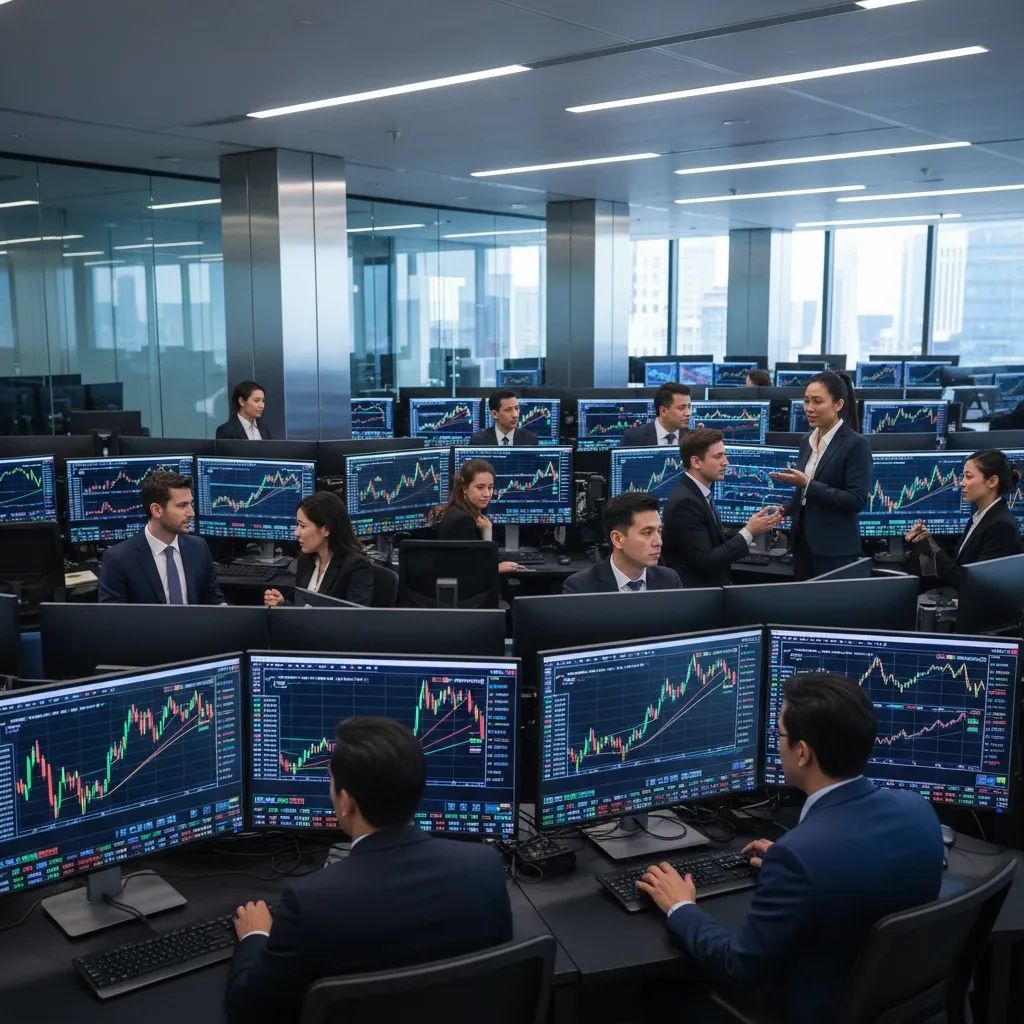
Italy investors woke up to a bracing rally across global equity markets as global media reported signals of potential ceasefire negotiations between the United States and Iran, fueling a sharp risk-on pivot from Tokyo to New York. The momentum rippled through European futures and markets are speculating on how such a deal—if finalized—could reshape energy costs, inflation expectations, and investment portfolios for households and businesses in Italy throughout the summer.
Why This Could Matter
• Equity gains: The Dow Jones surged 1.64% to 50,717 points, while the Nasdaq climbed 1.68%—signals of appetite for risk assets driven by ceasefire optimism, though gains remain volatile pending confirmation.
• Potential energy relief: If a ceasefire agreement reopens the Strait of Hormuz, market analysts suggest crude prices could decline, potentially easing fuel costs and inflation pressures felt across Italy's transport and manufacturing sectors.
• Geopolitical speculation: Markets are pricing in hopes for de-escalation, with implications for energy security if negotiations progress beyond the current speculative phase.
The Reported Framework and Uncertainties
President Donald Trump told a virtual rally audience that negotiators "got everything we wanted," describing the framework as being "practically done." However, the specific terms of any potential agreement remain unconfirmed. Reports suggest discussions may center on nuclear-related negotiations and sanctions discussions, but formal details have not been publicly verified.
Critically, Tehran's Ministry of Foreign Affairs has declined to confirm any "final decision," a cautionary note that underscores significant uncertainty around the deal's status. Iran's leadership has not issued formal public approval for any framework. Given Trump's previous announcements of imminent breakthroughs that failed to materialize, skepticism among analysts remains high regarding whether current negotiations will reach completion.
Various international parties, including regional governments, have reportedly been involved in diplomatic shuttle efforts, though specific mediation roles and compliance monitoring frameworks remain unclear pending official confirmations.
Market Response: From Seoul to Wall Street
Asian indices posted gains on the ceasefire speculation. The Tokyo Nikkei 225 jumped 2.5%, while Hong Kong's Hang Seng added 1.5%. The Seoul KOSPI surged 5%, reflecting market sensitivity to Middle East developments. Shanghai and Shenzhen each climbed over 1%, and Sydney's ASX 200 closed up 1.9%.
By the New York afternoon session, the S&P 500 had gained 1.28% to 7,361 points. Energy sector volatility, which has defined much of 2026, showed signs of easing as traders speculated that potential Iranian oil re-entry to markets could ease supply constraints. The Strait of Hormuz, a critical shipping chokepoint, has faced significant disruptions, and market analysts view potential reopening as a significant upside scenario for crude supply.
European futures indicated a positive but measured open, suggesting traders remain cautious pending any formal agreement and implementation details.
What This Could Mean for Italy Residents
For Italy households and firms, the potential benefit lies in energy cost stabilization—but only if negotiations succeed. Italy imports the majority of its oil and natural gas, and the conflict-driven spike in crude prices has fed through to diesel, heating oil, and electricity tariffs. If the Strait were to reopen and supplies normalize, this could ease some inflationary pressure that has constrained consumer spending and strained logistics operators.
Manufacturing competitiveness could also see a boost under this scenario. Italian exporters in textiles, machinery, and automotive components have faced rising input costs tied to energy-intensive production. Lower fuel and feedstock prices, if ceasefire negotiations succeed and lead to normalized supply, would improve margins in competitive EU and global markets.
On the investment front, Italy-based equity funds are responding to reduced near-term volatility, though longer-term positioning depends on whether talks advance toward a formal agreement.
Italy's inflation trajectory could shift if energy prices normalize. The European Central Bank has flagged energy as a primary driver of inflation persistence. A successful de-escalation would ease pressure on monetary policy, potentially supporting Italian government bond valuations and borrowing costs—but again, only if the current speculation translates into a durable agreement.
Significant Skepticism and Obstacles Ahead
The potential deal faces considerable structural hurdles. Energy infrastructure, port operations, and supply chain recovery would require significant time if disruptions were to be reversed. Compliance verification, especially around nuclear-related commitments, remains complex and often subject to international disputes.
The European Union maintains its own position on Iran-related matters, and any framework would need to navigate existing multilateral sanctions regimes and diplomatic positions. It remains unclear whether European governments would adjust their policies or how quickly implementation could occur.
Russia and China have their own strategic interests in Middle East developments, and their positions could influence how any negotiations advance.
Saudi Arabia and the United Arab Emirates have reportedly been consulted on negotiations, reflecting broader regional dynamics.
Italy's Energy and Economic Exposure
Italy's dependence on Middle Eastern energy routes makes developments in the Strait of Hormuz's status a relevant economic variable. The country sources significant volumes of crude and LNG via Gulf shipping lanes, and recent supply disruptions have contributed to higher wholesale energy prices affecting household budgets and corporate balance sheets.
If the reported negotiations progress and stabilize supply, Italy could see potential relief in jet fuel and diesel costs, benefiting airlines, freight companies, and consumers. The Port of Genoa and Port of Trieste, critical for energy imports, could see improved throughput if regional tensions ease.
For Italy investors, the market rally offers a moment to reassess positioning, though volatility is likely given current uncertainties.
A Cautious Outlook: Speculation vs. Reality
Despite market enthusiasm, the current situation remains highly uncertain. Negotiations are reported to be ongoing, but formal breakthroughs have not been confirmed. The 60-day window mentioned in some reports is speculative at this stage, as are specific terms and enforcement mechanisms.
For Italy residents, the key takeaway is to distinguish between market optimism and deal certainty. The rally reflects hope and speculation, not yet resolution. Energy prices may eventually stabilize if negotiations succeed, but significant risks—from compliance challenges to diplomatic reversals—could impact outcomes. Portfolio diversification, energy cost awareness, and attention to European policy responses will remain important through the summer and beyond.


