
Why This Matters
• Livigno's cycling calendar has expanded dramatically: The 1816 Bike Zone now hosts year-round events, with the Granfondo Alè drawing over 850 participants and attracting professional European competitors to compete on alpine routes.
• High-altitude advantage for summer training: At 1,816 meters elevation, the resort offers physiological benefits unavailable at lower altitudes—cooler temperatures, better trail grip, and acclimatization pathways for professional teams preparing for major competitions.
• Major infrastructure completed for the Olympics: €33.8M in underground parking, gondola bike retrofits, and a new Learn & Flow technical center opened in mid-2026, positioning Livigno as a multi-season destination beyond winter sports.
Livigno has undergone a quiet but consequential transformation. What began three years ago as an experimental cycling festival has evolved into a comprehensive mountain ecosystem where the destination itself—not any single event or facility—has become the actual product. The 1816 Bike Zone brand, which derives its name from the resort's altitude of 1,816 meters, represents far more than clever branding. It anchors an entire strategic philosophy: making geography, rather than ephemeral marketing trends, the foundation of a sustainable tourism model.
The late June 2026 edition of the Granfondo Alè served as a public demonstration of how thoroughly this vision has taken hold. Over the weekend of 26–28 June, the quiet alpine valley hosted more than 850 registered cyclists on a challenging 150-kilometer route that climbs toward the Mottolino finish—the same elevation finish that featured in the 2024 Giro d'Italia. What distinguished this gathering, however, was not merely the race itself. The event functioned as an aperture into an entire cultural ecosystem that Italy's Livigno Next (the destination management organization) has deliberately constructed over the past three years.
"We're witnessing a shift from seasonal tourism to experiential tourism," explains Luca Moretti, president of Livigno Next. "The Granfondo exists because the community lives cycling year-round. The race didn't create that identity—it simply gave it a platform." This distinction matters for residents and visitors alike, because it signals that infrastructure decisions and economic investments have durability baked in, rather than representing speculative plays on cyclical event popularity.
From Competition to Community Infrastructure
Beyond the timed segments, the Granfondo weekend compressed what Livigno has built across twelve months into a concentrated three-day experience. An Expo Village materialized at the base of the valley, aggregating European bike manufacturers, component suppliers, and local retailers into a functioning marketplace. Parallel to the racing, the destination activated guided social rides, panoramic descent tours, bike testing zones, and technical coaching sessions—a programming strategy explicitly designed to accommodate non-competing partners of participants and families seeking leisure alongside athletic engagement.
This structure reflects a deliberate philosophy: prevent the event from becoming an exclusive club for competitive cyclists. Instead, offer multiple entry points for different rider abilities and tourism motivations. A first-time visitor unfamiliar with the 4,000-meter cumulative elevation of the Granfondo route can rent an e-bike, join a "Giro delle Tee" (a playful reference to Italian tee—as in tea—suggesting leisurely rides punctuated by café stops), and experience identical mountain scenery without physical danger or competitive pressure. Meanwhile, advanced cyclists access the same terrain through a series of certified Strava segments—three officially recognized digital benchmarks where individual performance can be logged and compared globally. These segments include the climb to Passo d'Eira, the final section of the 2024 Giro d'Italia stage, and the ascent to Passo Forcola.
The evening programming revealed a second dimension of Livigno's strategy. The resort hosted conversations with retired professional cyclists Alessandro Petacchi, Sonny Colbrelli, Fabrizio Ravanelli, and professional snowboarder Maurizio Bormolini. Rather than delivering performative testimonials, these athletes engaged in substantive discussions about training methodology, altitude acclimatization, mental resilience during performance, and the psychology of pushing physical limits in mountain environments. Importantly, these sessions will persist on MyLivignoTV, the resort's owned-media channel, extending the event's commercial and cultural reach beyond the physical gathering. Future promotional campaigns can reuse content from retired champions, and prospective visitors gain windows into the mentality of athletes for whom Livigno has become a training sanctuary.
Strategic Positioning Against Alpine Rivals
Livigno's rise as a cycling destination has not occurred in a vacuum. The Dolomites—UNESCO World Heritage territory encompassing Val Gardena, Sella Ronda, and surrounding terrain—have long held prestige in cycling circles, particularly through events like HERO Südtirol Dolomites (recognized as one of Europe's most challenging mountain bike marathons) and Maratona dles Dolomites (broadly regarded as Italy's most aesthetically compelling gran fondo). The Sellaronda Bike Day, where road authorities close four iconic passes to motor traffic for twelve hours, creates an experience unique among Alpine destinations—collective, egalitarian, and deeply choreographed.
Verbier, Switzerland, meanwhile, has leveraged existing ski-area infrastructure to construct 500 kilometers of cross-country MTB trail networks and now hosts the European DH Cup Continental Series, attracting international downhill racers to technically demanding coursework. The three-day Enduro2 Verbier team competition represents another draw unavailable elsewhere in the Alps.
Livigno's competitive edge rests on something the others cannot replicate: altitude and proximity to legendary road climbs. At 1,816 meters, it sits higher than most European cycling destinations, meaning professional teams and serious cyclists train here specifically for the physiological advantages—improved oxygen processing, muscle endurance, and acclimatization. The ICON Xtreme Triathlon—featuring 195 kilometers of cycling across the Passo dello Stelvio, Passo Gavia, Passo Bernina, and Passo Mortirolo—positions the resort within cycling's historical geography rather than competing on contemporary event prestige alone. These are not invented climbs designed for spectacle; they are established, storied routes where cyclists from across Europe and beyond seek to test themselves and accumulate personal records.
Squadra Nazionale Italiana (Italian national cycling federation) regularly books blocks of accommodation for training camps, recognizing the measurable physiological returns the altitude provides. Foreign European UCI squads similarly use Livigno as a pre-competition base. This isn't ancillary tourism—it's institutional demand that generates steady revenue regardless of marketing trends or seasonal fluctuations.
Physical Infrastructure as a Foundation
The materialization of the Mottolino Bike Park as a year-round facility anchors the destination's credibility. Across the 2026 season, from the June 13 opening through September 27 closure, the park maintains 14 established trails ranging from beginner-friendly pathways to technical north-shore features and jump lines equipped with AirBag landing systems. Two new routes debut in 2026: "Blue Velvet," a blue-grade (beginner-intermediate) flow trail expanding accessibility, and "Wide Open," a red-grade sustained rhythm trail for experienced riders seeking speed without technical hazard.
The Learn & Flow Area at the M'eating Point (accessible via gondola from the base station) addresses a crucial gap for families and recreational riders. This facility consolidates technical skill development into a dedicated zone, complete with a pump track—a continuous banked loop of rollers and turns requiring no pedaling, designed to build fundamental bike-handling coordination. Children can progress from balance bikes through advanced aerial practice on the AirBag. By removing barriers to participation for non-advanced riders, Livigno attracts families and recreational cyclists who tend to spend more per visit and return more frequently than competitive riders alone.
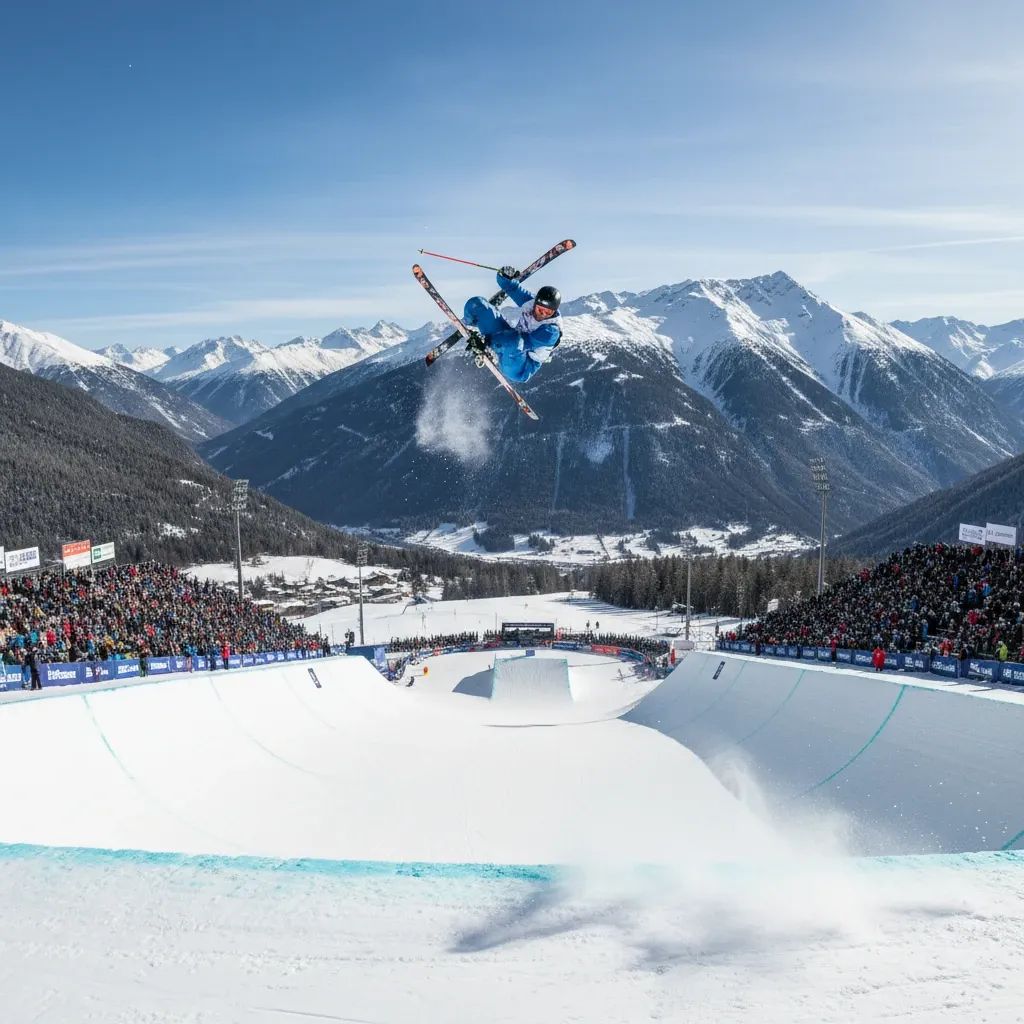
Complementary infrastructure projects have accelerated due to the Milano-Cortina 2026 Winter Olympics, for which Livigno serves as a freestyle skiing and snowboard venue. A three-story Mottolino Headquarters now consolidates bike rental (road, mountain, downhill, and e-bike categories), retail, administrative offices, two restaurants, co-working spaces, and recreational facilities at the gondola base. This centralization reduces friction for visitors, eliminating the historic necessity to navigate fragmented services scattered across the valley.
A €33.8 million underground parking structure beneath the Olympic snow park will deliver over 500 automobile spaces and 13 bus bays across three levels, topped with green roofing to integrate the structure into alpine aesthetics. This addresses chronic congestion during peak summer weekends—good news for both visitors and residents navigating the valley. Temporary disruptions will persist through autumn 2026 as construction concludes, but the long-term relief for local traffic management is substantial.
The Yepi chairlift retrofit to accommodate bicycles (securing wheels and frames in dedicated racks) improves uplift access to higher-elevation trails, slopestyle terrain, and jump zones. The Monte Sponda chairlift—an 8-seat installation with heated seats and protective domes—signals Livigno's intention to operate across variable mountain weather, extending shoulder seasons and reducing revenue concentration in peak periods.
What This Means for Livigno Residents
The Granfondo Alè brought tangible changes to daily life in the valley. The 850 participants, plus accompanying family and support staff totaling an estimated 2,500–3,000 individuals, required accommodation in hotels and vacation rentals, meals at restaurants and cafés, bike repairs at local shops, and services from guides and mechanics. For hoteliers, restaurant owners, and rental operators, this represents direct income during a traditionally moderate June period. Hospitality workers experienced predictable employment and overtime opportunities when seasonal work is typically scarce.
However, residents should expect heightened cyclist traffic on valley roads, particularly along the lakeside cycle path and approaches to high passes. Morning hours concentrate road cyclist activity as riders attempt climbs during cooler temperatures. Afternoons see downhill mountain bikers descending from uplift-served trails. Local authorities have not yet implemented formal access management—reserved lanes, hourly trail quotas, or resident-priority parking—but the cycling volume makes mutual awareness between motorists and cyclists essential during peak weekends.
The year-round cycling calendar means these dynamics will extend beyond summer. The Ride & Style Series—a sequence of four mountain bike competitions scheduled between June and September—ensures that cycling-motivated visitors maintain traffic through mid-autumn. Long-term residents should anticipate more consistent traffic patterns throughout the year, but also more consistent employment and commercial activity than the historical feast-or-famine seasonality of a winter-dependent resort.
For young people in the valley seeking employment, the expansion creates opportunities. Bike guides, pump track instructors, trail maintenance crews, restaurant staff, and accommodation operators all require workers. Livigno's challenge will be retaining specialized talent—experienced guides, mechanics, coaches—by offering competitive wages and year-round positions rather than seasonal work. Housing costs may increase as demand rises, a potential downside for residents on fixed incomes or considering relocating to the valley.
Scaling and Sustainability Questions
Livigno's ambitious expansion strategy faces real operational constraints. The valley's geography is relatively constrained; expansion of trail networks and physical facilities cannot proceed indefinitely without environmental impact or overcrowding. Popular trails already show wear patterns during peak weekends, and some form of access management will eventually become necessary to preserve trail quality and visitor experience.
Competitive cycling destinations across the Alps have introduced dynamic pricing for uplift tickets, rider caps on specific trails during designated hours, or reservation systems that smooth demand across the week rather than concentrating it on weekends. Livigno may adopt similar measures within 2–3 years if current growth trajectories persist, affecting both residents and casual visitors accustomed to unrestricted trail access.
The sustainability question extends beyond trail wear. Maintaining specialized services—professional coaching, personalized training plans, nutrition support for elite teams—requires consistent staffing and expertise. The resort will need to retain talent, negotiate competitive employment terms, and invest in continuous skill development. These costs scale with demand but may not translate proportionally into revenue if the destination attempts to keep cycling accessible and affordable for recreational riders.
Why Geography Matters More Than Trends
Ultimately, the 1816 Bike Zone strategy represents a calculated focus on what cannot be copied. Rather than competing on event prestige (always vulnerable to shifting competition), landscape aesthetics (subject to climate degradation and overuse), or transient service quality (dependent on staffing and operational consistency), Livigno has anchored its identity to an immutable geographic fact: its altitude and proximity to legendary road climbs.
This strategy hedges against climate risk. As warming winters compress reliable snowfall windows across the Alps, resorts that diversified into summer multi-sport tourism will capture market share disproportionately relative to those that remained winter-dependent. Livigno's infrastructure investments and event calendar signal this diversification to institutional and individual visitors alike.
For residents, the implications are substantial. Extended cycling seasons generate employment stability and justify year-round commercial operation previously impossible during tourism-scarce winter transitions. Simultaneously, congestion, trail degradation, and infrastructure strain require active management. The resort's success in coming years will depend on whether it sustains the authenticity and mountain character that attracted its cycling community while scaling operations to accommodate the economic opportunity that success has created.
The Granfondo Alè, then, was not merely a race. It was a public articulation of a transformation already underway: the repositioning of an entire alpine valley as a destination where altitude, community, and year-round cycling culture converge into a market offer that older, more established competitors have not yet effectively replicated.


