
Iveco Group, the Italy-based commercial vehicle manufacturer, reported a challenging start to 2026 but has cleared corporate governance milestones to pursue an aggressive recovery strategy. The shareholder assembly approved the 2025 financial statements and reinstated key leadership, while the board authorized fresh capital flexibility and a €130M share buyback program. However, the most recent results underscore the hurdles ahead: Q1 2026 showed a consolidated net loss of €74M and an adjusted EBIT loss of €55M, driven by deliberate investments in quality assurance, South American market weakness, and unfavorable currency moves.
Despite the near-term losses, management is projecting a sharp turnaround. Analysts forecast Iveco's adjusted EBIT will climb to €845.4M in 2026, up from €645M in 2025—a 31% year-over-year gain—contingent on cost-reduction initiatives and volume recovery in the second half of the year.
Why This Matters for Italy:
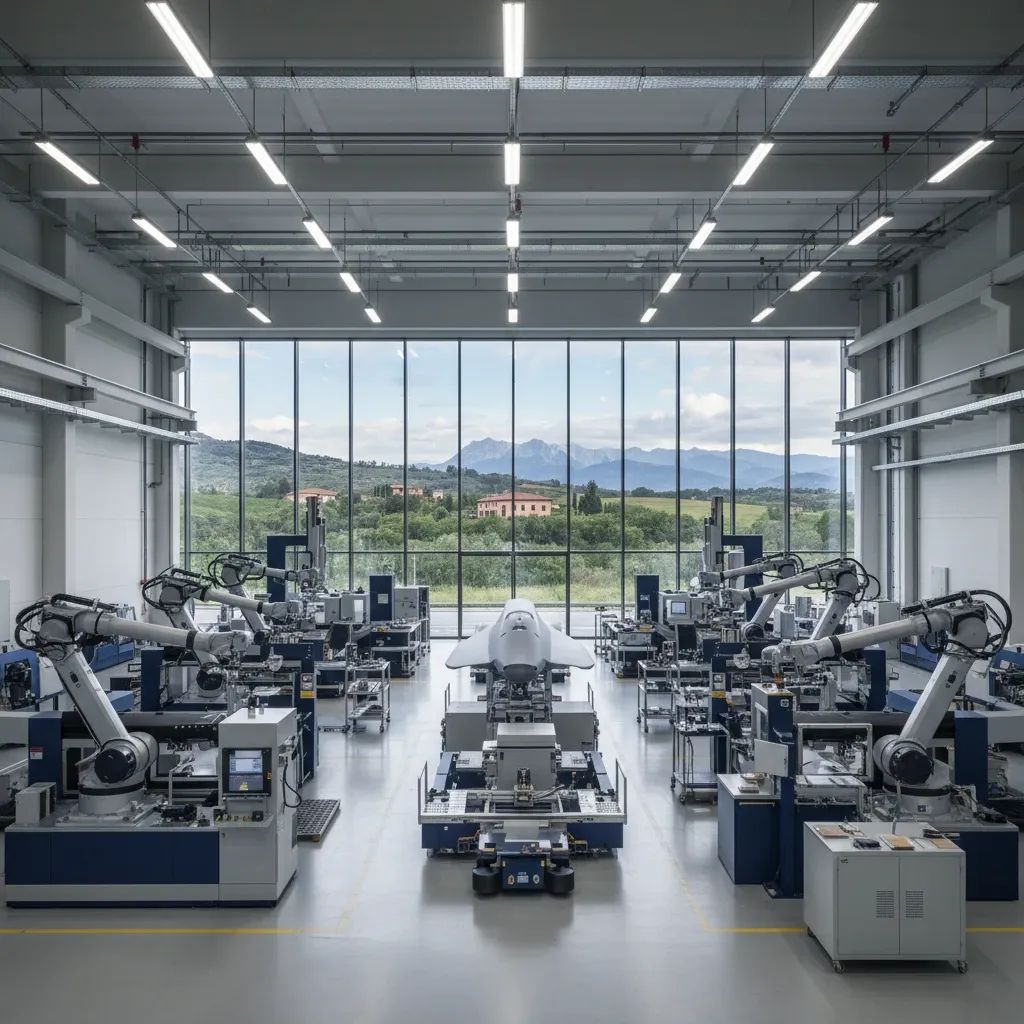
• €77M investment in Italian plants: Iveco is channeling investment into Italy-based manufacturing facilities to support electric and multi-fuel platform development, automation upgrades, and e-bus capacity. This represents a significant increase from €46.6M spent domestically in 2025, signaling management's commitment to anchor European engineering and assembly in Italy even as the group pursues global expansion.
• Tata Motors acquisition underway: Tata Motors is acquiring Iveco Group, with closure expected by Q3 2026. The combined entity will rank among the world's top-five commercial-vehicle manufacturers, but governance and control will shift to Mumbai. Italian plants are promised continued investment and a role as the European engineering hub—assurances that residents and workers will monitor closely during integration.
• Employment and workforce implications: While the €77M capex increase suggests expansion, specific job creation or restructuring plans have not yet been announced. Workers and suppliers in Italy are watching to confirm whether increased investment translates to hiring and sustained employment or masks efficiency drives that could reduce headcount.
• Revenue and profitability rebound projected: Excluding Q1 losses, management must deliver roughly €900M in operating profit over the final three quarters to meet €845M full-year guidance. Success hinges on European volume recovery, cost efficiencies materializing faster than planned, and stable pricing.
• Leadership continuity: Olof Persson has been reconfirmed as CEO and Suzanne Heywood as Chair, anchoring the turnaround plan. Both will remain in place through the Tata acquisition transition.
Q1 2026: The Reality Behind the Recovery Plans
Iveco stumbled out of the gate in Q1 2026, reporting consolidated net revenues of €2.828B and an adjusted EBIT loss of €55M. The shortfall stemmed from three main headwinds: deliberate investments in quality assurance and rework costs in the Bus division, a sharp slowdown in commercial-vehicle demand across South America (historically a growth engine), and unfavorable currency moves that eroded margins on export sales. The company also booked a net loss of €74M for the quarter, compared with a profit in the year-earlier period.
Yet beneath the headline figures, order books told a more encouraging story. In Europe, light commercial vehicle orders surged 31%, medium and heavy truck orders rose 5%, and deliveries of light vans climbed 17% year over year. Management attributed the uptick to fleet renewals deferred from 2025, improving availability of financing, and early traction for refreshed model lineups. The pipeline suggests that once production stabilizes and South American markets rebound, top-line momentum should return in the second half of the year.
CEO Persson emphasized that the Q1 margin squeeze was the intended cost of "quality as our number one priority," with engineering and manufacturing teams conducting additional validation cycles and retrofitting units already in the field. "We are making the business leaner, more disciplined, and more robust," he said in a statement accompanying the results. "The short-term impact on profitability will yield long-term gains in reliability, customer satisfaction, and residual values."
Governance Overhaul and Capital Strategy
At the annual general meeting, shareholders voted to reappoint Heywood and Persson as executive directors, while seven non-executive board members—including Alessandro Nasi and Lorenzo Simonelli (who will serve as Senior Independent Director)—retained their seats. The assembly then extended the board's authority to issue new ordinary shares or grant subscription rights representing up to 10% of issued capital, with the power to limit or exclude pre-emptive rights (the existing shareholders' entitlement to purchase new shares proportionally, which can be waived to give management flexibility in fundraising) for existing shareholders. That 18-month mandate replaces an earlier authorization from April 2025 and gives management room to raise equity quickly if strategic opportunities or market conditions shift.
Separately, the board secured a five-year renewal of its ability to issue special voting shares—a mechanism that grants enhanced voting power to long-term holders and has become a common defensive tool among European industrial companies facing takeover interest. This tool will carry over into the Tata-controlled structure once the acquisition closes.
The centerpiece of the capital-allocation package is a new buyback program allowing Iveco to acquire up to 10M ordinary shares for a maximum outlay of €130M over the next 18 months. Management framed the authorization as a means to optimize capital structure, offset equity dilution (the reduction in ownership percentage for existing shareholders when new shares are issued to compensate employees or raise capital) from stock-based compensation plans, and support liquidity in the stock. With shares trading below some internal valuation benchmarks after a turbulent Q1, the buyback also sends a signal that the board views current prices as attractive relative to the company's medium-term earnings trajectory.
Impact on Italian Plants and Employment
For workers and suppliers in Italy, the €77M capex commitment is both welcome and scrutinized. The company plans to channel this investment into Italian plants—primarily in Piedmont, where Iveco's engineering headquarters and major assembly facilities are based—to fund new tooling for electric and multi-fuel platforms, automation upgrades, and capacity expansions in the e-bus segment. That compares with €46.6M spent domestically in 2025, reflecting a 65% year-over-year increase in Italian manufacturing investment.
However, management has not yet disclosed specific employment targets. The increased capex could support job creation to staff new production lines, or it could indicate primarily automation-led efficiency. Union representatives and local government officials have called for clarity on headcount plans before the Tata merger closes, fearing that integration could accelerate restructuring and shift production or R&D decision-making away from Italy.
Management has publicly committed that Italian plants will anchor European production and that R&D headcount in Piedmont will grow, not shrink, even after the Tata combination. But such assurances will be tested once integration planning moves from announcement to execution. The regional government in Piedmont and labor unions are pressing for binding commitments and job-creation targets before regulatory approvals are finalized.
The Tata Motors Acquisition: What It Means for Italian Operations
The pending Tata Motors acquisition—with Tata acquiring Iveco, not the reverse—is expected to close by late Q3 2026. This transaction will merge Iveco with Tata's commercial-vehicle arm to create a combined entity with roughly €22B in annual revenue and more than 540,000 unit sales. The integration is designed to unlock procurement synergies, broaden geographic reach (especially in India and Asia-Pacific), and pool R&D budgets for electrification and autonomous-driving technology.
For Italian residents and stakeholders, the key governance implication is that corporate control and major strategic decisions will shift to Mumbai. While Italian plants are promised a continued role as the European engineering and production hub, day-to-day oversight and capital-allocation decisions will be made by Tata's leadership rather than an independent Iveco board.
Until the deal closes, however, Iveco will continue to operate independently. Italian stakeholders—workers, unions, local suppliers, and the regional government—are watching closely to ensure that promised investment commitments survive the corporate marriage and that integration does not accelerate job losses or shift production to lower-cost geographies.
Multi-Energy Push and Competitive Pressures
Persson's turnaround strategy rests on four pillars: innovation, financial discipline, partnerships, and sustainability. Between 2024 and 2028, Iveco will deploy over €5.5B in R&D and capital expenditure, targeting zero-emission powertrains (battery-electric and hydrogen fuel-cell trucks), software-defined vehicle architectures, and AI-driven fleet management.
On the electric front, Iveco Bus is scaling production of urban e-buses and aims to hit several thousand units of annual e-bus capacity in Europe by year-end 2026. The group is also rolling out a long-haul battery-electric tractor for intra-European corridors starting in 2025 (with volume ramp-up in 2026) and has deepened its collaboration with Hyundai Motor Company on fuel-cell heavy-duty trucks. Meanwhile, FPT Industrial, Iveco's powertrain subsidiary, is launching next-generation e-axles, battery packs, and fuel-cell integration kits, and targeting 5–9% sales growth outside Europe—chiefly in North America—through OEM partnerships in off-road and marine applications.
The multi-fuel strategy hedges regulatory uncertainty: while the European Union has set ambitious CO2 reduction targets for new heavy trucks, member states remain divided on the pace of charging infrastructure build-out and the role of renewable fuels such as biomethane and HVO (hydrotreated vegetable oil—a low-carbon diesel substitute made from waste or agricultural feedstock). Iveco is betting that offering biomethane, XTL/HVO, battery-electric, hydrogen, and hybrid options will let fleet operators choose the lowest total-cost-of-ownership solution for each duty cycle, rather than forcing a one-size-fits-all transition.
Competitive intensity, however, is fierce. Daimler Truck, Volvo Group, Traton Group (Volkswagen's truck arm), and PACCAR all wield larger balance sheets and broader dealer networks. Iveco defends strong niches—it commands a 55.8% share of the European intercity coach market and leads in specialized municipal and firefighting chassis—but must fight for every percentage point in the core heavy-duty segment. The Italian light-commercial-vehicle market, for instance, contracted 7.1% in May 2026, and the battery-electric share slipped to 3.5% as buyers awaited clarity on government incentives. That "wait-and-see" dynamic has frozen orders and complicated production planning across the industry.
To counter scale disadvantages, Iveco is doubling down on partnerships. Beyond Hyundai, it has formed a joint venture with Ford Otosan to co-develop cab structures for heavy trucks that meet tougher crash and visibility standards taking effect in 2028–2029. By sharing engineering costs, both partners aim to preserve margins even as regulatory compliance expenses climb.
Efficiency Drive and Cash-Flow Pivot
Management has pledged to extract €1B in cumulative efficiencies by 2028, with €600M targeted by the end of 2026. Levers include reducing product complexity (fewer cab and chassis variants), shifting sourcing to low-cost countries, maximizing factory throughput through flexible work patterns, and tightening commercial terms with dealers. Part of the quality push in Q1 involved simplifying supplier portfolios and bringing critical subassemblies in-house to improve traceability—a move that raised short-term costs but is expected to lower warranty expenses and boost residual values over time.
The company has also completed a strategic divestiture: in Q1 2026 it closed the sale of its defense business (brands IDV and ASTRA) to Leonardo, Italy's aerospace and defense champion. The transaction allows Iveco to concentrate capital and management attention on commercial trucks and buses, while Leonardo gains armored-vehicle design and manufacturing capabilities to complement its land-systems portfolio.
Returning to positive free cash flow from industrial activities in 2026 is the board's headline target. Achieving it will require not only the planned efficiency gains but also disciplined working-capital management—inventory days have crept up as the company pre-builds electric units ahead of expected incentive announcements—and selective capex phasing. If Iveco can hit that milestone, it will restore investor confidence that the business can self-fund growth and weather cyclical downturns without emergency equity raises or asset sales.
Market Context and Road Ahead
EU heavy-truck registrations are normalizing in 2025–2026 after record peaks in 2023–2024, when fleets rushed to replace aging diesels and lock in pre-2025 emission standards. Analysts expect a mid-single-digit percentage decline in industry volumes this year, offset partly by mix gains as electric and alternative-fuel models command higher average selling prices. The bus segment remains a bright spot: demand for electric city buses jumped 24.2% in Q1 2026 in Italy alone, driven by municipal tenders tied to EU recovery funds and clean-air mandates in major urban areas.
Iveco's ability to capitalize on that tailwind depends on execution—ramping e-bus production without quality hiccups, securing battery supply at competitive prices, and ensuring that charging infrastructure partnerships deliver uptime guarantees fleet operators demand. The company has also flagged South America as a watch item; economic volatility and currency weakness in Brazil and Argentina have slowed truck sales, and management does not expect a meaningful recovery until mid-2026 at the earliest.
All eyes now turn to the Tata Motors acquisition completion. If regulatory approvals land on schedule, the merged group will rank among the world's top-five commercial-vehicle manufacturers by unit volume and will span product segments from three-wheelers to long-haul tractors. For Italy, the strategic question is whether Turin remains the engineering and innovation hub or gradually cedes influence to Mumbai and other Tata centers. Management has promised that Italian plants will anchor European production and that R&D headcount in Piedmont will grow, not shrink—but such assurances will be tested once integration planning moves from PowerPoint to practice.
In the meantime, Iveco's shareholders have handed the board the financial tools—equity issuance authority, buyback capacity, extended voting-share powers—to navigate a year that promises both operational turbulence and transformational opportunity. Whether 2026 marks the definitive turning point or merely a pause in a longer restructuring saga will become clear when the company reports second-quarter results in the coming weeks. For workers and communities in Italy, the next quarter of announcements will be critical in clarifying whether the €77M investment and recovery projections translate into job security and sustained manufacturing presence or mask deeper restructuring ahead.


