
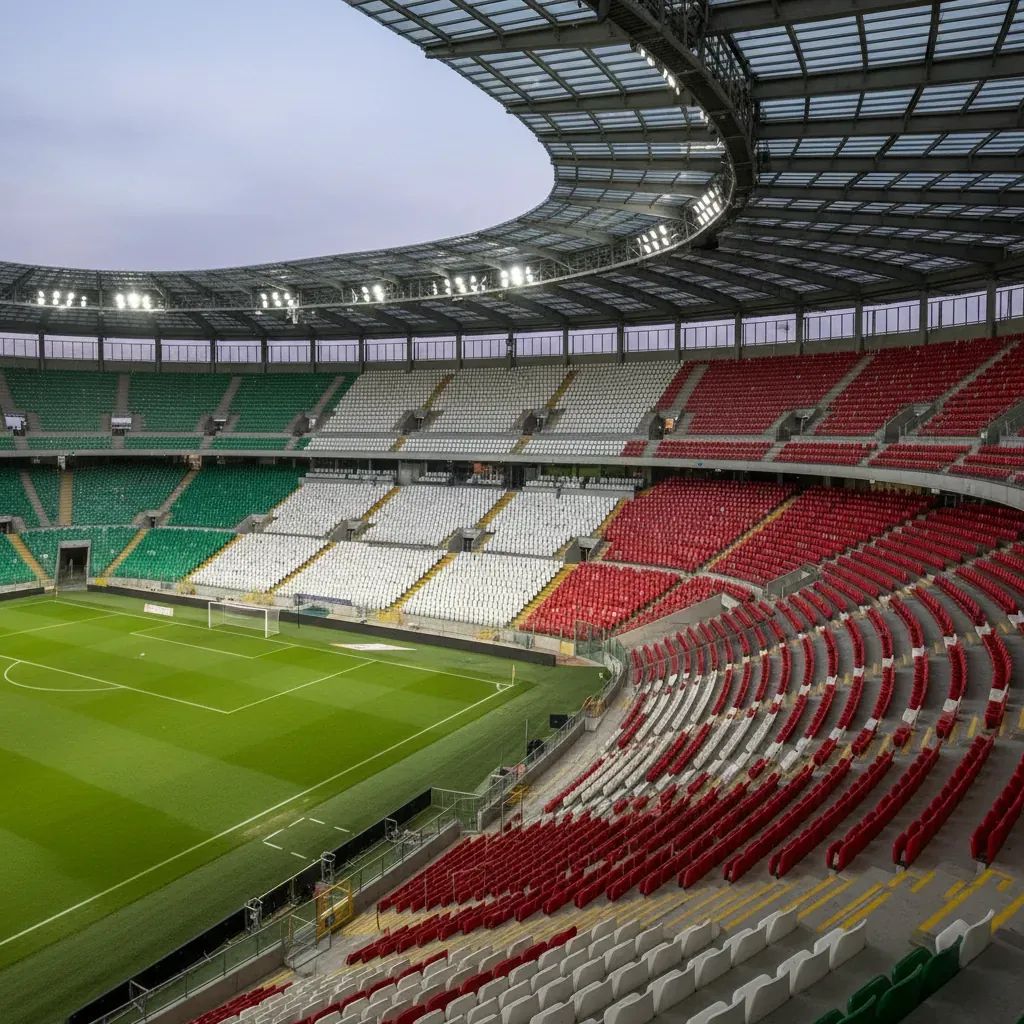
Italy's U-17 squad has returned home from Estonia as back-to-back European champions, receiving a formal welcome at the Italian Football Federation (FIGC) headquarters and the Italian Senate that underscored the country's renewed focus on youth talent development. The team, which defeated Belgium 4-3 on penalties on June 7 after a 1-1 draw in the final held in Tallinn, now carries the weight of national expectation as evidence that Italy's restructured youth system is finally delivering consistent results.
Why This Matters
• Historic achievement: Italy secured its second consecutive U-17 European Championship, after winning in Cyprus in 2024—an unprecedented feat in the modern format.
• Talent pipeline activated: The squad features prospects from Empoli, Lecce, Atalanta, Inter, and Juventus youth academies, with scouts from top European clubs already circling.
• Political backing: Senate President Ignazio La Russa publicly endorsed the youth model, signaling institutional support for long-term investment over quick fixes.
The celebration on June 18 at the FIGC offices in Rome saw President Gabriele Gravina and General Secretary Marco Brunelli host the delegation led by head coach Daniele Franceschini in the Paolo Rossi Hall, where federation employees greeted the squad with standing ovations. Later that afternoon, the team moved to Palazzo Giustiniani, where La Russa delivered a pointed message aimed at Italy's senior football establishment: "The school exists, the talent exists, the desire to win translates into victory—and we must trust them. It's difficult for everything to happen immediately, but you are the hope."
A Strategic Shift Under Viscidi's Coordination
The twin titles represent the clearest vindication yet of the Maurizio Viscidi-led youth overhaul, which has prioritized individual technique over rigid tactical systems and created a continuous pathway from U-14 through U-21. Viscidi, who coordinates all Italy's youth national teams from U-15 to U-19, has integrated advice from Cesare Prandelli and World Cup winners Simone Perrotta and Gianluca Zambrotta to standardize training philosophies across federation academies.
The results speak clearly: Italy won the U-19 European Championship in 2023, reached the U-20 World Cup final the same year in Argentina, and now holds consecutive U-17 European titles. Italy remains the only European federation to qualify for the final phases of both U-17 and U-19 Euros for five straight seasons. The U-17 squad's recent success follows Italy's inaugural 1982 U-16 European Championship win (before the tournament became U-17), making this the second U-17 European title after the 2024 victory, following final losses in 2013, 2018, and 2019.
Standout Performers Drawing Club Attention
Christian Lupo, the 17-year-old Lecce-contracted goalkeeper, emerged as the tournament's defining figure by saving crucial penalties in both the semifinal shootout against Spain and the final itself. His composure and reflexes have already attracted interest from multiple Serie A clubs seeking to secure his rights before a bidding war escalates—the type of breakthrough talent that could anchor Italy's senior team within years, if domestic clubs commit to his development.
In midfield, Edoardo Biondini from Empoli captained the side with maturity beyond his years, while Federico Croci of Fiorentina impressed analysts with his two-footed finishing. The defensive core relied on Ludovico Varali (Parma) and Giampaolo Bonifazi (Roma), both commanding figures throughout the tournament. At the FIGC ceremony, Biondini addressed teammates and federation leadership, stating: "We played to honor the shirt and hope we were worthy of this splendid responsibility."
What This Means for Italian Football's Future
The institutional reception signals a deliberate effort by Italy's football governance to align political and sporting priorities around youth development, a departure from the reactive, short-term thinking that has characterized previous reform efforts. Gravina emphasized "growth and belonging" as central themes, framing the U-17 triumph as validation of structural investment rather than individual brilliance alone.
Yet the challenge remains translating youth success into senior competitiveness. Despite the conveyor belt of talent, Serie A clubs continue to offer limited first-team minutes to domestic prospects, a pattern that has hindered the transition of youth champions to the senior Azzurri squad. The gap between Primavera academies (Italian youth teams for players under 20) and senior squads remains a critical bottleneck, with foreign imports often preferred over homegrown graduates.
La Russa's public endorsement at Palazzo Giustiniani serves as both encouragement and warning: the political class expects these investments to yield tangible outcomes at the senior level, particularly as Italy seeks to rebuild credibility following its 2022 World Cup qualification failure. The Senate president's reference to "patience" suggests awareness that immediate results are unlikely, but the symbolic weight of hosting the squad at the Senate underscores the government's stake in football's role as a national identity marker.
A Narrow Window to Capitalize
Italy now faces a critical 2- to 4-year window to integrate this generation into senior squads before they disperse across Europe or stall in domestic reserve teams. The FIGC has publicly committed to tracking these players through the U-20 and U-21 pipelines, with Viscidi's coordination structure designed to prevent the "lost generation" phenomenon that followed previous youth tournament successes.
For Italian clubs, the challenge is balancing immediate competitive pressure with the long-term benefits of nurturing domestic talent. The U-17 squad's success offers a blueprint—technically skilled, tactically flexible, and mentally resilient—but only if Serie A managers are willing to absorb the risk of fielding teenagers in high-stakes matches.
The next test arrives in 2027, when many of these players will be eligible for U-19 competition and, potentially, senior call-ups. The FIGC's emphasis on "continuity" suggests a deliberate effort to avoid the boom-bust cycles that have plagued Italian football development for decades. Whether Italy's football establishment can sustain this momentum beyond ceremonial receptions and into the harsh economics of professional football will determine if the Tallinn triumph becomes a turning point or a footnote.


