
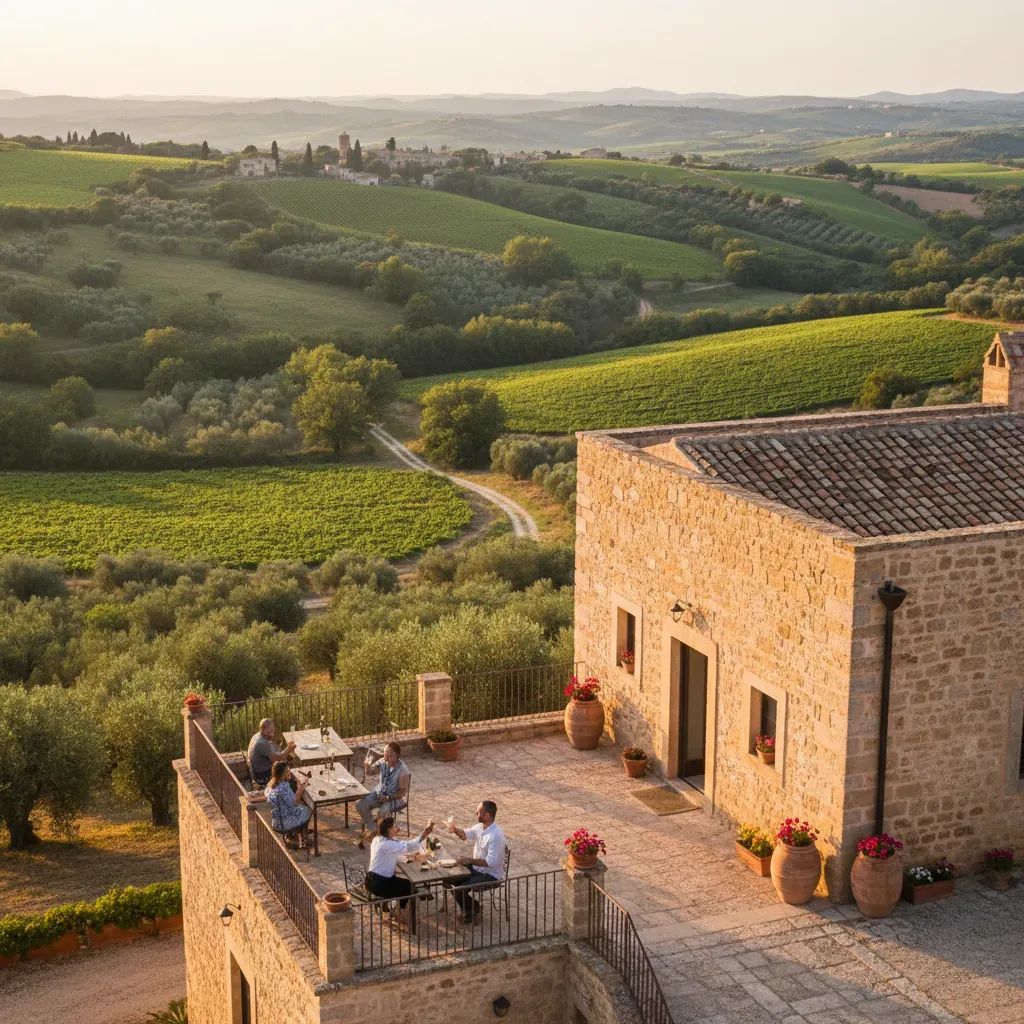
Italy's tourism sector continues to outpace its Mediterranean rivals, capturing more than half of all European travel aspirations for the upcoming summer season. With 54% of continental travelers naming Italy their preferred destination, the country has solidified its position ahead of Spain, Greece, and France—even as regional competition intensifies and overtourism pressures mount on iconic destinations.
Why This Matters:
• Italy leads Europe in summer tourism desirability, ahead of Spain (51%) and Greece (46%), according to Confturismo Confcommercio data gathered via Swg&PollingEurope.
• Record occupancy rates hit 55.1% in May 2026, the highest in the Mediterranean, surpassing Greece (50.3%), France (44.3%), and Spain (42.5%).
• Foreign arrivals surged 12.3% in the first quarter of 2026, and projections suggest 141 M total arrivals and nearly 479 M overnight stays for the full year.
• Overtourism risk concentrates 80% of visitors in only 10–20% of destinations, raising urgent calls to redirect travelers to lesser-known towns and rural areas.
What Sets Italy Apart in a Crowded Field
While Spain boasts the most Blue Flag beaches in the world (677 in 2026) and Greece attracts visitors with a well-defined island-hopping product, Italy's competitive edge lies in its layered appeal. The country is perceived as the most interesting destination to visit by Europeans when asked to choose from a shortlist of Mediterranean options. Spain still claims the top spot for climate, and Greece wins on authenticity, but Italy clinches the second-best ranking for accommodation quality and scores as the most entertaining place to travel.
The allure transcends age and geography. Among Spanish respondents, 61% favor Italy for their next holiday, and Polish travelers express the same preference at 60%. In Southern and Central-Eastern Europe, enthusiasm reaches 62% and 60%, respectively, well above the continental average.
Underneath these preferences is a perception of political and geographic stability—a factor that has grown in importance as global conflicts and fuel-price volatility redirect long-haul travelers toward closer European destinations. Italy benefits from being both accessible and secure, a combination that has also lifted Spain and, to a lesser extent, Greece and France.
The Historic Cities Paradox
46% of prospective European visitors cite Italy's historic cities as their primary motivation for traveling, followed by museums and archaeological sites (31%). This concentration has created a familiar problem: while Rome, Florence, Venice, and Milan attract the lion's share of international arrivals, secondary sites and rural regions remain comparatively untapped.
The imbalance is measurable. Across Italy, roughly 80% of tourists cluster in a narrow band of well-known destinations, placing severe strain on urban infrastructure, housing stock, and cultural heritage. Venice's resident population has collapsed from 175,000 in the 1950s to under 50,000 today, as short-term rental demand drives up prices and displaces local communities. Firenze has responded with IMU tax rebates for property owners who convert tourist rentals back to long-term housing, while Venezia introduced a day-tripper entry fee in 2024 and is piloting mandatory booking systems. Rome launched an IoT-based crowd-monitoring project in 2025 to distribute flows more evenly across its attractions.
These measures signal a policy shift from maximizing arrivals to managing quality over volume—what some Italian officials are now calling the transition from "overtourism" to "unbalanced tourism."
Food, Wine, and Forgotten Villages
28% of European travelers express interest in food and wine experiences set in traditional territories, and 27% want to visit small villages—figures that reveal latent demand for experiences outside the main tourist circuits. Another 24% are drawn to Italian folklore and traditions, and 22% seek nature-based slow travel such as walking routes or cycling paths.
These preferences align with the Legge 158/2017 (also called the Salva Borghi law), which allocates national funds to restore and promote Italy's small municipalities. The law aims to counter depopulation by fostering sustainable tourism, creating employment in traditional crafts, and supporting cultural events that animate rural calendars. Airbnb has partnered with Italy's National Association of Municipalities (ANCI) to promote lesser-known villages, and regional bodies are developing enogastronomic itineraries that link vineyards, artisan producers, and historic hamlets.
The challenge is one of visibility and infrastructure. Many of these towns lack the digital marketing reach or hospitality capacity to absorb significant visitor numbers, even as demand grows. Eco-compatible lodging models—including alberghi diffusi (distributed hotels), agriturismi, and renovated heritage buildings—are expanding, but coordination between local operators, tourism boards, and transport providers remains fragmented.
Impact on Residents and the Broader Economy
For people living in Italy, the tourism boom is a double-edged reality. On one hand, the sector is a pillar of the national economy, contributing billions in revenue and sustaining millions of jobs. First-quarter 2026 data show 23 M arrivals and 71.6 M overnight stays, up 4.2% and 7.5%, respectively, from the same period in 2025. Foreign guests now account for 54.6% of all overnight stays, and the sector's growth is outpacing that of peer nations.
On the other hand, the concentration of visitors in city centers has priced residents out of historic neighborhoods, transformed commercial streets into chains of souvenir shops, and strained public transport systems designed for smaller populations. The phenomenon, labeled "turismofobia" in some quarters, reflects rising tension between locals and the tourist economy that increasingly dictates urban life.
Destagionalizzazione—spreading demand across the calendar year—is part of the response. By encouraging travel outside July and August, authorities hope to relieve summer peaks while extending the economic benefits across more months. Projections for summer 2026 anticipate 172 M overnight stays and 89 M foreign visitors between July and August alone, underscoring the urgency of load-balancing.
Where Italy Still Lags
Despite its cultural and culinary strengths, Italy trails in areas where Spain and Greece have invested heavily. Entertainment, nightlife, and shopping rank low among European motivations for visiting Italy: only 12% associate the country with shopping or entertainment venues, 9% with nightlife, and a mere 6% with sports activities. Spain, by contrast, has cultivated a reputation for vibrant coastal nightlife and sporting events, while France leverages its "Art de Vivre" brand and calendar of world-class cultural and sporting occasions, from the Tour de France to the Cannes Film Festival.
Italy's average stay duration of 3.6 nights is the longest in Europe, a metric that reflects high satisfaction and the depth of available experiences. Yet shorter visits to specific landmarks—day trips to Venice or Cinque Terre, for example—contribute to the overtourism dynamic without spreading economic benefit more broadly.
Outlook and Strategic Priorities
Industry bodies and policymakers agree that Italy's brand strength is unmatched in the European tourism landscape. The question is whether the country can redistribute flows, enhance digital infrastructure, and scale up sustainable lodging fast enough to meet surging demand without eroding the very qualities that attract visitors.
Key initiatives include:
• Technology-driven flow management: Real-time sensors and predictive analytics to guide tourists toward less-crowded sites.
• Regulatory frameworks for short-term rentals: Licensing regimes and conversion incentives in high-pressure cities.
• Rural tourism investment: Funding for heritage restoration, event programming, and digital marketing in small municipalities.
• Collaboration platforms: Joint planning by tourism operators, municipal authorities, and resident associations to ensure community voices shape development.
With the Giubileo (Jubilee) underway and the Milano Cortina Winter Olympics generating fresh infrastructure and international visibility, Italy is poised for another year of record-breaking arrivals. Whether that growth translates into equitable economic gains and preserved cultural authenticity will depend on how effectively the country navigates the tension between popularity and sustainability.
What Travelers and Residents Should Expect
For foreign visitors, Italy remains the most coveted summer destination in Europe, offering an unmatched combination of art, history, landscape, and cuisine. Expect higher occupancy rates, especially in urban centers and coastal hotspots, and consider exploring lesser-known regions—Marche, Molise, inland Sardegna, the Langhe hills—to avoid crowds and discover the country's quieter, more authentic side.
For residents, the tourism surge means continued pressure on housing, transport, and public services in major cities, but also growing opportunities in rural areas as policy and private investment shift toward decentralization. The debate over how to balance economic benefit with livability will remain a defining issue for local politics and community planning in the years ahead.


