
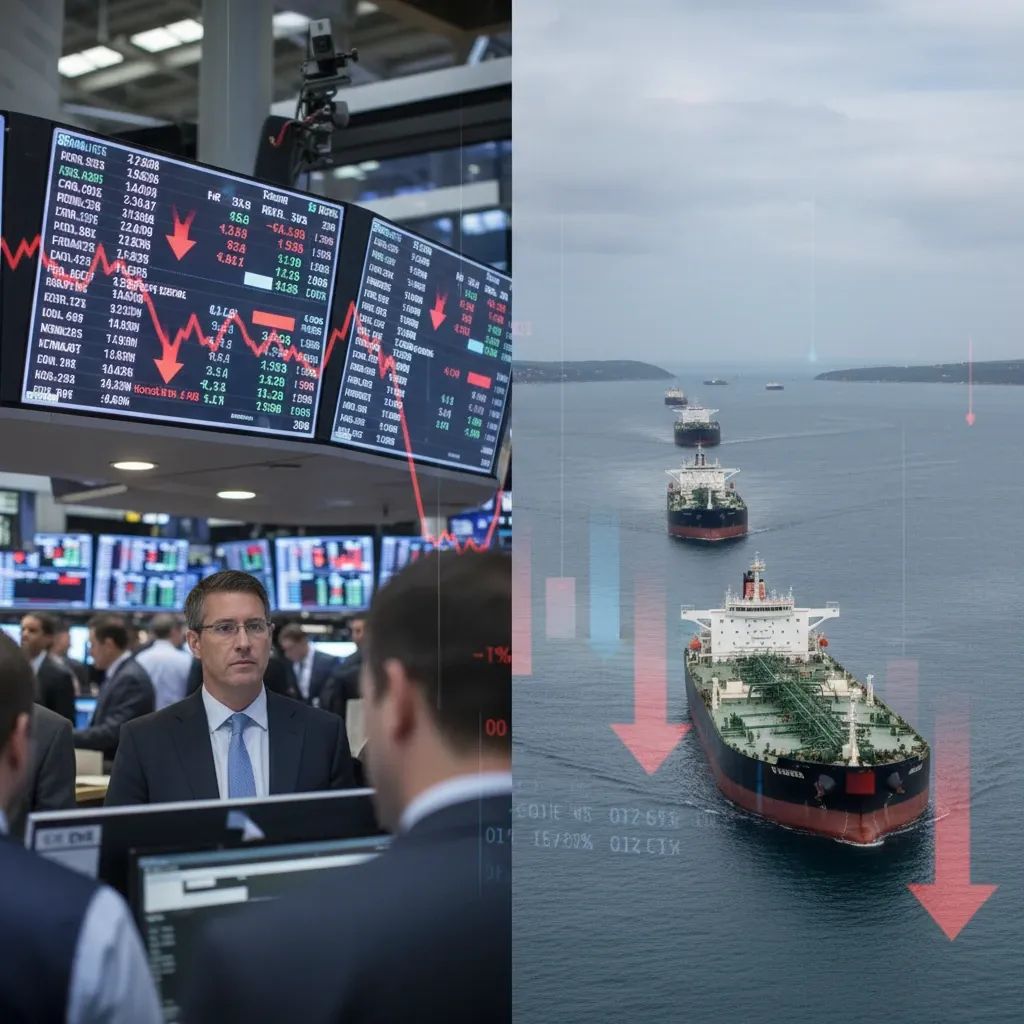
Italy's Borsa Milano closed 0.63% lower on Tuesday, dragged down by a European-wide sell-off driven by geopolitical anxiety over US-Iran negotiations in Pakistan and the first Senate testimony of Kevin Warsh, Donald Trump's controversial nominee to lead the Federal Reserve. The FTSE MIB index settled at 47,903 points, mirroring a broader retreat across the continent as investors weighed the twin risks of energy supply disruption and a potential hawkish shift in American monetary policy.
Why This Matters:
• Defense stocks plunged as geopolitical tension mounted: Leonardo fell 4.8%, Fincantieri dropped 2.9%.
• Government bond yields surged across Europe; Italy's 10-year BTP yield climbed to 3.77%, with the spread over German Bunds widening to 77 basis points.
• Oil and gas price volatility continued as the Strait of Hormuz remains effectively blocked, threatening energy supply chains critical to Italy's manufacturing base.
• Warsh's testimony signaled a potential shift in Fed policy, raising questions about future rate cuts that markets had been pricing in for late 2026.
Geopolitical Overhang: Hormuz and the Energy Equation
The immediate catalyst for Tuesday's decline was renewed uncertainty over talks between Washington and Tehran scheduled in Pakistan, set ahead of a temporary ceasefire deadline on April 22. The Strait of Hormuz, a chokepoint for roughly 13% of global oil supply, remains largely shuttered despite the fragile truce brokered earlier this month. With only a trickle of tankers passing through, Brent crude hovered near $95 per barrel during European trading hours, while analysts have warned prices could spike to $110 if the blockade extends another month.
For Italy, heavily reliant on imported energy, manufacturing costs are climbing and inflationary pressures are building. Saipem, the energy services giant, fell 1.9% ahead of its first-quarter earnings release, reflecting investor caution about project delays and margin compression in a volatile energy market.
The defense sector bore the brunt of the sell-off. Leonardo, Italy's aerospace and defense champion, tumbled 4.8% as markets priced in the risk that a negotiated settlement could dampen near-term defense spending. Fincantieri, the state-controlled shipbuilder, shed 2.9%, with traders questioning the sustainability of elevated order books should tensions ease.
Warsh's Senate Debut Rattles Bond Markets
Across the Atlantic, Kevin Warsh used his confirmation hearing before the US Senate Banking Committee to outline a starkly different vision for the Federal Reserve. The former Fed governor called for a shift in how the central bank operates, criticizing its post-pandemic inflation management and advocating for a narrower policy mandate. He emphasized the Fed's independence from political pressure but also suggested a tolerance for coordinating with elected leaders on non-monetary matters—a stance that left markets uncertain about his true intentions.
Warsh's testimony triggered a sharp repricing of rate expectations. While some analysts now forecast the federal funds rate could fall to 3%-3.25% by year-end, others interpret his call for a leaner Fed balance sheet and stricter inflation targeting as a signal that rate cuts may be delayed or smaller than hoped. The ambiguity sent European government bond yields climbing, with safe-haven flows reversing as traders reassessed the path of global monetary policy.
Italy's BTP-Bund spread widened to 77 basis points, with the 10-year Italian government bond yield rising to 3.77%. The move reflects both the ripple effect of Warsh's rhetoric on rate expectations and lingering concerns about fiscal sustainability in Rome, particularly as higher energy costs threaten to impact the budget.
Banking Sector Under Pressure
Italian banks, sensitive to both bond market volatility and economic growth prospects, closed broadly lower. Banco BPM fell 1.6%, BPER lost 1.5%, and UniCredit declined 1.4%. The trio's performance underscores investor anxiety about net interest margins in an environment where rate cuts may be postponed while credit risk rises amid slowing growth.
Intesa Sanpaolo and Monte dei Paschi di Siena (MPS) fared better, each down just 0.3%, while Mediobanca slipped 0.2%. The relatively contained losses suggest institutional investors view Italy's largest lenders as better positioned to weather near-term turbulence, thanks to stronger capital buffers and diversified revenue streams.
Selective Strength in Industrials and Luxury
Not every corner of Piazza Affari was painted red. Tenaris, the steel pipe manufacturer with deep ties to global energy infrastructure, surged 1.7% as investors bet on sustained demand for oil and gas equipment regardless of geopolitical outcomes. Nexi, the digital payments processor, climbed 1.3%, buoyed by expectations for continued growth in cashless transactions.
Generali, the insurance giant, rose 1.1%, while semiconductor producer STMicroelectronics gained 0.9%, both benefiting from defensive positioning and sector-specific tailwinds. In luxury goods, Moncler edged up 0.6% ahead of its quarterly earnings report, while Brunello Cucinelli dipped 0.1%. Stellantis, the automotive conglomerate, added 0.5%, shrugging off broader sector weakness.
Telecommunications operator TIM fell 0.9% as it navigates a takeover offer from Poste Italiane, which itself declined 0.6%. The ongoing corporate drama adds a layer of uncertainty for retail and institutional investors tracking Italy's infrastructure sector.
Small-Cap Spotlight: BF Surges on Takeover Bid
In the mid-cap segment, pharmaceutical company BF rocketed 12% to €4.93 after entrepreneur Federico Vecchioni and Dompè Holdings launched a tender offer at €5.00 per share. The deal, which values the company at a significant premium to its pre-announcement price, underscores continued appetite for strategic acquisitions in Italy's healthcare sector despite broader market volatility.
What This Means for Residents and Investors
For individuals and households in Italy, geopolitical instability and uncertain monetary policy create headwinds for energy costs and overall inflation. Energy prices remain vulnerable to further disruptions at the Strait of Hormuz, with potential knock-on effects for fuel and utility costs.
For investors, the message is one of caution and selectivity. Defensive plays—insurers, payment processors, and select industrial exporters—are outperforming, while banks and defense stocks face near-term headwinds. The BTP market remains vulnerable to external shocks, particularly if Warsh's confirmation ushers in a less accommodative Fed stance.
Portfolio managers should monitor three key variables in the coming weeks: the outcome of US-Iran talks scheduled ahead of the April 22 deadline, Warsh's confirmation vote (expected in early May), and Italy's first-quarter GDP data, due for release at the end of the month. Any one of these could trigger renewed volatility or, conversely, provide a catalyst for a relief rally.
Europe-Wide Retreat
The decline in Milan was part of a continent-wide pattern. Paris's CAC 40 fell 1.14%, London's FTSE 100 dropped 1.01%, and Frankfurt's DAX shed 0.6%. The Stoxx 600, the pan-European benchmark, retreated as investors rotated out of cyclical equities and into cash or short-dated government debt.
Traders are now positioning for a binary outcome: either a breakthrough in US-Iran negotiations that could reopen Hormuz and ease energy prices, or a collapse of talks that pushes Brent crude higher and adds pressure on European economies. The April 22 ceasefire deadline represents a critical juncture for market direction, and clarity should emerge in the coming days.


