
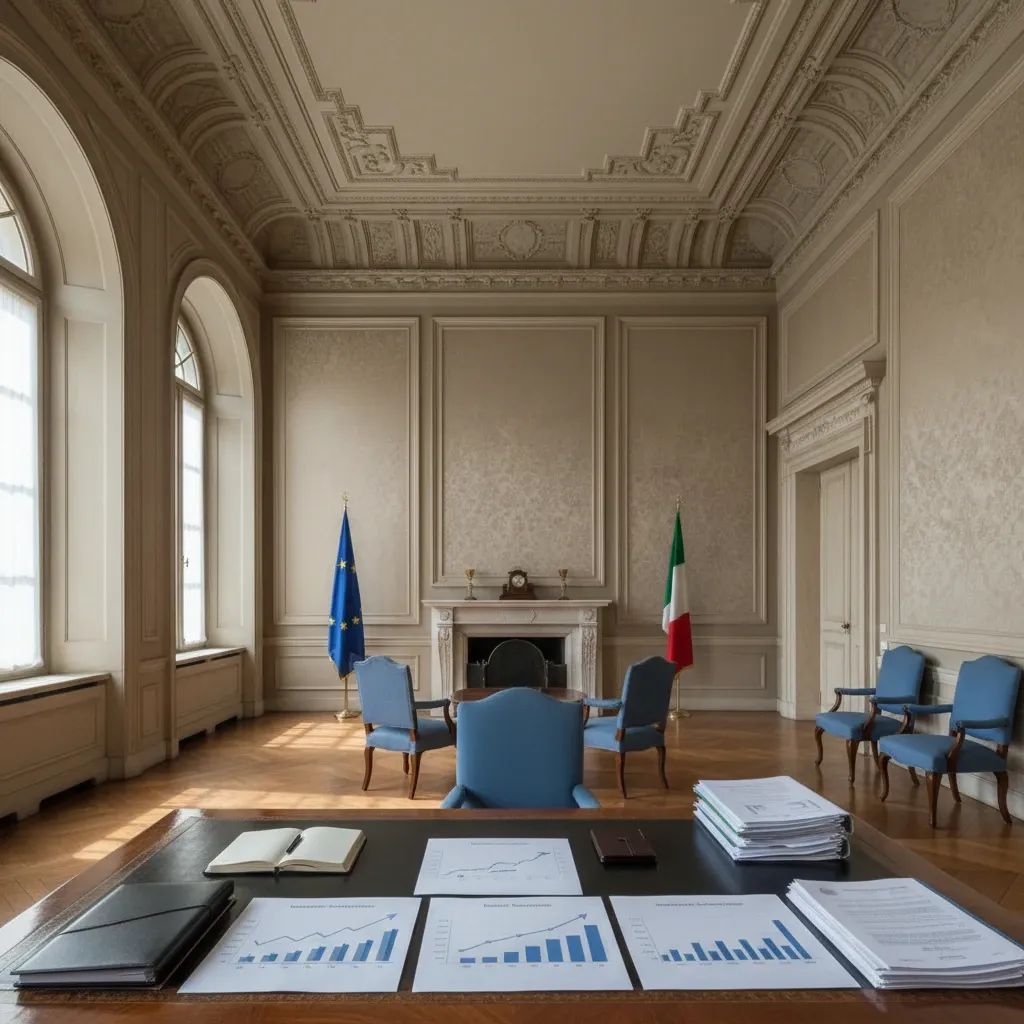
Italy's President Sergio Mattarella has reached his 85th birthday, marking over 11 years at the helm of the Quirinale Palace and reinforcing his position as one of the country's most respected institutional figures. Prime Minister Giorgia Meloni personally telephoned the head of state to convey congratulations on behalf of her government, describing his tenure as defined by "constant service to the nation."
The milestone arrives as Mattarella enters his 12th year as Italy's 12th president, a role he assumed in February 2015 and was reluctantly persuaded to extend in 2022—making him only the second Italian president to serve consecutive terms.
Why This Matters
• Political Continuity: Mattarella has overseen multiple governments led by successive prime ministers, anchoring stability through Italy's chronic coalition turbulence.
• Constitutional Arbiter: As guardian of Italy's parliamentary system, he wields the power to dissolve parliament, veto laws, and appoint prime ministers—tools he's deployed during repeated crises.
• Term Implications: Born July 23, 1941, in Palermo, his current mandate extends through 2029, when he will be 88 years old, raising questions about succession planning.
The Weight of the Quirinale
Mattarella's presidency has been anything but ceremonial. Since taking office, he has navigated Italy through seismic political and social upheaval: the migration surge of 2015-2017, a devastating 2016 earthquake in central Italy, the collapse of multiple coalition governments, the COVID-19 pandemic, and the economic aftershocks of both the eurozone crisis and global inflation.
His interventionist approach became particularly visible during government formation crises. When coalition talks collapsed in 2018, Mattarella blocked the appointment of a euro-skeptic finance minister, effectively vetoing a populist cabinet and triggering fresh coalition negotiations. In 2021, he tapped former European Central Bank president Mario Draghi to lead a technocratic unity government after the Giuseppe Conte coalition fractured—a move widely credited with securing Italy's share of EU recovery funds.
The Italian Constitution grants the president extraordinary discretion during political deadlock. Mattarella has used this authority to shape cabinets, reject proposed ministers on constitutional grounds, and deliver pointed speeches reminding lawmakers of their obligations. Political scientists describe him as "misurato ma inflessibile"—measured but unyielding—a jurist whose reverence for constitutional norms occasionally puts him at odds with populist forces.
A Political Life Forged in Tragedy
Mattarella's path to the presidency was shaped by personal loss and Sicily's brutal mafia wars. His older brother, Piersanti Mattarella, then president of the Sicilian regional government, was assassinated by Cosa Nostra gunmen in January 1980 while driving to Sunday Mass. The killing—part of the mob's campaign to eliminate reformist politicians—galvanized Sergio's decision to enter politics full-time with the Christian Democracy party.
First elected to parliament in 1983, he rose through the ranks of Italy's evolving center-left: from Christian Democracy to the Italian People's Party, then The Daisy coalition, and finally the Democratic Party. His ministerial portfolio spanned parliamentary affairs (1987-1989), education (1989-1990, resigning in protest over a controversial media law), and defense (1999-2001). He also served as deputy prime minister under Massimo D'Alema.
As a legislator, Mattarella authored the hybrid electoral law known as the "Mattarellum," which governed Italian elections from 1994 to 2001, blending proportional representation with first-past-the-post districts. Before his presidential election, he served four years as a constitutional court judge, further deepening his expertise in Italy's legal architecture.
What This Means for Residents
For Italians, Mattarella represents institutional ballast in a notoriously volatile political system. His presence at the Quirinale reassures markets, EU partners, and voters that Italy's democratic mechanisms will function even when coalition arithmetic turns chaotic. His speeches—often delivered during national tragedies or constitutional flashpoints—set the tone for public discourse, emphasizing unity, legality, and European integration.
Practically, his influence extends into daily governance. Every law passed by parliament must receive presidential promulgation before taking effect; Mattarella has occasionally returned legislation for reconsideration, effectively wielding a soft veto. He presides over the High Council of the Judiciary, shaping the independence of Italy's court system, and chairs the Supreme Defense Council, making him a key voice in security and foreign policy.
His refusal to step down in 2022, despite publicly stating his preference to retire, underscored the depth of Italy's political fragmentation. Parliament spent eight days deadlocked over a successor before entreating him to continue—a testament to his perceived neutrality and crisis-management acumen.
International Recognition
Mattarella's 85th birthday drew tributes from across Italy's political spectrum. Chamber of Deputies President Lorenzo Fontana and Senate President Ignazio La Russa, both from the right-wing coalition, praised Mattarella as a "custodian of republican values." Party leaders from the Democratic Party, Five Star Movement, and Forza Italia echoed similar sentiments, a rare show of consensus in Italy's fractious legislature.
Meloni's phone call, announced by her office at Palazzo Chigi, struck a tone of institutional respect. Though Meloni's Brothers of Italy party has roots in the post-fascist tradition that Mattarella's political family historically opposed, the two have maintained a professional working relationship since her 2022 appointment as prime minister. Her statement emphasized "profound consideration and gratitude" for his service—language carefully calibrated to honor the office without wading into policy disputes.
The Road to 2029
Mattarella has not publicly commented on whether he will serve his full second term. At 85, health considerations inevitably arise, though he maintains a rigorous schedule of state ceremonies, foreign visits, and constitutional duties. His potential departure would trigger a parliamentary election requiring a two-thirds supermajority in early rounds or a simple majority after the fourth ballot—a process that could take weeks and test Italy's fragile coalition dynamics.
For now, Mattarella remains the Republic's elder statesman, a figure whose biography intertwines with Italy's post-war transformation and whose presidency has come to symbolize continuity amid chronic political disruption. Whether navigating technocratic transitions or rebuking populist overreach, his tenure has redefined the scope and influence of Italy's highest office.


