
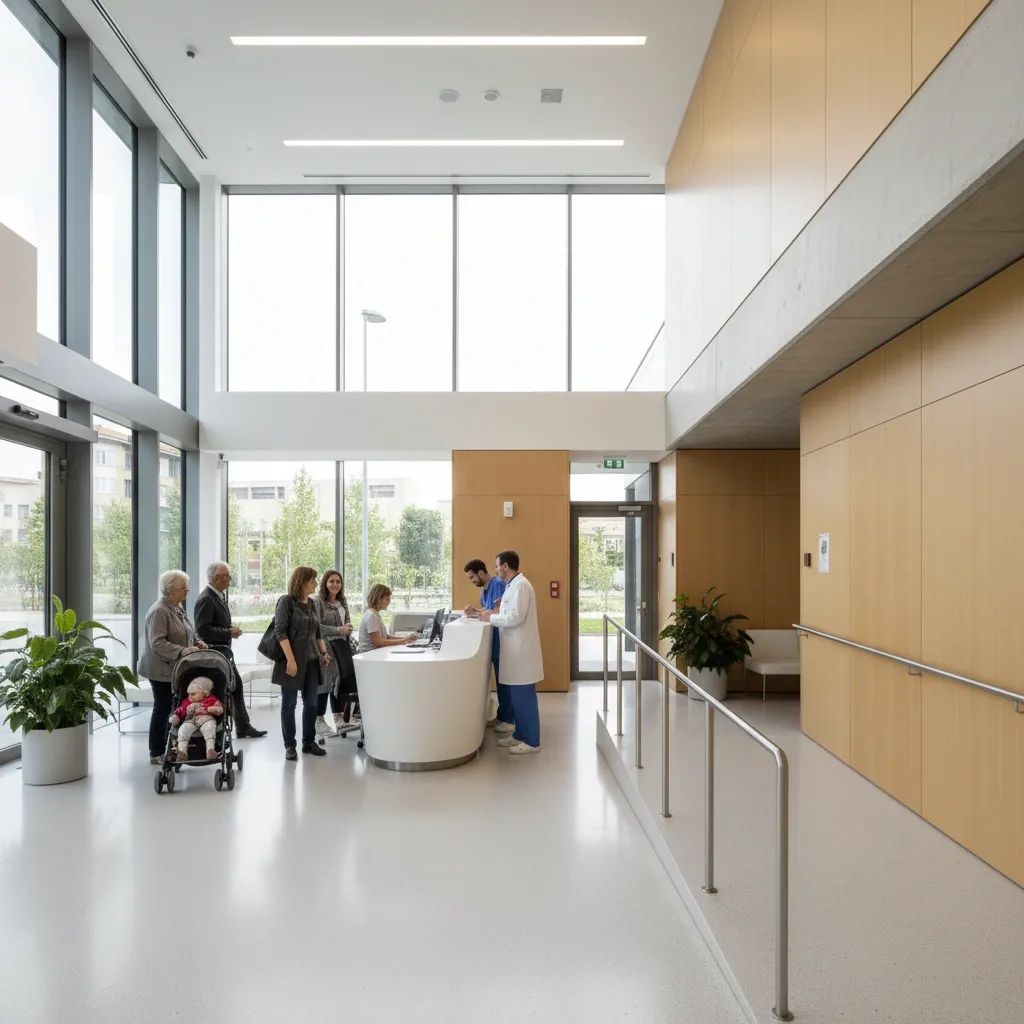
Italy's 10-15% surge in emergency room visits signals an overwhelmed healthcare system, but coordinated public response and activated protocols are preventing the catastrophic system failures visible in neighboring European countries.
Why This Matters Right Now
• If you live in one of Italy's 18 red-alert cities—including Rome, Milan, Florence, Bologna, Palermo, Naples, and others listed in the Caldo e Salute app—emergency services expect significant wait times; knowing when to seek care and when alternative options (urgent care, telemedicine) are appropriate can free hospital resources for genuine emergencies.
• Heat-related illness warning signs—dizziness, confusion, lack of sweating despite heat, rapid heartbeat—demand immediate action, not home treatment.
• The 1500 public hotline provides free guidance on prevention and heat illness, accessible 24/7 during alert periods.
What Residents Should Actually Do Right Now
If you live in a red-alert city, treat this period as a genuine public health hazard, not mere summer inconvenience. Remain indoors during peak afternoon hours (11 a.m. to 6 p.m.)—this window is when heat-related illness accelerates most sharply. Hydrate continuously throughout the day, not just when thirsty. Thirst is a lagging indicator; by the time you feel it, dehydration is already present.
Check on elderly neighbors and family members living alone regularly; many heat deaths occur in complete social isolation. If someone experiences dizziness, confusion, rapid heartbeat, or—critically—stops sweating despite visible heat exposure, seek emergency care immediately. These are not minor symptoms; they signal dangerous core temperature elevation.
For individuals with chronic conditions or those taking psychiatric medications, contact your primary care physician before peak heat periods to discuss heat-specific precautions and any medication adjustments. The 1500 hotline provides guidance when physicians are unavailable.
For families with children: Limit outdoor activities to early morning (before 11 a.m.) or evening (after 6 p.m.). Avoid strenuous sports or beach outings during peak hours. If your child's summer camp operates during red-alert days, discuss alternative indoor programming with organizers or consider temporary schedule adjustments.
For workplace decisions: If your job involves outdoor work or poorly air-conditioned spaces, discuss heat-related accommodations with your employer. Many Italian companies have adopted temporary schedule shifts (early start, midday rest) during red-alert periods. If you have a medical condition, consider requesting remote work options where possible.
For scheduled appointments: Non-urgent medical appointments, dental visits, or routine procedures should be rescheduled if they fall during peak heat hours or require significant travel. Hospitals appreciate this; it reduces unnecessary ER visits when staff are stretched thin.
Help preserve emergency room capacity by using alternative pathways for non-urgent concerns: telemedicine consultations, primary care centers, or 24-hour urgent care facilities. Hospitals function most effectively when non-emergencies are diverted elsewhere.
Who Is Actually Showing Up: The Vulnerable Demographics
Italy's emergency departments are admitting a predictable but severe cohort. Elderly patients with chronic cardiovascular disease, diabetes, or respiratory conditions dominate the incoming cases. Heat rapidly worsens these conditions by triggering dehydration, electrolyte imbalances, and organ stress that manifests suddenly.
A second and often overlooked population has also emerged: individuals with psychiatric conditions. Many psychotropic medications impair the body's temperature regulation. Social isolation—common among this demographic—often means limited access to cooling or reliable hydration. Many arrive at emergency rooms not necessarily with acute heat stroke but in need of basic relief and monitoring.
How Hospitals Are Responding: Protocols That Work
Rather than accept defeat, Italy's hospitals have activated "codici calore" (heat response codes) that function similarly to trauma alerts, allowing medical staff to fast-track heat-related cases through dedicated assessment areas rather than standard triage queues. These mechanisms allow staff to rapidly identify, assess, and treat heat illness efficiently, preventing bottlenecks that would otherwise cascade through entire emergency departments.
The Italy Ministry of Health issued operational guidance directing hospitals to bolster territorial healthcare networks to intercept non-emergency cases before they reach hospitals. Dedicated heat-triage stations within emergency departments now sort patients by urgency, with heat-specific protocols taking priority. Daily heat alerts covering 27 Italian cities publish 24-, 48-, and 72-hour forecasts through the "Caldo e Salute" mobile application—free, accessible, and genuinely useful.
The 1500 public helpline, jointly operated by the Italy Ministry of Health and INAIL (the National Institute for Insurance against Accidents at Work), offers accessible information on preventive behaviors, assistance pathways for vulnerable populations, and warning signs requiring emergency care. It's a straightforward resource that works: citizens know exactly where to call when uncertain.
Select municipalities have moved beyond passive monitoring into proactive intervention. Pescara initiated a targeted support program for elderly and socially isolated residents, dispatching staff to assess hydration status, confirm medication compliance, and coordinate with social services. These home visits intercept crises before they reach emergency rooms, a multiplier effect in reverse.
Why Italy's Numbers Reflect Functioning Systems
A surge of 10-15% in emergency visits might sound modest, yet it carries enormous weight when set against the European context. The World Health Organization formally declared this heatwave a regional public health emergency, noting that the continent is warming faster than any other global region. But the pattern of response matters as much as the temperature spike.
Across the continent, the stress on emergency systems has revealed stark differences in institutional preparedness. Paris saw emergency call volumes spike 80% in a single week, with hospital corridors overflowing and staff stretched beyond functional limits. The London Ambulance Service reported a 50% surge in emergency calls. France documented 74 drowning deaths since mid-June, predominantly in unauthorized water sites where residents sought desperate relief. Within a single 24-hour period at the heatwave's peak, Paris recorded 55 deaths in emergency services alone—a number incomprehensible outside crisis contexts.
Italy's 10-15% increase, by comparison, reflects something different: a healthcare system that activated early warnings, deployed triage protocols, and distributed accurate public guidance before the pressure mounted to breaking point. The modest increase signals that institutional response actually functioned, not that Italy escaped the heatwave unscathed.
Temperature Records Reshaping Baseline Expectations
The physical reality is stark. France reached 44.3°C, Germany hit 41.5°C, Switzerland recorded 38.8°C, and the United Kingdom climbed to 37.3°C—figures that strain infrastructure designed for cooler historical norms. These temperatures don't merely feel uncomfortable; they fundamentally alter how human physiology responds.
In Italy, peak temperatures have also climbed well above seasonal averages. The practical consequence is that urban air conditioning systems, electrical grids designed around older cooling demands, and building ventilation patterns all operate at or beyond design capacity.
The Staffing Crisis Behind the Scenes
Italy's emergency medicine sector confronts a systemic crisis independent of—and now amplified by—the heatwave. An assessment from earlier this year by Società Italiana di Medicina di Emergenza-Urgenza (Simeu) predicted that nearly 70% of emergency departments would operate below 75% of required staffing levels during peak summer, with approximately 30% expecting to function with fewer than half their required physicians. Only 31% of facilities predicted reaching three-quarters capacity; achieving full staffing is exceptionally rare.
The human numbers are staggering. An estimated 4,500 emergency physicians and 10,000 nurses are absent from the sector nationwide. The roots run deep: expired pandemic-era contracts, difficulty recruiting emergency medicine specialists, grueling work conditions, and compensation that lags behind alternative medical specialties or private practice. Young doctors are systematically choosing different career paths, and experienced physicians are retiring earlier or moving to less demanding roles.
This creates a multiplication effect. When a 10-15% visitor surge hits a system operating at two-thirds capacity, even small increases strain already-stretched resources and eliminate the flexibility that normally absorbs unexpected demand.
Government Action: Why Hospitals Are Better Prepared Than Last Year
Italy's 2026 Budget Law included measures explicitly addressing emergency staffing. Regional authorities now have authority to increase supplementary compensation for emergency room personnel from 2026 through 2029, providing immediate financial incentive for staff retention during high-stress periods.
A 5% reduced income tax rate on overtime compensation has been extended to nurses in both public facilities and accredited private structures, including residential care homes. For a nurse working substantial overtime, this creates meaningful financial incentive to remain in roles that are otherwise professionally grueling.
The "Decreto Calabria" has demonstrated measurable structural impact. By permitting medical residents to work in hospital settings while completing training, it generated a 200% increase in hiring of young anesthesiologists and emergency physicians over the past 12 months. This represents targeted systemic reform that is already visible in emergency departments this summer.
Yet even Simeu's leadership cautions these measures remain necessary but incomplete. They've called for comprehensive system redesign—one that reconfigures organizational models rather than simply adding personnel. Proposals emphasize deeper integration of community health centers (Case della Comunità) to redirect non-emergency cases, expanded hospital bed capacity to ease discharge bottlenecks, and enhanced career pathways that make emergency medicine a destination specialty rather than a default option.
Europe's Collective Learning: From Crisis to Strategy
Across the continent, governments have deployed varied mitigation strategies, each revealing different priorities and constraints. France closed schools, reduced train speeds to prevent track warping, canceled mass gatherings including Pride parades in Paris and Lyon, and restricted alcohol sales in specific contexts. Parks and gardens were maintained open 24 hours as public relief zones, and authorities temporarily permitted swimming in the Canal Saint-Martin. Moldova restricted heavy truck traffic during peak heat hours to reduce atmospheric burden. Italy closed museum sections during red-alert periods, redirecting public attention from indoor cultural gathering to safer alternatives.
The WHO's updated heat-health guidance emphasizes urban greening, proper ventilation strategy (ceiling fans can paradoxically worsen outcomes above certain thresholds), and solar panel installation to reduce air conditioning dependency on electrical grids—a technology that, while providing immediate relief, can intensify urban heat islands and accelerate long-term climate change when deployed without complementary urban cooling measures.
Looking Ahead: This Is the New Summer Normal
Beneath tactical responses lies a strategic recognition: this heatwave is not an anomaly. It is becoming the baseline summer condition across European regions historically accustomed to milder climates. Healthcare systems, urban infrastructure, and social support networks are evolving rapidly—imperfectly, unevenly—to function under conditions they were not designed to withstand.
Italy's 10-15% emergency room increase, modest by continental comparison, actually reflects functioning early-warning systems, activated protocols, and institutional memory from previous heat events. The real crisis would be inaction. The real achievement is the coordination visible in Ministry guidance, hospital heat codes, the 1500 hotline, and municipal outreach to isolated seniors. These interventions are not eliminating the heatwave's health impact—no policy can—but they are preventing the catastrophic system failure visible in other European nations facing identical atmospheric conditions with less prepared infrastructure. That distinction matters profoundly for residents navigating this summer and offers a model for the extreme heat seasons that will follow.


