
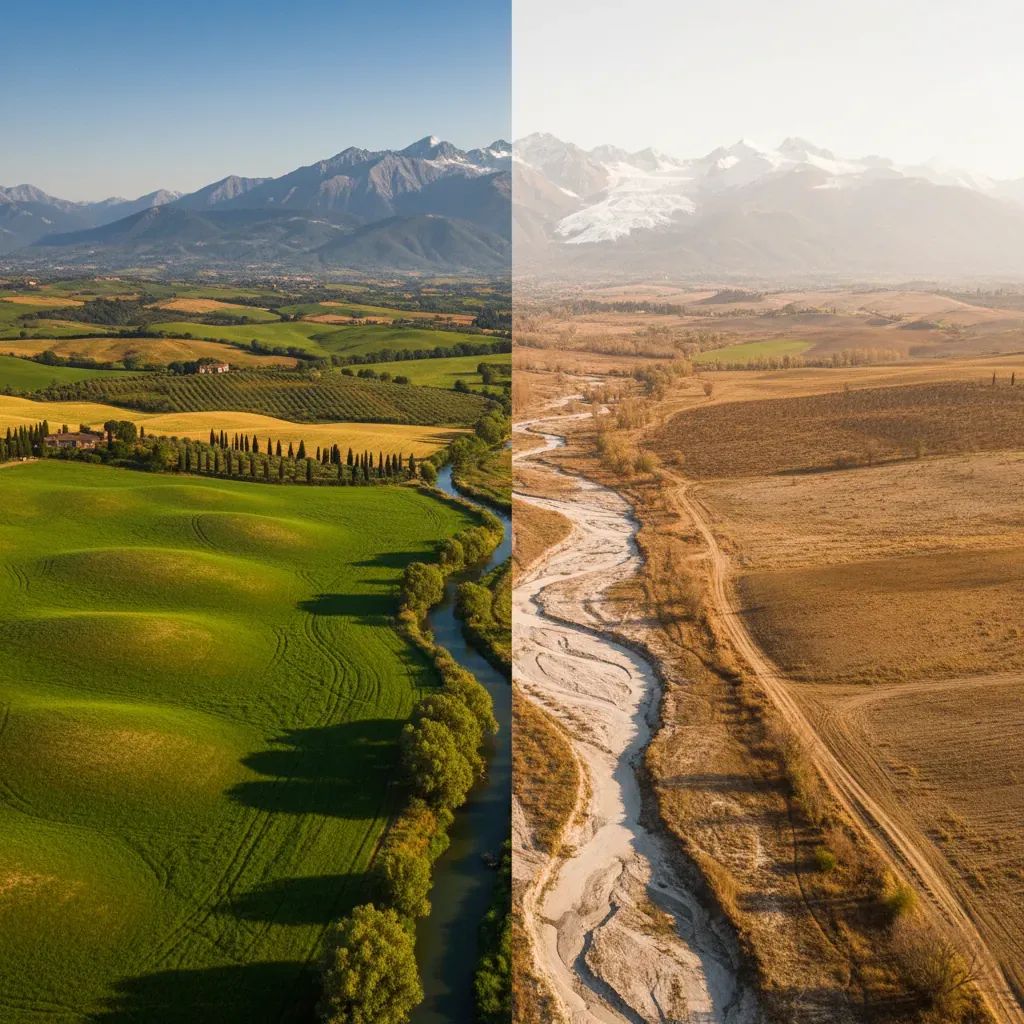
When summer temperatures climbed beyond survivable ranges across Europe in June 2026—a month that would become the second-hottest June on record—Italy's coordinated emergency response prevented mortality figures from matching those devastating neighboring nations. While the Italy Health Ministry documented a 3% excess death rate among residents over 65 during the two-week heatwave that consumed late June, preliminary European surveillance data documented far more severe outcomes: preliminary estimates suggest Germany recorded approximately 32% above-baseline deaths during the identical period, France's Paris region experienced mortality surges exceeding 120%, and Spain reported significant heat-attributable mortality across multiple heatwave cycles.
Why This Matters
• Regional variation exposes vulnerability gaps: Northern cities like Turin recorded notably higher excess mortality, yet Rome saw only 7%—revealing uneven preparedness across Italy's urban landscape.
• Systemic coordination appears to have saved lives: Italy's activation of its National Heat Prevention Plan on May 25, combined with daily heat bulletins, real-time mortality tracking, and targeted home visits for isolated elderly residents, appears to have contained preventable deaths relative to other Western European nations.
• Climate trajectory demands permanent structural change: June 2026 was the second-hottest June on record globally; climate projections suggest summer seasons will expand to 5-6 months by 2030, with routine temperatures exceeding 35°C becoming the norm rather than crisis.
• Practical action channels are now active year-round: The Italy Health Ministry's toll-free number 1500 (Monday-Friday, 9:00-17:00) provides real-time guidance on medication interactions with extreme heat and warning signs requiring emergency intervention.
The European Mortality Context
Mortality surveillance data across Europe during the June 2026 heatwave documented substantially higher mortality increases than Italy's national 3% figure. According to preliminary estimates from European health surveillance systems, more than 10,000 excess deaths were documented across Western Europe during the peak heatwave period, with France and Belgium experiencing particularly acute mortality spikes. Germany's Federal Statistical Office reported approximately 32% above-baseline mortality during the June 22-28 week, while France's Île-de-France region (encompassing Paris) experienced approximately 122% mortality increase during the same period, and Spain documented over 1,000 heat-linked deaths attributed to June heatwave events.
Against this continental context, Italy's 3% national average—despite troubling geographic disparities—suggests that coordinated intervention strategies substantially reduced what could have been thousands of preventable deaths comparable to neighboring nations.
Why Italy's Response Contained the Damage
The Italy Health Ministry formally activated its National Operational Plan for Heat Prevention on May 25, establishing a three-tier coordination mechanism spanning health authorities, civil protection officials, and regional administrators. The framework operates on three integrated pillars: meteorological forecasting to predict dangerous conditions 72 hours in advance, real-time mortality surveillance monitoring daily death patterns among vulnerable populations, and targeted protection protocols for identified at-risk populations.
Daily heat bulletins publish risk assessments for 27 Italian cities on a standardized four-level scale where Level 3 represents emergency conditions posing danger even to healthy individuals. Between May 25 and June 30, central and northern Italian cities averaged 10 consecutive days operating under Level 2 or Level 3 alert status, while southern regions averaged approximately 4 elevated-alert days. This early warning infrastructure enabled local health systems to shift resources before patient volumes overwhelmed capacity.
The "Piano Caldo 2026" framework activated at municipal level deployed expanded home care visits targeting isolated elderly residents living independently, systematic telephone monitoring protocols, and expedited emergency room triage for suspected heat illness. General practitioners flagged patients over 85 with chronic conditions living alone, triggering proactive welfare interventions. In selected regions, municipalities arranged direct medication delivery, meal provision, and grocery supply to homebound seniors. Some cities established lists of air-conditioned public spaces—municipal libraries, shopping centers, designated cooling shelters—offering free refuge during peak afternoon temperatures.
The Ministry distributed its "Proteggiamoci dal caldo 2026" campaign emphasizing concrete prevention measures: avoiding outdoor exposure between 11:00 and 18:00, consuming at least 1.5 liters of water daily regardless of thirst sensation (a critical intervention since elderly individuals often lose the sensation of thirst), maintaining light diets rich in fresh produce, and establishing neighbor check-in patterns for elderly residents without reliable cooling systems.
Where the System Demonstrated Vulnerability
National averages mask severe geographic disparities revealing uneven adaptation across Italian territory. Northern cities and smaller municipalities experienced significantly higher excess mortality rates during peak heat intensity. The Po Valley location creates meteorological conditions where high-pressure systems stagnate heat and prevent natural cooling—a geographic disadvantage without simple remedies.
The mortality burden concentrated overwhelmingly on residents over 85, the demographic cohort most vulnerable to dehydration, cardiovascular deterioration, and acute exacerbation of pre-existing conditions. Deaths during extreme heat rarely result from heatstroke directly; instead, extreme temperatures precipitate failure of existing diseases—heart disease, respiratory illness, kidney dysfunction, circulatory problems—under acute thermal stress. An 87-year-old with controlled hypertension becomes critically vulnerable when temperatures exceed 38°C for consecutive days because heat simultaneously dilates blood vessels, increases water loss through perspiration, and reduces the body's capacity to maintain stable blood pressure.
Actionable Steps for At-Risk Residents
The 3% national figure translates into specific preparedness actions for anyone over 65 or providing care for that demographic. Enroll in your municipality's vulnerable-resident monitoring program if available—many Italian comuni automatically trigger welfare checks for registered individuals during heat emergencies, ensuring isolation doesn't become life-threatening. Verify your general practitioner maintains updated contact information for reliable family members or neighbors capable of intervening if you become unreachable during emergencies.
Physical residence modifications provide measurable protection. Install external window shading—external shutters reduce heat penetration far more effectively than interior blinds or window coverings—and prioritize residence in buildings with substantial thermal mass such as stone or brick construction that naturally moderates temperature fluctuations. Portable air-conditioning units for sleeping areas prove particularly valuable if central systems are unavailable; nighttime cooling carries disproportionate importance because when nighttime temperatures remain above 20°C for consecutive days, the human body cannot recover from daytime thermal stress, leading to cumulative physiological deterioration.
The toll-free number 1500 provides practical information on how common medications interact with extreme heat—many blood pressure regulators, diabetes medications, and psychiatric drugs impair the body's natural cooling mechanisms—along with hydration strategies for those with fluid restrictions and warning signs requiring immediate emergency care. Critical symptoms include confusion or difficulty concentrating, dizziness, absence of sweating despite high temperatures, rapid or irregular heartbeat, and dark-colored urine indicating severe dehydration.
Climate Acceleration Reshaping European Summers
June 2026's temperature extremes fit within a documented acceleration pattern. Europe is warming at twice the rate of the global average, with mean temperatures rising approximately 0.56°C per decade since the 1990s. Attribution science—the field establishing how much warming influences specific weather patterns—has conclusively demonstrated that heatwaves of this magnitude would not occur without anthropogenic greenhouse gas emissions. The World Health Organization has declared this Europe's "new normal," cautioning that future summers will grow progressively more severe.
Climate projections from major research institutions indicate that by 2030, summer seasons could expand to 5-6 months, with dramatic increases in days exceeding 35°C. Southern Europe and the Mediterranean basin face disproportionate risk, with predictions suggesting the steepest temperature increases and extended drought periods. Under scenarios involving continued high greenhouse gas emissions, European average temperatures could climb 5-7°C above pre-industrial levels by 2100—a transformation that would render current heatwave response protocols entirely obsolete.
These projections carry immediate infrastructure implications: health systems must redesign summer capacity planning around annual mortality surges now, building codes require updating to mandate cooling infrastructure as a public health necessity, and urban design must prioritize shade networks and temperature-reflective surfaces. Without systematic adaptation, June 2026 mortality figures become routine rather than exceptional emergencies.
What Residents Face Now
Italian health authorities have committed to maintaining surveillance systems through September, with weekly analysis designed to detect mortality anomalies. The Italy Health Ministry's June 25 circular (n. 5234) directs regional health authorities to sustain emergency protocols and emphasize vulnerable population protection through the remainder of summer.
For residents, the pragmatic lesson mirrors pandemic-era preparations: summer now demands the same anticipatory planning once reserved for winter influenza season. Ensure adequate fluid supplies well in advance, identify accessible air-conditioned public spaces in your neighborhood, and establish regular check-in patterns with vulnerable neighbors. Contact your local municipality to confirm enrollment in heat emergency monitoring programs if your area maintains such registries.
The national 3% figure, while appearing modest relative to current baseline mortality, represents lives preserved through earlier intervention—and a baseline that effective public health coordination can maintain even as climate trajectories push temperatures higher. Survival in future heatwaves will depend not on chance but on preparation undertaken during cooler months.


