
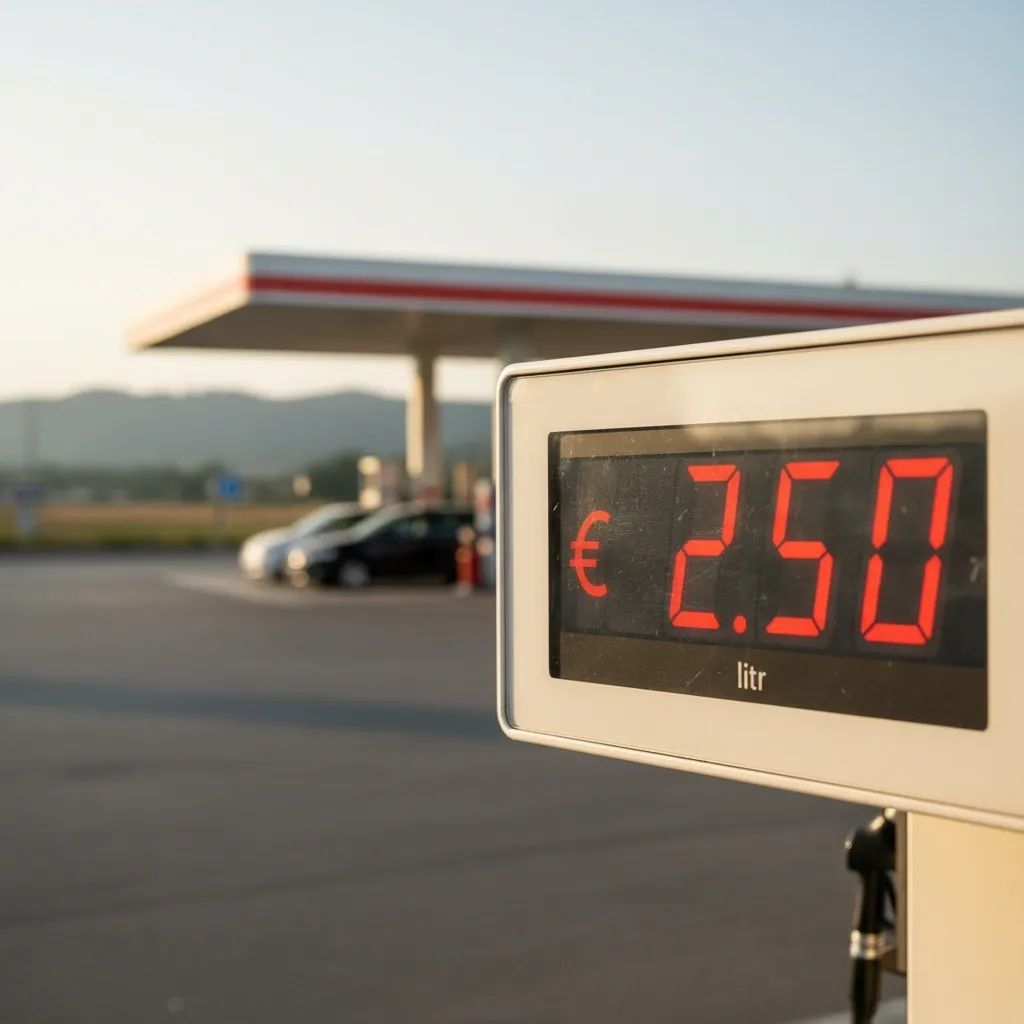
The Italy Ministry of Business and Made in Italy has summoned executives from the country's largest oil companies for a face-to-face meeting on Tuesday, June 30 at 5:30 PM, signaling heightened official concern over fuel pricing practices as consumer protection groups continue to voice frustration over pump prices that remain stubbornly elevated despite falling crude benchmarks.
Why This Matters
• Tuesday's June 30 meeting involves Eni, Q8, Api-Ip, and Tamoil—the four fuel majors who collectively control the majority of Italy's retail network.
• The gathering follows a U.S.–Iran memorandum that reopened the Strait of Hormuz, injecting new supply into global markets and sending Brent crude lower.
• Italy's Garante per la sorveglianza dei prezzi (price watchdog) will be watching for evidence of speculative pricing—a practice the government has warned against since early April.
• Fuel-excise reductions are set to expire around July 3, meaning pump prices could be affected by the outcome of Tuesday's meeting and government policy decisions.
The Geopolitical Catalyst
A provisional agreement between Washington and Tehran has allowed Iranian crude—sanctioned for years—to resume commercial flows through the Strait of Hormuz. That chokepoint, through which roughly one-fifth of the world's oil passes, had been intermittently disrupted during the spring, pushing Brent crude higher and lifting pump readings across the European Union. The accord is expected to add approximately one million barrels per day to global supply in the medium term, easing both tight inventories and inflationary pressure.
Yet the relief has been uneven. While wholesale Brent and West Texas Intermediate futures have declined, Italian motorists report that retail prices have not kept pace. Tuesday's meeting at Palazzo Piacentini—the ministry's historic seat—will give Business Minister Adolfo Urso the platform to demand a transparent and timely passthrough of lower input costs to the forecourt, according to an official statement.
A Pattern of Confrontation
This is not the first intervention. On April 9, Urso convened the same four companies in an attempt to forestall what the ministry termed "speculative phenomena at the pump." At that time, crude had begun retreating from earlier spikes, but consumer advocates complained of a lag—sometimes as long as two weeks—before retail listings followed suit. The ministry warned that margins between refinery gate prices and retail readings would be scrutinized and that persistent distortions could trigger additional regulation or sanctions under transparency rules overseen by the ministry's price supervisor.
Italy's anti-speculation toolkit includes mandatory disclosure of recommended retail prices and obligations to update digital price boards daily. Retailers who fail to comply face administrative fines. Nevertheless, structural factors can limit how fast pump prices respond. Accise e IVA—excise and value-added taxes—account for a significant portion of the retail price of gasoline, insulating the final figure from swings in crude; currency fluctuations, since oil is invoiced in dollars, can also dampen or amplify the effect of international price changes for euro-denominated buyers.
What This Means for Residents
For households, Tuesday's June 30 meeting occurs at a critical moment. Temporary fuel excise cuts that have been in effect since mid-March are set to expire around July 3. The outcome of Tuesday's discussion with oil company executives, combined with government decisions on whether to renew or extend these subsidies, will influence what residents pay at the pump in early July and beyond.
Consumer associations have noted that households driving regularly would face potential increases if the excise reductions end and retail margins do not adjust downward. The exact impact will depend on both the results of Tuesday's meeting and subsequent government policy decisions.
Retrofit Incentives Offer a Parallel Path
In a sign that Rome is pursuing multiple levers to ease transport costs, the ministry this week published the long-awaited decree allocating €21 million over 2026–2030 to support conversion of existing petrol and diesel vehicles to GPL or methane. The measure revives a scheme that proved popular, when installations of gas kits surged among families seeking lower-cost fuel alternatives.
Eligible vehicles span Euro 3 through Euro 6 classes and may be owned by individuals or legal entities. Assogasliquidi-Federchimica, the liquid-gas industry federation, welcomed the move, noting that the retrofit market has contracted significantly in recent years despite gas fuel's lower per-kilometer cost potential and CO₂ benefits. The federation described the decree as serving a triple objective: enabling families to continue using their cars in increasingly restricted urban zones, sustaining Italy's network of gas-component makers and conversion workshops, and cutting particulate emissions from the existing fleet.
Energy Headwinds Beyond the Pump
The fuel picture sits within a broader squeeze on household energy budgets. Italy's energy regulator, Arera, announced that the protected-tariff electricity rate will climb 4.6% in the July–September 2026 quarter, driven by anticipated higher wholesale power prices and lingering geopolitical uncertainty. The tariff applies to roughly three million vulnerable consumers—pensioners, low-income households, and those with serious health conditions—who have not migrated to the liberalized market.
Combined with the expiring fuel subsidy, the electricity hike underscores the challenge facing policymakers who must balance fiscal discipline against cost-of-living pressures heading into the second half of the year.
Outlook: Transparency Versus Market Reality
Tuesday's June 30 closed-door session will test the government's ability to extract concrete commitments without resorting to price controls, which risk distorting investment signals and supply. Industry representatives are expected to discuss global supply chain dynamics, inventory replenishment timelines, and the cost components embedded in fuel pricing.
Urso's leverage rests on heightened public scrutiny and the ministry's authority to tighten disclosure rules or recommend legislative action. With cost-of-living pressures evident and inflation concerns, the political importance of appearing engaged on fuel prices is significant.
For residents, the practical takeaway is to monitor pump prices closely as we approach early July. The combination of Tuesday's meeting outcome and government decisions on fuel excise extensions will shape what happens to fuel costs in the coming weeks.


