
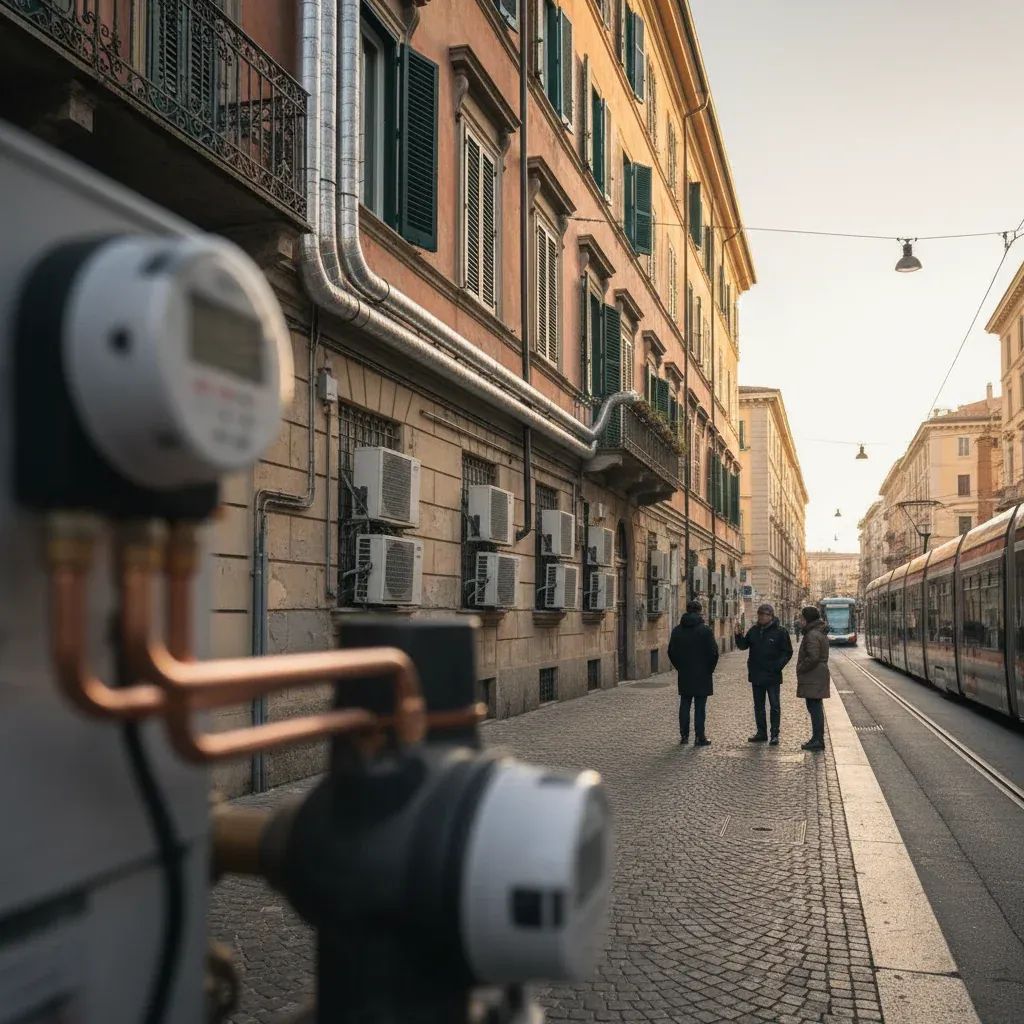
The Italy energy market is confronting a renewed spike in natural gas prices, with benchmark contracts on the Amsterdam TTF exchange breaching the €45 per megawatt-hour (MWh) threshold today—the highest level recorded since mid-June. The surge reflects intensifying competition with Asian buyers for liquefied natural gas (LNG) shipments and persistent geopolitical friction across the Middle East.
Why This Matters
• Household impact: Higher wholesale gas costs typically filter into electricity bills within 2–3 months, especially for homes on variable-rate contracts.
• Storage shortfall: Europe's gas reserves currently sit at 48% of capacity, well below the 61% five-year average, raising the risk of winter supply crunches.
• Investment signal: Energy-heavy sectors—chemicals, ceramics, steel—face renewed margin pressure if prices hold above €45/MWh through autumn.
• Policy friction: The Italy Cabinet and EU regulators are accelerating plans to decouple electricity pricing from gas benchmarks, though implementation remains months away.
What Drove the Rally
Natural gas futures for August delivery climbed 2.4% to settle at €45.07/MWh on the TTF hub, the European reference market. The morning session had opened at €44.68, already marking a 1.5% gain from the prior close. By mid-afternoon, spot quotes touched €45.66 before easing slightly.
Two forces converged to drive the move. First, Asian LNG buyers have re-entered the spot market aggressively, spurred by a heat wave across China and South Korea that has pushed air-conditioning demand to seasonal peaks. Second, Middle East supply risks remain elevated. Traders are pricing in the possibility of renewed tensions around the Strait of Hormuz, through which roughly one-fifth of global monthly LNG flows transit. Qatar's Ras Laffan export facility has experienced intermittent disruptions since late February, and planned expansion projects have been delayed into 2027.
Europe's Storage Dilemma
The continent's gas inventories lag historical norms at a critical juncture. Europe's storage sites currently stand at 48% full—eight percentage points below the five-year average. Under EU regulation, member states must reach 80% capacity by December 1, a target that now appears increasingly tight.
Italy's position is marginally more secure, with domestic reserves running above the EU average. However, the country's heavy reliance on gas-fired power generation—natural gas supplied 59% of Italy's electricity in the first quarter—means wholesale price swings translate quickly into grid costs. Every rise in gas prices pushes up electricity bills for Italian households. The Italy Energy Authority (ARERA) has warned that failure to meet storage goals could expose households and businesses to sharp tariff increases if winter weather turns severe.
The Asia Factor
China's gas demand is the primary driver of current European price pressures. After subdued growth in 2025, Chinese industrial output has rebounded, lifting gas consumption. Beijing has locked in new long-term LNG supply agreements with exporters in Qatar, Australia, and the United States, but those volumes will not fully arrive until the fourth quarter. In the interim, Chinese traders are covering incremental demand on the spot market, where they are willing to pay premium prices. This competition is diverting U.S. LNG cargoes—which historically sailed predominantly to Europe—eastward in response to stronger Asian price signals. If this competition remains elevated through late summer, Europe could face a bidding war that drives TTF prices toward €50/MWh or higher.
What This Means for Italy Residents
Immediate Action Steps:
For households, the immediate effect will vary by contract type. Customers on regulated tariff plans tied to the Authority's quarterly reference price can expect upward revisions in the October update if wholesale quotes remain above €45. Those on variable-rate private contracts indexed to TTF will see adjustments within 30–60 days. Fixed-rate subscribers are insulated until renewal, though providers are already quoting higher rates for new annual agreements signed after mid-July.
Three practical steps to manage rising costs:
Review your contract before autumn renewal. Many providers are now offering two-year fixed-rate plans at elevated rates, but locking in protection against further volatility may be worthwhile. Contact your supplier to compare options before October.
Consider solar panel installations if you have rooftop space. Italy's national subsidy scheme covers up to 50% of installation costs through tax deductions spread over ten years. Payback periods have shortened to under six years at current electricity prices.
Install AI-enabled smart thermostats. These devices optimize heating schedules to avoid peak-tariff hours. ARERA data indicate households using such devices cut winter gas consumption by an average of 18%.
Industrial consumers—particularly in energy-intensive sectors such as glass manufacturing, textiles, and food processing—are revisiting hedging strategies. Because gas-fired plants set the marginal cost of power during peak hours in Italy's merit-order dispatch system (where the most expensive plant needed sets the price for all), every €5 increase in TTF typically lifts wholesale power prices by approximately €8–10 per MWh. ARERA's latest market monitoring bulletin flagged this linkage as the primary driver of Italy's persistently higher electricity costs relative to France and Spain.
Policy Countermeasures in Motion
The Italy Cabinet has prioritized two medium-term responses. First, the government is accelerating renewable capacity additions, targeting 12 gigawatts of new solar and wind installations in 2026 alone. Renewables accounted for 41.5% of Italy's electricity generation in 2024, and officials aim to lift that share above 50% by the close of 2027. Every additional gigawatt of wind or solar reduces the country's hourly dependence on gas-fired dispatch, dulling the transmission of gas price shocks into household bills.
Second, ARERA is advancing a new regional pricing system for electricity, scheduled for pilot rollout in early 2027. The plan would replace Italy's single national wholesale price with regional benchmarks that better reflect local generation costs. Southern regions with abundant solar capacity would see lower tariffs, while northern industrial zones reliant on gas peaking plants would face higher rates.
At the EU level, the European Commission is preparing revised energy taxation rules that would make renewable electricity cheaper relative to fossil gas. Brussels is also extending the strategic gas storage mandate through 2027 and has proposed tighter monitoring of TTF trading to curb speculative excess.
Outlook and Hedging Options
Commodity strategists anticipate TTF prices will trade in a €43–€50 range through the third quarter, with the risk skewed toward the upper bound if Middle East tensions escalate. By year-end, forecasts converge around €46–€47/MWh, assuming Europe meets its storage target and winter temperatures remain near seasonal norms.
Industrial buyers are increasingly turning to financial tools—including TTF futures and options—to manage quarterly budget risk. These contracts allow procurement teams to lock in maximum prices, though they require upfront deposits. Consulting firms specializing in energy risk management report a 40% increase in inquiries from mid-sized Italian manufacturers since May.
The broader trajectory points toward a multi-year period of elevated price volatility as Europe completes its energy transition. Until renewable capacity and storage infrastructure expand sufficiently to absorb demand swings without gas-fired backup, the continent—and Italy in particular—will remain vulnerable to the same geopolitical and logistical shocks that are playing out this week on the Amsterdam exchange. For now, the €45 threshold serves as a reminder that energy security carries a tangible cost, one that will continue to reshape household budgets and industrial competitiveness for years to come.


