
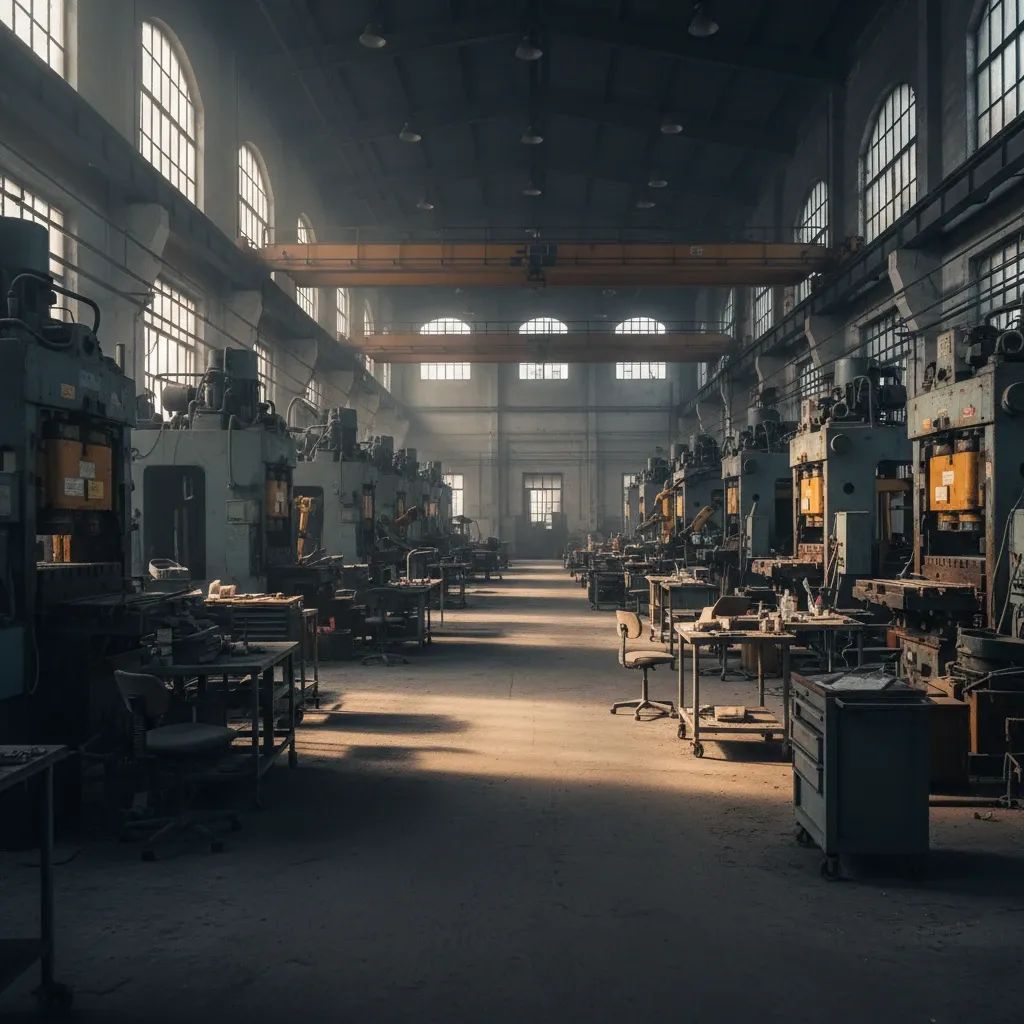
The Italy Ministry of Enterprise and Made in Italy has rejected Electrolux's restructuring plan as "unacceptable," setting up a showdown on Sunday, May 25, that will determine whether 1,700 jobs can be saved across five manufacturing sites.
Why This Matters
• Over 1,700 workers face layoffs — rising to 1,900 when temporary contracts expire — representing more than 40% of Electrolux's workforce in Italy.
• One factory closure confirmed: The Cerreto d'Esi plant in the Marche region, employing 170 people, is slated for shutdown.
• National strike Sunday: A coordinated eight-hour walkout across all Electrolux facilities will coincide with the ministry meeting, signaling union determination.
• Government demands a full reset: Minister Adolfo Urso has pledged to request a complete withdrawal of the current plan and a new proposal without mass redundancies.
Government and Regions Form United Front
Following a closed-door session between Ministry of Enterprise and Made in Italy (Mimit) representatives and officials from the five regions hosting Electrolux plants, a unanimous position emerged: no acceptance of job cuts or factory closures until Electrolux presents a credible investment and innovation roadmap.
The affected facilities span across the country: Porcia in Pordenone (Friuli-Venezia Giulia), Susegana in Treviso (Veneto), Forlì (Emilia-Romagna), Cerreto d'Esi in Ancona (Marche), and facilities in Lombardia. This geographic spread underscores the national significance of the crisis, affecting industrial employment across multiple regions from north to south.
Urso, who has been coordinating the institutional response, stated explicitly that the ministry will demand the Swedish multinational "immediately withdraw" its reorganization blueprint at the scheduled May 25 table. "We will request a new industrial plan from Electrolux, one that opens genuine dialogue with government, regions, and unions, and that does not include collective dismissals," he emphasized.
The unified stance reflects growing frustration with foreign multinationals that have downsized Italian operations while maintaining production elsewhere in Europe or shifting to lower-cost markets. The government's strategy hinges on defending Italy's manufacturing capacity, safeguarding employment, and rejecting any decision that undermines the group's industrial future in the country.
What's Driving Electrolux's Retrenchment
Electrolux's restructuring forms part of a global efficiency drive aimed at cutting roughly 3,000 positions over two years, with Italy bearing the brunt — more than half of the global total. The company cites persistent weak demand in European appliance markets, rising production costs, and intensifying competition from lower-priced Asian manufacturers, particularly Chinese rivals.
The group's stock has plunged 75% from its 2021 peak, pressuring management to improve profitability by rationalizing product configurations, consolidating production volumes, and focusing on premium segments. In practical terms, this means Susegana in Treviso will remain the only European site for built-in refrigeration, concentrating on high-end products, while Porcia in Pordenone will lose its washer-dryer lines, and Forlì will cease cooktop manufacturing.
The Cerreto d'Esi facility, which specializes in kitchen hoods, faces outright closure. Staff cuts are planned across all remaining sites, affecting not just production workers but also research, development, and administrative teams — a point of particular concern for unions representing the Porcia hub, historically a center for appliance innovation.
Porcia Workers Lead the Resistance
Hundreds of workers gathered outside the Electrolux plant in Porcia on Tuesday morning for a public assembly organized by the metalworkers' unions Fim, Fiom, and Uilm, alongside company representatives. The mobilization marks an escalation in the campaign against what unions describe as a "hollowing out" of Italian production capacity.
Trade union leaders argue that relocating washer and washer-dryer lines, combined with deep cuts in research and staff functions, will effectively gut the site's strategic value, turning it into a marginal assembly operation or worse. The Porcia facility has long been a flagship R&D center for Electrolux in Europe, making the proposed downsizing especially controversial.
Marco Sartini, mayor of Porcia, has convened an extraordinary meeting of all mayors in Pordenone province for Thursday evening at 6:30 p.m. in the municipal council chamber. The session aims to forge a unified municipal response ahead of the May 25 ministry table. Luca Ciriani, Minister for Relations with Parliament, is expected to attend, underscoring the political weight now attached to the crisis.
What This Means for Residents
For anyone living near an Electrolux site — or within the broader industrial ecosystems of the affected regions — the outcome of Sunday's negotiation could reshape local economies. Job losses on this scale ripple outward: reduced spending power, pressure on municipal budgets, strain on social services, and potential secondary layoffs among suppliers and service providers.
The Marche region, already grappling with demographic decline and limited industrial diversification, faces the loss of a major employer if Cerreto d'Esi closes. In Friuli-Venezia Giulia, the Porcia plant supports a network of subcontractors and logistics firms; its downsizing threatens clusters of smaller businesses that depend on Electrolux orders. Meanwhile, Veneto residents employed at the Susegana facility also face uncertainty as the site is restructured to focus exclusively on premium refrigeration products.
Broader implications extend to industrial policy debates across Italy. The standoff highlights vulnerabilities in Italy's position within global value chains: when multinational firms pursue cost reduction, Italian plants — often burdened with higher labor costs and regulatory complexity — become targets. Government officials have hinted at exploring European-level measures to counter Chinese competition, including anti-dumping tariffs and stricter product standards, but concrete policy shifts remain uncertain.
Historical Precedents and Likely Outcomes
Italy's record with multinational industrial crises offers both cautionary tales and occasional successes. The Fiat dispute of 1980, marked by the "march of the forty thousand," ended with partial compromises but substantial suspensions. Alitalia's prolonged agony consumed billions in public funds before morphing into a state-owned successor. The ex-Ilva steel complex in Taranto remains mired in environmental, financial, and labor disputes years after international players entered and exited.
More recently, worker buyouts (WBO) have proven viable for small and medium enterprises, with survival rates above 90% after three years. Whether that model could apply to a multinational subsidiary like Electrolux — where headquarters in Stockholm retains ultimate control — is doubtful.
The government's leverage stems primarily from public pressure and regulatory scrutiny. Italy cannot legally block restructuring per se, but it can delay, complicate, and impose social costs through prolonged negotiations, incentive withdrawals, and reputational damage. Urso's hardline stance may compel Electrolux to scale back job cuts or phase them over a longer period, but a full reversal appears improbable without new market conditions or strategic pivots.
What Happens Next
All eyes turn to Palazzo Piacentini on Sunday afternoon, where ministry officials, regional delegations, union leaders, and Electrolux executives will sit down at 3:00 p.m. on May 25. The eight-hour strike and accompanying protest outside the building will signal worker resolve and create a tense backdrop for negotiations.
If Electrolux refuses to withdraw the plan, the government has hinted at escalating measures, potentially including suspension of public contracts, withdrawal of regional incentives, or referral to European authorities for review under state aid and competition rules. However, legal experts note that Italy's room for maneuver is constrained by EU single-market regulations and labor flexibility norms.
Unions have vowed to continue mobilization beyond Sunday, with further strikes and local assemblies planned if the talks fail. Meanwhile, Pordenone mayors and Marche officials are preparing parallel advocacy efforts, including appeals to members of the European Parliament and coordination with German and Polish representatives whose regions also host Electrolux facilities.
The drama unfolding ahead of the May 25 meeting encapsulates a larger tension: how Italy can retain industrial capacity in a globalized, cost-driven market where multinationals shift production fluidly across borders. For the 1,700 workers and their families, the answer will arrive soon — but the broader question remains unresolved.


