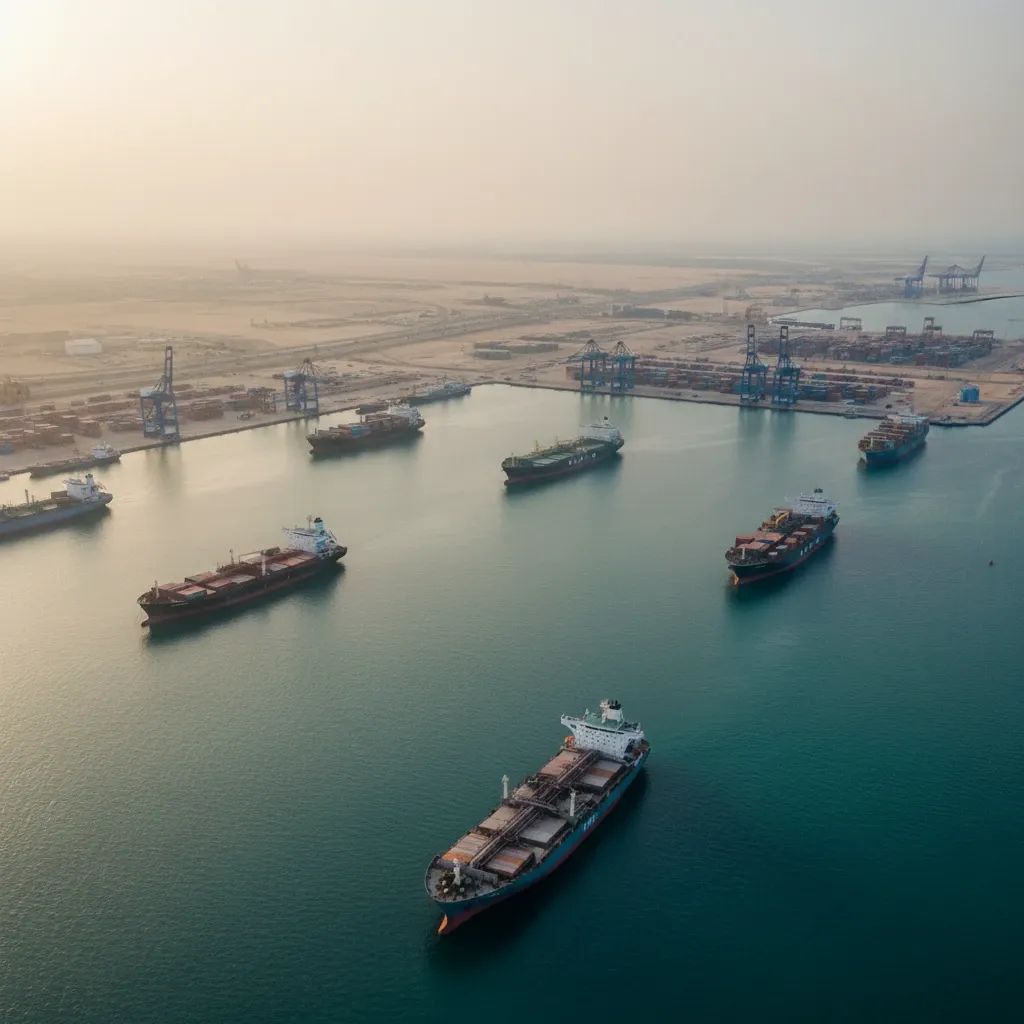
The Italy Energy Market Operator (GME) has recorded a wholesale electricity price of 144.09 €/MWh for the week of July 6–12, marking a 6.8% increase over the previous seven days and underscoring the volatility gripping Italy's energy sector. At the same time, natural gas futures have surged for the third consecutive week, climbing 6.3% to close at 58.24 €/MWh on the Amsterdam TTF exchange, driven by escalating tensions in the Persian Gulf.
Why This Matters
• Wholesale power costs jumped nearly 10 euros in a single week, a spike that will ripple through household and business electricity bills in the coming months.
• Gas storage in Italy has crossed 70% capacity for the first time this year—a buffer against supply shocks but no shield from price volatility.
• Inflation pressure is intensifying: the Bank of Italy now projects 3.1% consumer price inflation for 2026, with energy driving the bulk of the increase.
• GDP growth estimates have been revised down to 0.4% for 2027, with the central bank citing "elevated risk" from the Strait of Hormuz crisis.
Energy Price Surge Tied to Geopolitical Stress
Italy's electricity market is reacting sharply to the breakdown of the U.S.–Iran accord announced on June 14. Wholesale power traded on the GME platform averaged 144.09 €/MWh for the week ending July 12, up from 134.85 €/MWh the week prior. Daily spot prices have since climbed higher: on July 16, the PUN (National Single Price) hit a 2026 peak of 170.47 €/MWh, the highest level recorded since hostilities in the Middle East intensified.
Regional price disparities remain pronounced. Sardinia saw the lowest average at 142.52 €/MWh, while Sicily paid the most at 147.38 €/MWh, reflecting infrastructure bottlenecks and limited grid interconnection on the islands. Trading volumes on the GME exchange totaled 5.5 million MWh for the week, with market liquidity holding steady at 83.7%.
Natural gas futures are following a parallel trajectory. The TTF contract for August delivery closed at 58.24 €/MWh, levels last seen in March and 53.57 €/MWh above early-year lows. The rally reflects not only Middle East supply fears but also seasonal demand: Italy's summer heat wave has driven air conditioning use to record highs, tightening the electricity-gas nexus that underpins Italian power generation.
Italy's Storage Buffer: Strong but No Guarantee
Italy's gas storage facilities reached 70.75% capacity—193.43 TWh—by mid-July, matching the fill rate from the same period in 2025. The milestone is significant: Italy has 203.42 TWh of total storage capacity, the second-largest in the EU after Germany's 246.79 TWh. At present, German storage stands at just 44.26% (109.22 TWh), while the EU average sits at 52.21% (590.2 TWh).
The robust fill level offers some insulation against supply disruptions, particularly if the Strait of Hormuz—through which roughly 30% of global liquefied natural gas transits—faces prolonged closure. However, storage does not set prices: futures markets do, and those are pricing in risk premiums that translate directly into higher costs for consumers and industry.
What This Means for Residents
For Italian households, the wholesale price increase is a leading indicator of higher retail bills. The PUN serves as the benchmark for most variable-rate electricity contracts. While the full retail price includes transmission fees, system charges, and VAT—bringing the all-in cost to between 0.25 and 0.35 €/kWh for a typical family in June—the PUN accounts for the largest variable component.
A family consuming 2,700 kWh annually could see an additional €70–90 in electricity costs over the second half of 2026 if wholesale prices remain at current levels, erasing much of the €200 in expected annual savings projected earlier in the year. The Italian government has responded with targeted relief: a €115 one-time electricity subsidy for 2026 is being distributed to 2.7 million households already receiving the social bonus, supplementing the existing €200 annual support.
For businesses, the calculus is more severe. Italian industrial electricity prices in the first half of 2025 averaged €278/MWh, nearly 30% above the EU average. The current spike threatens to add roughly €10 billion in annual energy costs for Italian companies in 2026, compressing margins in energy-intensive sectors like metallurgy, chemicals, and hospitality. Trade group Confcommercio has called for the elimination of general system charges on electricity bills and a formal decoupling of power prices from gas benchmarks.
Bank of Italy Warns of Stagflation Risk
The Bank of Italy's July economic bulletin, released with data current through July 16, paints a cautious picture. The central bank projects 0.6% GDP growth for 2026 (adjusting for Istat revisions and working-day effects), slowing to 0.4% in 2027 and recovering to 0.9% in 2028. The 2027 figure represents a 0.1 percentage point downward revision from the April forecast.
Inflation, meanwhile, is accelerating. The central bank now expects 3.1% average consumer price inflation for 2026, "primarily reflecting higher energy prices," before moderating to 2% in the 2027–2028 biennium. That trajectory mirrors the broader eurozone, but Italy's growth performance lags significantly: the euro area is forecast to expand 0.8% in 2026, 1.2% in 2027, and 1.5% in 2028—nearly double Italy's pace despite the €166 billion in PNRR (Recovery and Resilience Plan) funds disbursed to the country, much of it channeled into public investment.
The central bank's baseline scenario assumes the Strait of Hormuz situation stabilizes. Should hostilities persist or shipping lanes remain closed, the downside scenario is stark: "Particularly pronounced negative impacts on growth," driven by further energy price surges and intensified inflation.
Government Response: Subsidies and Structural Reforms
Beyond household subsidies, the Italian government is pursuing a multi-pronged strategy. A "business decree" currently in preparation aims to streamline permitting for renewable energy projects—wind and solar in particular—to reduce the bureaucratic lag that has slowed capacity additions. Officials estimate that Italy could unlock €13–14 billion in flexible EU investment capacity over the 2026–2028 period, earmarked exclusively for capital projects rather than operating subsidies.
The government is also encouraging Power Purchase Agreements (PPAs) for small and medium enterprises, allowing direct long-term contracts for renewable electricity at fixed prices, insulated from gas market volatility. The GSE (Energy Services Operator) will act as guarantor of last resort for aggregated demand coordinated through trade associations and the Acquirente Unico (Single Buyer).
On the fiscal side, the government has raised the IRAP (regional production tax) on energy companies from 3.9% to 5.9% for 2026–2027, using the additional revenue to fund electricity price rebates for businesses: €3.40/MWh in 2026, €4/MWh in 2027, and €0.54/MWh in 2028. Italy is also lobbying the Eurogroupto extend Stability and Growth Pact exemptions for energy support measures, similar to the carve-out already granted for defense spending.
Consumer and Industry Adaptation
Survey data from July reveal that 86% of Italians expect further price swings, and 82% anticipate a meaningful hit to household budgets. In response, 87% express interest in consumption-monitoring tools and predictive billing. Many are shifting to Class A appliances, LED lighting, and leveraging the Ecobonus tax deduction for home energy efficiency retrofits.
Businesses are doubling down on digitalization and energy efficiency, while lobbying for structural reforms. Confindustria, Italy's main employers' federation, has proposed decoupling renewable electricity pricing from gas benchmarks and cutting system charges to close the competitiveness gap with Spain, France, and Germany.
Outlook: Volatility Likely to Persist
Forward curves suggest a potential easing of gas prices in the autumn, assuming no further escalation in the Persian Gulf. However, electricity remains tied to gas-fired generation—roughly 50% of Italy's power mix—and summer cooling demand has demonstrated how quickly the market can tighten. The PUN has already gained 53.58% year-to-date through mid-July.
Italy's energy resilience has improved since the 2022 crisis, thanks to diversified LNG import terminals and accelerated renewable capacity. Yet structural vulnerabilities remain: high gas dependency, elevated network costs, and slow renewable deployment continue to leave households and businesses exposed to external shocks. For now, the combination of geopolitical risk and seasonal demand ensures that Italy's energy market will remain one of the most closely watched—and most expensive—in Europe.