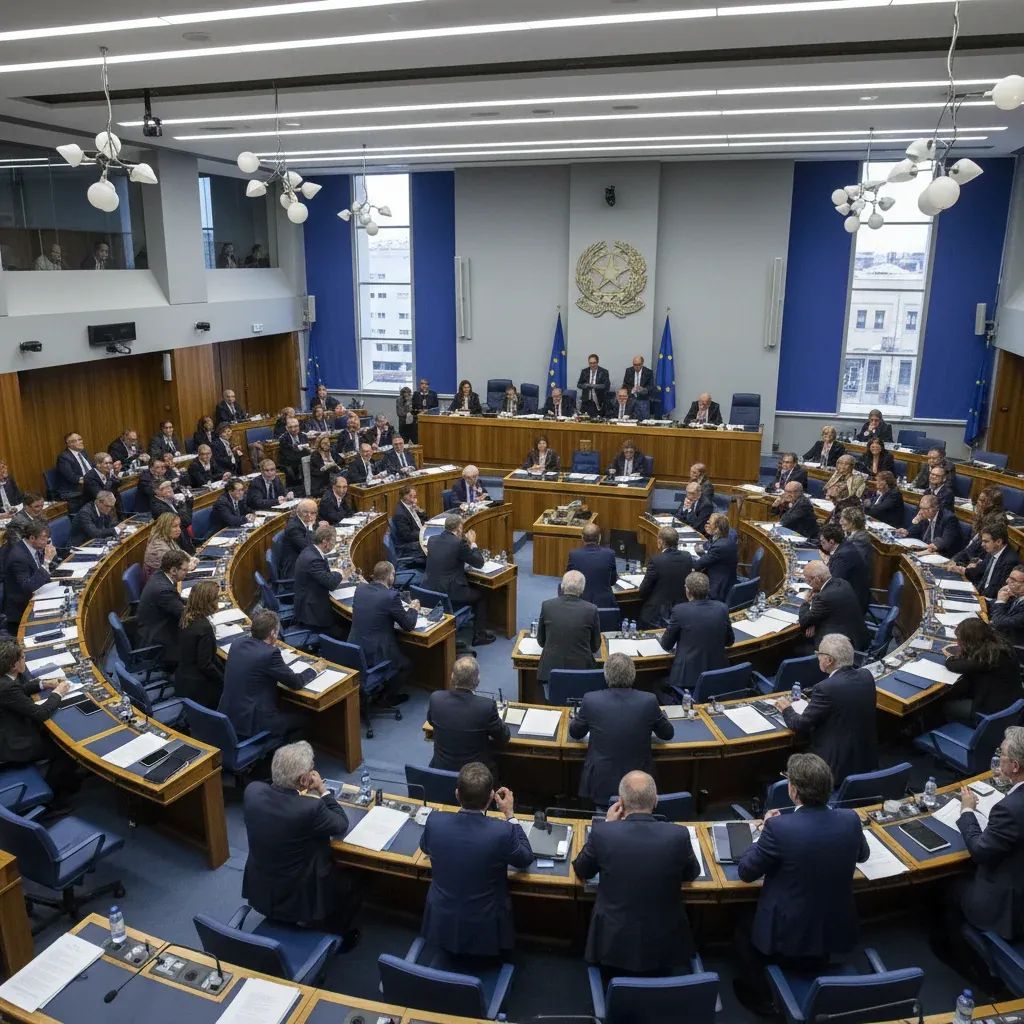
Antonio Tajani, Italy's Foreign Minister and Forza Italia leader, has signaled that parliamentary groups will decide independently whether to support voter preference ballots in the country's electoral law reform, a move that leaves the door open for amendments when the controversial legislation reaches the Senate in September 2026. The statement comes amid escalating friction within Italy's center-right coalition over a reform that could fundamentally reshape how Italians elect their representatives.
Why This Matters
• Senate debate resumes in September: Amendments reintroducing up to three voter preferences are expected, despite being rejected by a single vote at the Chamber on July 14, 2026.
• Coalition stability at stake: Prime Minister Giorgia Meloni has reportedly warned of early elections if the preference system fails again, raising the political temperature.
• Voter autonomy at stake: The outcome will determine whether Italian voters can pick specific candidates or remain limited to party-chosen lists.
The Preference Ballot Controversy
The so-called "Stabilicum" electoral reform passed Italy's Chamber of Deputies on July 16, 2026, establishing a proportional system with a 70-seat governability bonus for any coalition securing at least 42% of the national vote. But the version that advanced contains no voter preference mechanism—candidates are listed in fixed order on blocked party lists, meaning voters cannot choose individual representatives beyond selecting a party slate. This blocked-list system empowers parties to handpick candidates in a predetermined order, stripping voters of the ability to select specific individuals.
That wasn't supposed to happen. Just two days earlier, Fratelli d'Italia, Noi Moderati, and the UDC had proposed an amendment allowing voters to express up to three preferences from a list of six candidates, while keeping the top spot reserved for party leaders. The measure had formal backing from the entire center-right majority, including Lega and Forza Italia, both of which initially opposed preferences but eventually agreed to the compromise.
Then came the secret ballot. The amendment failed by a single vote—188 against, 187 in favor—on July 14, 2026, exposing deep fractures within the governing coalition. Estimates suggest between 30 and 53 "franchi tiratori" (rogue voters) from the center-right ranks defied party instructions, exploiting the anonymity of the secret vote to sink the proposal.
Tajani's Strategic Ambiguity
Speaking on RTL radio, Tajani adopted a carefully neutral posture. "On the issue of preferences, there will be amendments," he said. "We will evaluate them, discuss them, and the groups will decide in complete freedom what to do."
Tajani's brief statement, made on RTL radio, comes against the backdrop of a complex reform battle. It marks a subtle shift from Forza Italia's earlier positions. On July 14, 2026, the party had supported the preference amendment alongside coalition partners. After the vote collapsed, Tajani downplayed the political fallout, insisting government stability was not at risk. By July 22, 2026, he had declared the electoral law "fine as it is" without preferences, while leaving open the possibility of supporting allies' amendments.
His latest remarks acknowledge what many in Rome already know: Forza Italia's parliamentary group is divided. The party, rooted in the Berlusconi tradition of centralized candidate selection, has members who view preference voting as a threat to leadership control. Others see it as a populist necessity. Tajani's "full freedom" language appears designed to manage both factions without forcing a public rupture.
The Franchi Tiratori Problem
Tajani also addressed the elephant in the chamber: the secret ballot defections that torpedoed the preference amendment. "If there were rogue voters, they were in all parties, not just Forza Italia," he said. "Some parliamentarians did not vote according to what was decided in the parliamentary group meeting, but this happened in other center-right parties as well. It is everyone's responsibility."
The franchi tiratori phenomenon—parliamentarians who vote against their party line under cover of secrecy—has long plagued Italian politics, particularly during high-stakes votes like presidential elections. In this case, the Chamber's secret ballot rules allowed dozens of center-right deputies to sabotage their own coalition's proposal without facing public accountability.
That dynamic will change in the Senate. Unlike the Chamber, the Senate does not permit secret ballots for this type of legislation, meaning any future defections will be recorded and attributable. This procedural shift could either force Forza Italia senators into line or expose internal dissent more starkly.
What This Means for Residents
For Italian voters, the stakes are both symbolic and practical. In a blocked-list system, the party determines the fixed order of candidates, and voters cannot choose specific individuals—they select only the party. This empowers party machines to handpick representatives, insulating candidates from direct accountability to constituents. Critics argue this reinforces a patronage-based political culture and weakens the link between elected officials and their geographic or demographic communities.
A preference-based system, by contrast, allows voters to reward individual candidates based on local reputation, policy positions, or demographic representation. The proposed amendment would have required gender alternation among preferences, potentially increasing the number of women in Parliament. It also would have preserved party control over the top candidate in each district, a compromise meant to balance leadership prerogatives with voter autonomy.
The broader electoral framework also carries significant implications. The governability bonus—up to 70 extra seats in the Chamber and 35 in the Senate—is designed to ensure stable majorities even in Italy's fragmented political landscape. But it only kicks in if a single coalition or party surpasses 42% nationally and wins both houses. Below that threshold, the system reverts to pure proportional representation, potentially producing the kind of legislative gridlock that has historically plagued Italian governance.
The September Showdown
Prime Minister Giorgia Meloni has made clear she intends to revive the preference amendment when the bill reaches the Senate. Her party, Fratelli d'Italia, has framed the reform as a democratic enhancement, while Noi Moderati has already announced plans to reintroduce the measure. Lega has signaled support, viewing the compromise as acceptable given the retention of blocked top slots.
Forza Italia remains the coalition's wild card. Senator Roberto Rosso has indicated that the "real decisions" on the electoral reform will come in September, when the Senate takes up the bill. Tajani's insistence on "full freedom" for parliamentary groups suggests the party leadership will not impose a hard line—a posture that could either facilitate compromise or invite further defections.
The opposition, meanwhile, is expected to slow the legislative process as much as possible, using procedural tools to delay final approval. If the preference amendment fails again, or if coalition infighting intensifies, Meloni's reported threat of snap elections could move from political rhetoric to constitutional reality.
The Road Ahead
Italy's electoral law has been rewritten repeatedly over the past two decades, reflecting chronic disagreement over how best to balance representation, governability, and party power. The current debate encapsulates those tensions: Meloni seeks a system that empowers her governing majority, Forza Italia navigates internal divisions over candidate selection, and Lega calculates whether preferences help or hurt its territorial base.
For residents, the outcome will determine not just who gets elected, but how responsive those officials are to voter concerns. A blocked-list system privileges party loyalty; a preference system privileges local engagement. The difference may seem technical, but it shapes the daily experience of democratic accountability—whether a constituent's complaint about infrastructure, healthcare, or taxation reaches an MP who owes their seat to voters or to party leadership.
The Senate debate begins in earnest when Parliament reconvenes after the summer recess. Until then, Tajani's carefully calibrated ambiguity reflects the reality that Italy's ruling coalition has yet to resolve whether it trusts voters more than it trusts itself.