
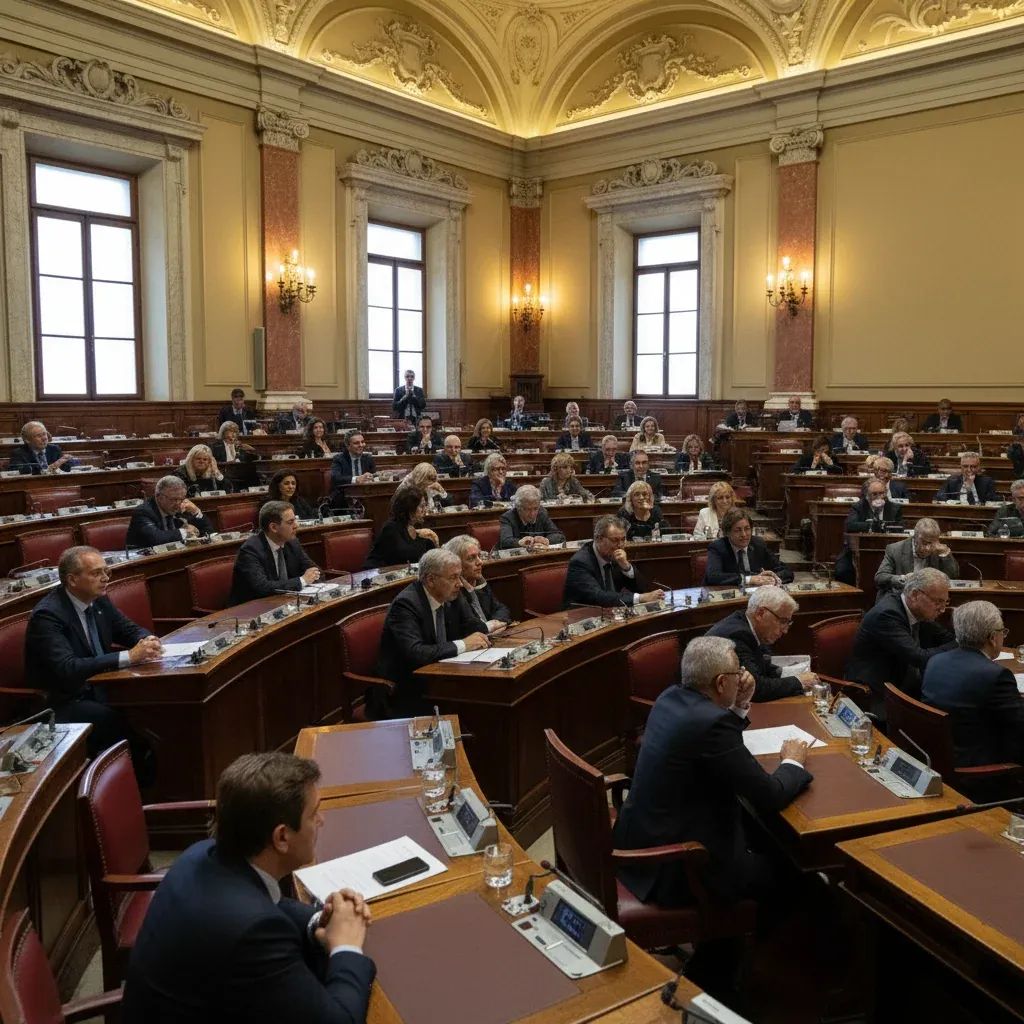
The Italian Parliament debated two contentious electoral reforms in July 2026 that could reshape how residents vote and who they elect. The center-right majority has committed to enabling out-of-district voting for an estimated 5 million citizens, while discussions over preference voting have created significant internal divisions within both coalition and opposition parties.
Why This Matters
• Out-of-district voting will let students, workers, and patients vote where they're temporarily domiciled—eliminating the need to travel back to your hometown for elections.
• The preference system debate centers on a key question: should voters pick individual candidates, or should party leaders determine candidate rankings?
• Catholic-Democratic members within the center-left are engaging with their party leadership on electoral representation, reflecting different perspectives within the Democratic Party (PD).
Breaking the Residency Lockout
For decades, Italy has required citizens to return to their registered hometown to cast a ballot—a significant logistical challenge for university students in Milan whose legal residence remains in Sicily, or contract workers stationed in Turin for extended assignments. The July 2026 parliamentary discussions addressed this long-standing issue.
On July 10, 2026, Angelo Rossi, the Brothers of Italy (FdI) rapporteur steering the electoral reform bill, confirmed that the ruling coalition would table an amendment permitting voters to register in their temporary municipality's electoral roll. The proposal, co-signed by FdI, Lega, Forza Italia, and Noi Moderati, outlined a registration process through the local electoral office.
Under the draft text, voters domiciled in a province different from their official residence could participate in national and European Parliament elections, as well as referendums. For legislative contests, ballots would reflect the lists and candidates of the temporary domicile's constituency; for referendums, questions would be uniform nationwide.
This represented a formalization of earlier developments: students received out-of-district voting provisions for the June 2024 European elections, and workers plus medical patients received similar access for administrative referendums in June 2025, according to parliamentary records.
The Preference Vote Debate
While the out-of-district amendment enjoyed broad consensus, the question of preference voting—whether citizens can rank individual candidates within a party list—generated substantial debate. The current reform blueprint maintains blocked lists: parties submit ordered rosters, and seats are filled based on the coalition's vote share and established electoral thresholds.
Brothers of Italy publicly supported reinstating preferences, arguing it strengthens the connection between representatives and constituents. However, Lega and Forza Italia expressed concerns, noting that open competition within lists could create administrative and organizational challenges. Electoral analysts have noted that preference voting systems historically introduced complexities that required careful institutional management.
What This Means for Residents
For ordinary Italians, the practical implications of these reforms include:
Out-of-district voting removes a significant administrative barrier. No more weekend train tickets to vote, no more choosing between civic duty and work commitments. If you're studying in Bologna but registered in Palermo, you would vote for your temporary location's candidates—a shift that also redirects electoral participation toward where citizens actually reside.
Preference voting presents a more complex question. Supporters contend it enables voters to select specific candidates rather than accepting party-determined rankings. Critics note that preference voting systems require careful management to prevent administrative inefficiencies and organizational complications.
Democratic Party Internal Discussions
Within the Democratic Party, members have engaged in discussions about electoral representation and party structure. These conversations reflect different perspectives on how electoral systems should balance centralized coordination with voter choice, particularly regarding candidate selection and representation.
The Parliamentary Process
Parliamentary scrutiny of these reforms proceeded through established legislative procedures during July 2026, with the coalition working to address various proposals before formal floor consideration. The opposition engaged with the substantive questions these reforms raised, balancing democratic principles with practical legislative considerations.
For residents, the out-of-district voting reform addresses a longstanding logistical challenge and will likely proceed. The preference voting question remains subject to ongoing legislative deliberation. Either outcome will shape how electoral participation functions in Italy going forward, and the decisions made during these parliamentary sessions will influence voting procedures in future elections.


