
Confindustria, Italy's leading industrial employers' federation, warned in its May 2026 monthly economic analysis that the nation's economic trajectory is worsening with no reprieve in sight, driven by a persistent energy shock that now threatens to freeze credit channels and undermine consumer confidence across the board.
Why This Matters
• Energy costs remain elevated: Oil prices hover above $118 per barrel due to the ongoing closure of the Strait of Hormuz, a direct consequence of the Iran conflict that erupted in late February.
• Inflation is accelerating: Italian consumer prices jumped 2.7% year-on-year in April 2026, up from 1.5% in February, with energy costs surging 9.2% annually.
• Credit access at risk: Banks are tightening lending criteria as geopolitical uncertainty mounts, threatening a "marked tightening" of credit conditions for businesses in the second quarter.
• GDP forecasts slashed: Growth projections for 2026 have been revised downward from 0.7% to just 0.4%, with a worst-case contraction of -0.7% if the Iran conflict drags on.
The Hormuz Blockade: An Energy Crisis Without End
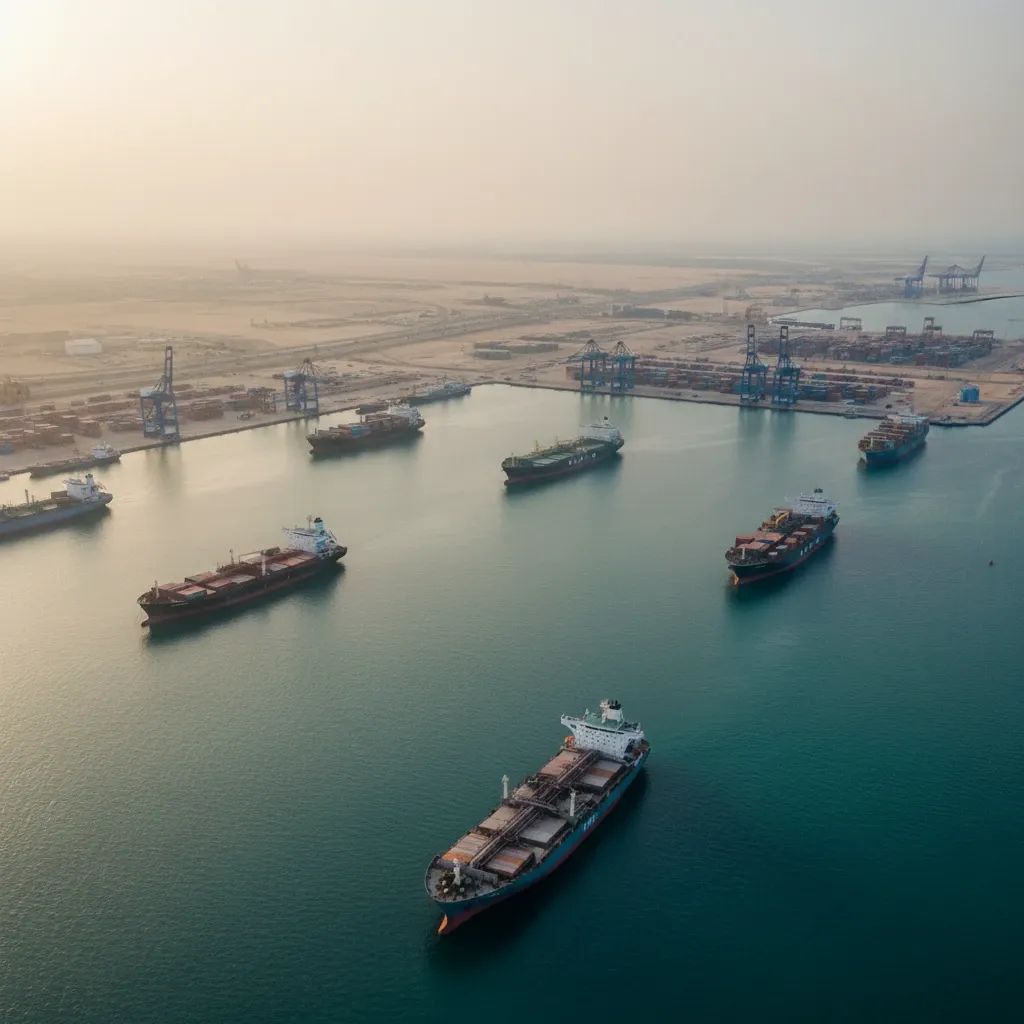
The Centro Studi Confindustria (CSC), the research arm of the employers' association, released its monthly economic analysis pointing to a single overriding factor: the Strait of Hormuz remains closed. Despite a fragile truce in the Middle East, the critical maritime corridor—responsible for approximately 20% of global crude oil transit—has not reopened since Iran's Revolutionary Guard sealed it on March 1, 2026, following the outbreak of hostilities with the United States and Israel.
Brent crude, Europe's benchmark, has oscillated between $100 and $125 per barrel since late March, more than 60% above pre-war levels. European natural gas prices have similarly doubled, climbing from roughly €30 per megawatt-hour in January to over €60/MWh by mid-spring. Should the blockade persist through the summer, analysts warn that gas could breach €100/MWh, a threshold not seen since the height of the 2022 energy crisis.
The International Monetary Fund and the International Energy Agency have labeled the situation a potential "worst energy crisis in recent history." Global oil inventories are draining at a rate of nearly 4 million barrels per day—equivalent to the combined daily consumption of the United Kingdom and Germany. If current drawdown rates continue, the world could reach critical supply limits by September, with stockpiles down nearly 250 million barrels since the conflict began.
What This Means for Italian Households and Businesses
Italy's heavy reliance on energy imports makes it particularly vulnerable. The CSC report notes that household confidence has fallen further, while business sentiment is now also deteriorating. The federation warns that consumer spending and the services sector are at imminent risk of slowing, a troubling shift for an economy where domestic demand has historically acted as a stabilizer.
Manufacturing firms face a triple squeeze: supply chain disruptions, operational cost inflation, and deteriorating credit quality. Transport-dependent businesses are seeing logistics expenses climb in lockstep with diesel prices. If the Hormuz closure extends into the second half of 2026, the CSC estimates Italian industrial output could contract by 1.5% on average over the 2026-2027 period, with the sharpest pain felt by producers of durable goods and capital equipment.
The agricultural sector is also under strain. The blockade has triggered a shortage of nitrogen-based fertilizers, which are critical for crop yields. Without stable supply, Italy—which does not produce enough food domestically to feed its population—faces a looming crisis in food security and price stability.
Even tourism, a pillar of the Italian economy, is showing cracks. The conflict has caused flight cancellations and fare increases across the Gulf region, dampening the growth of foreign visitor spending that had been a bright spot in recent quarters.
Credit Crunch Looms as Banks Turn Cautious
The Bank of Italy projects a "marked tightening" of credit conditions for businesses in the second quarter of 2026, a forecast echoed by the European Central Bank's latest lending survey. Banks across the eurozone have already stiffened criteria for all loan categories in the first quarter, citing heightened risk perception and reduced risk appetite driven by geopolitical instability and surging energy costs.
Italian banks entered 2026 in robust health, with strong capital reserves (a key measure of bank stability and their ability to lend) and healthy profitability as of December 2025. Yet the combination of external shocks and new fiscal burdens—including additional tax pressures imposed by the 2026-2028 budget—has made lenders more selective. The government's broader tax and regulatory package is estimated to extract roughly €9.5 billion from the banking system over three years, with the heaviest impact concentrated in 2026 and 2027.
The ECB has criticized these measures, warning they could discourage lending to households and businesses and erode investor confidence. Meanwhile, loan demand is falling, a telltale sign that both firms and consumers are bracing for a prolonged downturn.
NRRP Investments: The Last Man Standing
In this environment, investments financed by the National Recovery and Resilience Plan (NRRP)—the EU's €800 billion post-pandemic recovery fund—have emerged as the sole driver of industrial production, according to Confindustria. Without these critical EU recovery funds, Italy's manufacturing sector would face an even steeper decline.
As of late April 2026, Italy had activated the vast majority of NRRP resources, with financial commitments reaching approximately 90%. The country had received roughly €166 billion, and Italy has met 73% of the plan's total objectives—well above the European average.
The 2026 calendar is critical: by August 31, Italy must complete 159 additional milestones to secure the next disbursement, and by year-end, the entire plan must be administratively closed and reported to Brussels. Confindustria economists estimate the NRRP will add significant growth to Italy's GDP by the end of 2026.
Yet cracks are appearing. Actual expenditure has lagged projections, with delays concentrated in environmental projects and infrastructure. Private investment in circular economy initiatives—an area where Italy leads Europe—is declining, and operational bottlenecks threaten the timely completion of planned facilities. The risk is that bureaucratic inertia and energy-driven cost overruns could blunt the NRRP's impact just when it is needed most.
Inflation Pressures Mount, Eroding Purchasing Power
Italian inflation, which had moderated to 1.5% in February, rebounded sharply to 2.7% in April. Energy prices are the primary culprit, rising 9.2% year-on-year, but the effects are rippling outward. Confindustria forecasts that if the conflict persists, average inflation for 2026 could approach 3%, with a worst-case scenario of 4.3% should the Hormuz blockade remain in place through year-end.
This erosion of real disposable income is squeezing household budgets. While the ECB has continued its cycle of rate cuts, the benefits are being overwhelmed by the energy shock. Wage growth, which had begun to recover in late 2025, is once again lagging price increases, leaving workers with less purchasing power month after month.
What you can do now: Consider locking in fixed-rate energy contracts if available, review household budgets for discretionary spending cuts, and prioritize energy-saving measures such as improved insulation and efficient heating systems. Small businesses should explore credit options before lending criteria tighten further and consult tax advisors about energy cost recovery strategies.
A Fragile Outlook with Few Safety Nets
Confindustria's assessment paints a picture of an economy caught in a vice. On one side, external shocks—geopolitical conflict, energy supply disruptions, and volatile commodity markets—are beyond domestic control. On the other, internal weaknesses—weak credit transmission, fragile business confidence, and sluggish private investment—are being exposed.
The federation's message is unambiguous: "The scenario continues to deteriorate." Without a swift reopening of Hormuz or a dramatic shift in Middle Eastern geopolitics, Italy faces a prolonged period of stagnation, elevated inflation, and constrained growth. The NRRP offers a critical buffer, but it cannot single-handedly offset the headwinds now battering Europe's fourth-largest economy.
For residents, businesses, and policymakers, the coming months will test resilience in ways not seen since the depths of the COVID-19 pandemic. The question is no longer whether Italy can avoid a slowdown, but how deep and how long it will last.


