
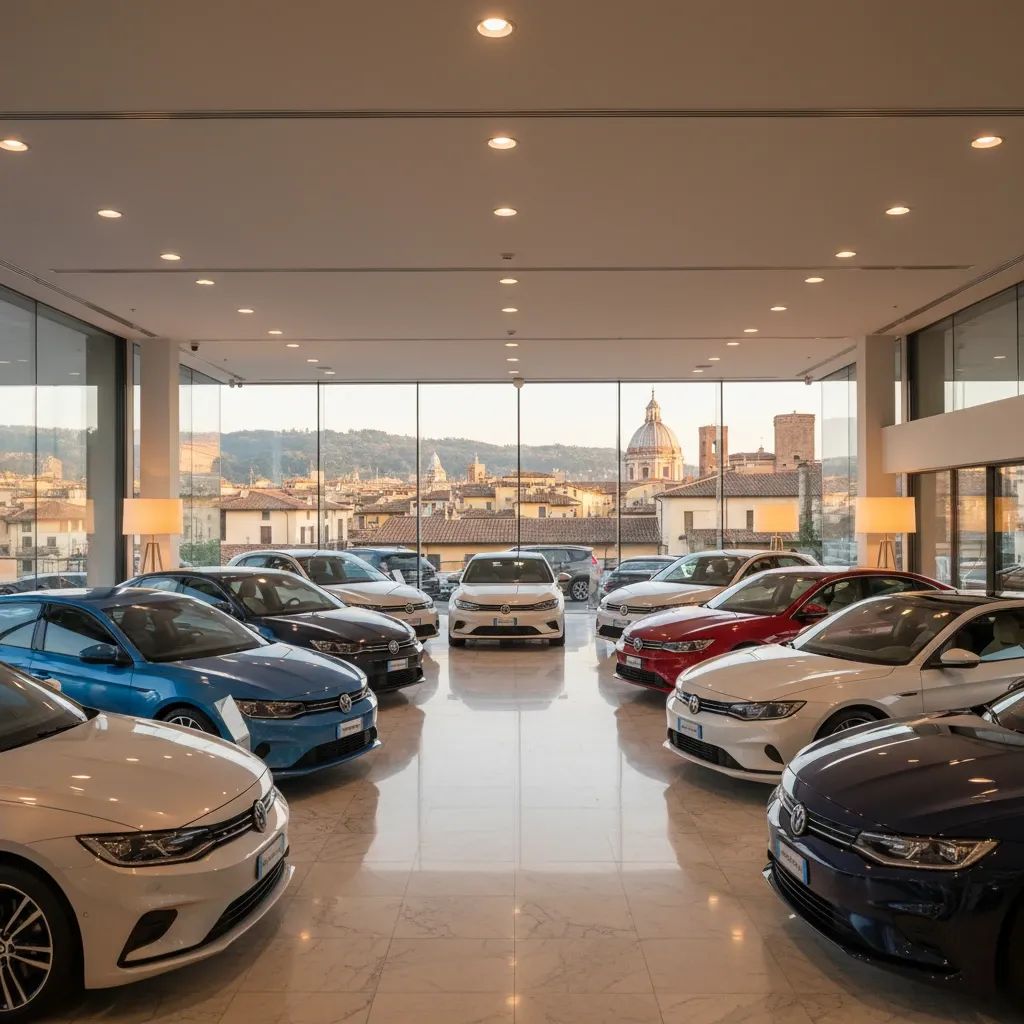
Italy's automotive market added 150,096 newly registered vehicles in May 2026, marking a 7.6% uptick compared to the same month last year. This extends an uneven but consistent recovery pattern across the year's first five months, when combined registrations reached 790,031 units—a 9.4% gain over the January-May 2025 period, according to data from the Italy Ministry of Infrastructure and Transport (MIT). Yet the broader picture reveals a market still 13.2% below pre-pandemic 2019 levels, underscoring the fragility of the rebound.
Why This Matters
• Hybrid vehicles now command 47.1% of market share, reshaping what Italians drive and how dealerships stock inventory.
• Stellantis has tightened its grip on the Italian market, controlling 31.6% of year-to-date sales—a jump from 30.1% in 2025.
• Chinese EV entrants like Leapmotor and BYD are eating into legacy brands' territory, with Leapmotor alone capturing 34.5% of the pure-electric segment.
• Government incentive programs remain in flux, creating uncertainty for buyers planning purchases through year-end.
The Hybrid Surge and the Electric Puzzle
Hybrid powertrains—both mild and full—have become the default choice for Italian buyers navigating the transition away from traditional combustion engines. Mild hybrids accounted for 31.1% of May registrations, while full hybrids took 16.0%. This combined 47.1% figure (rising to 50.4% in the five-month cumulative data) reflects a market leaning heavily toward technology that splits the difference between fossil fuel dependence and the infrastructure demands of pure battery power.
Pure battery-electric vehicles (BEVs) reached 8.8% of May's market—up from just 5.1% a year earlier—but the growth is deceptive. Much of the volume stems from deliveries tied to October 2025 incentives that were exhausted in days. Roberto Pietrantonio, president of Italy's automotive importers' association UNRAE, noted that BEV uptake remains concentrated on a handful of models, with the Leapmotor T03 alone representing 34.4% of all electric registrations. This concentration suggests price sensitivity rather than broad consumer embrace.
Plug-in hybrids (PHEVs) climbed to 10.2% of the market in May, nearly double the 6.4% recorded in May 2025. Italy's PHEV growth of 99.2% in the first quarter of 2026 outpaced the rest of the European Union, where the category grew 26% overall. Yet the technology faces headwinds: fiscal advantages for PHEVs are eroding across Europe, and analysts expect the segment to plateau as corporate fleets reassess lifecycle costs.
Traditional gasoline engines have shrunk to 20.4% of the market, while diesel clings to 6.6%, sustained primarily by commercial and fleet buyers who prioritize range and refueling infrastructure over emissions metrics.
Stellantis Tightens Its Grip, Leapmotor Storms the Charts
Stellantis, the automotive conglomerate led in Italy by CEO Antonio Filosa, registered 43,426 vehicles in May—a 9.9% increase that outpaced the broader market. The group's 28.9% monthly share rose to 31.6% for the year through May, driven by legacy brands and a strategic bet on Chinese partner Leapmotor.
Three Stellantis-affiliated models occupy the top four sales positions in Italy. The Fiat Pandina Hybrid remains the runaway leader with 8,977 units sold in May. Combined with 2,050 units of the classic Fiat 500, the brand commands more than 50% of the city-car A-segment. The Grande Panda has notched 19,870 registrations through May, claiming the third overall spot and leading the B-segment sedan category.
Leapmotor—active in Italy through a joint venture majority-owned by Stellantis—delivered 4,765 units in May, a staggering 1,278% jump over the prior-year month. The brand's year-to-date total surpassed 20,905 registrations, giving it a 3.2% passenger-car market share (up 2.9 percentage points). Leapmotor's strength lies in the private buyer channel, where it holds 5.7% share and sells 95.6% of its volume directly to consumers rather than fleets—the highest retail mix in the Italian market.
In the pure-electric arena, Leapmotor's dominance is stark: a 34.5% BEV market share overall, rising to 48% among private buyers. The T03 city car is the country's best-selling electric model and ranks third overall across all powertrains. Federico Scopelliti, Leapmotor's Italy country manager, attributes the success to "accessible, innovative" pricing that aligns with the budget realities of Italian households.
Chinese Challengers Accelerate Entry
BYD, the Shenzhen-based electric and plug-in hybrid giant, registered 6,044 vehicles in Italy during May, capturing 4% market share and landing in ninth place overall—a 209.2% surge compared to May 2025. The brand's five-month total reached 798 units, up 14% year-over-year.
BYD's plug-in hybrid lineup is the primary growth engine, claiming 31.8% of the PHEV segment nationally and propelling the company to first place in that category. The brand's DM-i hybrid technology—which emphasizes electric-priority operation with gasoline backup—resonates with Italian buyers wary of charging infrastructure gaps. In the pure-electric segment, BYD holds 8% share, ranking third and posting 156.4% annual growth and 82.2% month-over-month gains from April to May.
Across the electrified vehicle spectrum (BEVs, PHEVs, and hybrids combined), BYD commands 20.8% of the market, positioning it as the leading non-European player in Italy's ongoing powertrain shift.
What This Means for Residents
For car buyers, the current market offers a widening array of choices in the hybrid and electric segments, but the pricing landscape remains volatile. Government incentive programs for 2026 have pivoted away from broad consumer subsidies toward industrial support, infrastructure investment, and manufacturing incentives. The €1.6 billion DPCM Automotive fund (Decreto del Presidente del Consiglio dei Ministri—Prime Ministerial Decree) originally allocated for private-buyer rebates has been trimmed to €1.34 billion and redirected to supply-chain development, with partial replenishment expected in July. This means fewer direct discounts for individual purchasers and more reliance on manufacturer promotions and regional programs that vary by province. To find province-specific scrappage and EV incentives, check your regional Automobile Club d'Italia (ACI) office or your Regione website, as opportunities vary significantly between regions like Lombardy, Lazio, and Emilia-Romagna.
Private buyers drove 53.1% of May's registrations, up 3.5 percentage points—a sign that families and individuals are re-entering the market after years of fleet-dominated sales. However, nearly half of prospective buyers abandon purchases after receiving final quotes, according to dealer data, highlighting persistent affordability pressures despite nominal incentives.
For businesses and fleet managers, the regulatory environment favors electrification but lacks clarity. UNRAE has called for urgent fiscal reform of company car taxation to support corporate decarbonization goals and ease the administrative burden on enterprises managing mixed fleets. Current rules create disparities in total cost of ownership between PHEVs, hybrids, and diesels, complicating fleet renewal strategies.
Used-car owners considering trade-ins should note that scrappage bonuses for older Euro 0, 1, and 2 vehicles remain available under select regional schemes, though the national program has expired. Dealers report tighter margins on trade-in valuations as inventory levels normalize and demand for older hybrids softens.
The Road Ahead: Modest Growth, Structural Uncertainty
Industry analysts project Italy will close 2026 with 1.54 million to 1.70 million registrations, depending on macroeconomic conditions and the resumption of incentive funding. S&P Global Ratings forecasts stagnation across European auto markets, citing weak demand, compressed margins, and intensifying competition from Chinese manufacturers.
Italy's consumer confidence index rose to 93.4 in May—the highest reading in three months—but economic growth projections for 2026 remain modest, clustering between 0.5% and 0.8% GDP expansion. The automotive sector contributes roughly 19.5% of Italy's GDP when production and services are combined, making its health a bellwether for broader economic stability.
UNRAE President Pietrantonio emphasized that sustained recovery requires "industrial policies of broad scope and a certain regulatory framework" to restore confidence among families and businesses. The association has urged the government to clarify the timeline for incentive disbursements and to streamline bureaucratic processes that delay registrations and inflate transaction costs.
The rise of fleet and long-term rental (NLT) channels—a form of all-inclusive vehicle leasing popular among Italian businesses that bundles insurance, maintenance, and roadside assistance—now representing more than 40% of total registrations and projected to approach 45% in 2026, is reshaping dealership economics and inventory strategies. Corporate buyers prioritize total cost of ownership and tax treatment over sticker price, accelerating the shift toward hybrids and PHEVs while traditional retail showrooms grapple with thinner foot traffic and longer sales cycles.
For residents planning vehicle purchases in the coming months, the key takeaway is strategic timing: monitor regional incentive announcements, compare total ownership costs across powertrains, and recognize that the market is in transition—neither fully committed to electrification nor willing to cling to combustion engines. The winners in this environment are buyers who prioritize flexibility, total cost transparency, and brands with robust dealer networks capable of servicing evolving powertrain technologies.


