
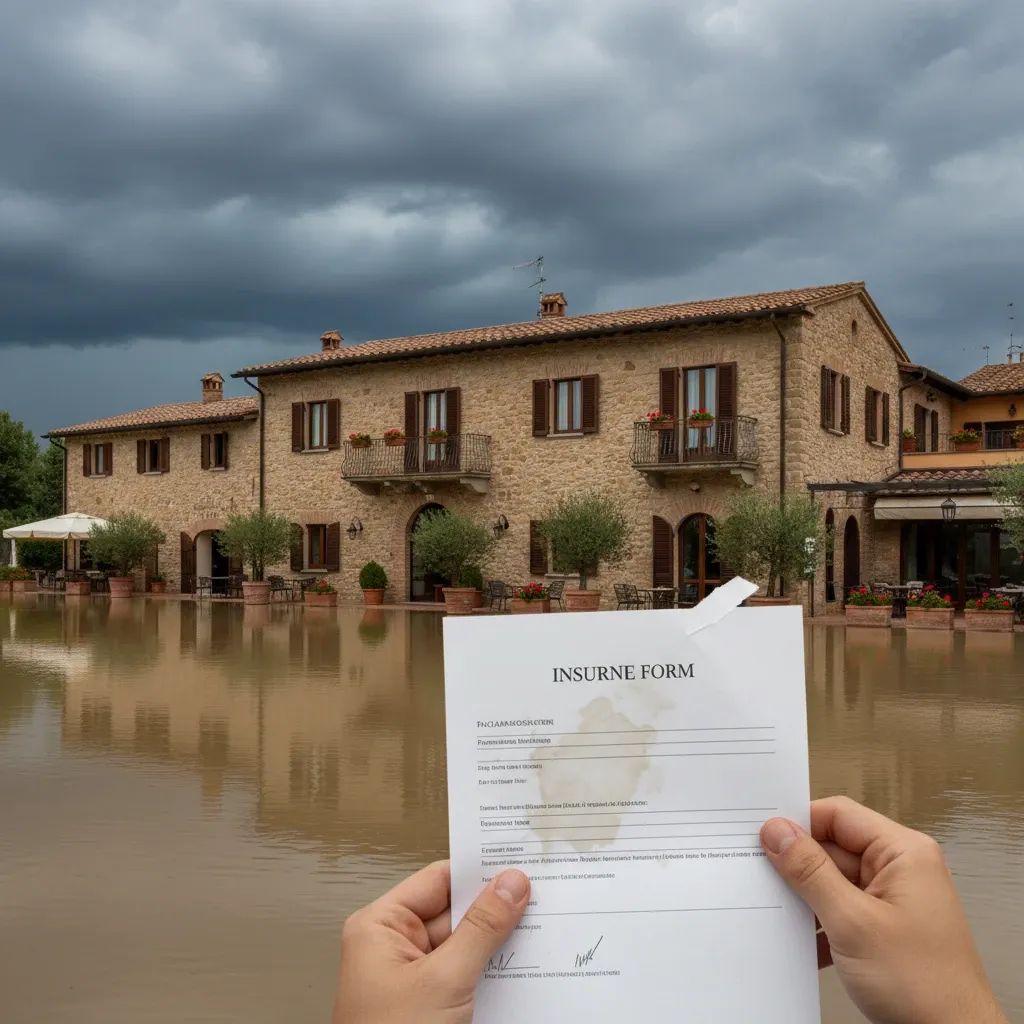
The Italian Senate Budget Committee has rejected a proposed extension for beach concessions in regions affected by extreme weather events, maintaining the 30 September 2027 deadline for all Italian beach concessions under EU competitive tender rules.
Why This Matters
• Deadline confirmed: Current beach concessions expire 30 September 2027, triggering mandatory public tenders under EU rules
• No relief for storm-affected zones: Calabria, Sardinia, and Sicily will receive no special exemption despite requests for extended tenure in damaged areas
• Legal concerns: The Finance Ministry opposed the amendment, citing constitutional budget balance requirements and potential EU infringement procedures
Amendment Rejected by Budget Committee
The Lega party, led by Senate member Massimiliano Romeo, had proposed extending beach concessions through 30 September 2030 for areas affected by coastal erosion and extreme weather events. The Environment Committee had initially approved the measure in late April, framing it as a way to encourage private investment in coastal protection infrastructure.
Proponents argued that extending tenure security would incentivize operators to invest in erosion mitigation and storm defenses, particularly in southern Italian regions where weather damage had occurred. They contended that the short runway to the 2027 deadline discouraged longer-term capital investments in coastal resilience.
However, when the amendment reached the Senate Budget Committee in the final days of April, it faced significant procedural obstacles. The Ministry of Economy and Finance issued a negative opinion, flagging concerns about financial coverage and compatibility with Article 81 of the Italian Constitution, which requires balanced public accounts. The committee also raised concerns about potential violation of the Bolkestein Directive, which prohibits automatic renewal of state concessions and mandates competitive public tenders.
Political Divisions Over Beach Concessions
The beach concession issue reflects broader divisions within Italy's governing coalition. Lega positioned the amendment as a pragmatic response to natural disasters. Fratelli d'Italia has previously sought to challenge judicial rulings on concessions, while Forza Italia has focused on compensation mechanisms for outgoing concession holders.
Opposition figures argued that the amendment represented an attempt to extend incumbent protections under the guise of disaster relief. The Democratic Party and Five Star Movement have emphasized the need to align Italian law with EU competition standards rather than defend existing concessionaires.
What This Means for Beach Operators and Investors
With the amendment rejected, the existing framework remains in force: all Italian beach concessions terminate 30 September 2027, after which municipalities must launch open tenders uniformly across the country, including storm-affected areas.
For current concession holders, the timeline is now certain. Operators will need to compete on equal footing with new entrants in competitive auctions. The transition is expected to reshape Italy's beach economy, raising questions about job continuity for seasonal workers, pricing for beachgoers, and the preservation of family-run establishments.
Investors eyeing opportunities in Italy's coastal sector now have a clearer timeline. The government has introduced a national template tender to standardize criteria, though implementation will vary by municipality. Bidding processes should begin rolling out through 2026 and early 2027.
Constitutional and European Legal Constraints
Italy's repeated attempts to delay beach concession reforms have collided with both domestic constitutional law and Brussels enforcement. Article 81 requires that any measure with budgetary implications identify corresponding revenue or savings. The amendment failed to demonstrate how extending concessions would avoid foregone state income from competitive tenders.
At the European level, the Bolkestein Directive mandates that service concessions in member states be allocated through transparent, non-discriminatory procedures. Italy has already faced multiple infringement actions over its failure to liberalize beach concessions. The European Commission has shown little tolerance for further delays, and the Budget Committee's decision reflected awareness that another extension could trigger legal action.
Next Steps: Chamber Debate and May 10 Deadline
The legislative vehicle—Decree Law 32/2026—now moves to the Chamber of Deputies for debate beginning 5 May 2026. Parliament must convert the decree into law by 10 May, a tight timeline. The Senate-approved text does not include the beach concession extension, meaning that barring a reversal in the lower house, the 30 September 2027 expiration date is locked in.
Legal observers expect litigation as the deadline approaches, with concession holders likely to challenge tender criteria and compensation formulas in administrative courts. Municipalities, many of which lack experience running competitive procurement for beach concessions, face administrative challenges in designing auctions that comply with both Italian and EU standards.
For residents and visitors to Italy's coastal communities, the practical implications remain uncertain: competitive tenders could drive service improvements, or they could disrupt local establishments and alter the character of Italy's beach economy. Either way, significant change is coming to Italy's coastal sector by autumn 2027.


