
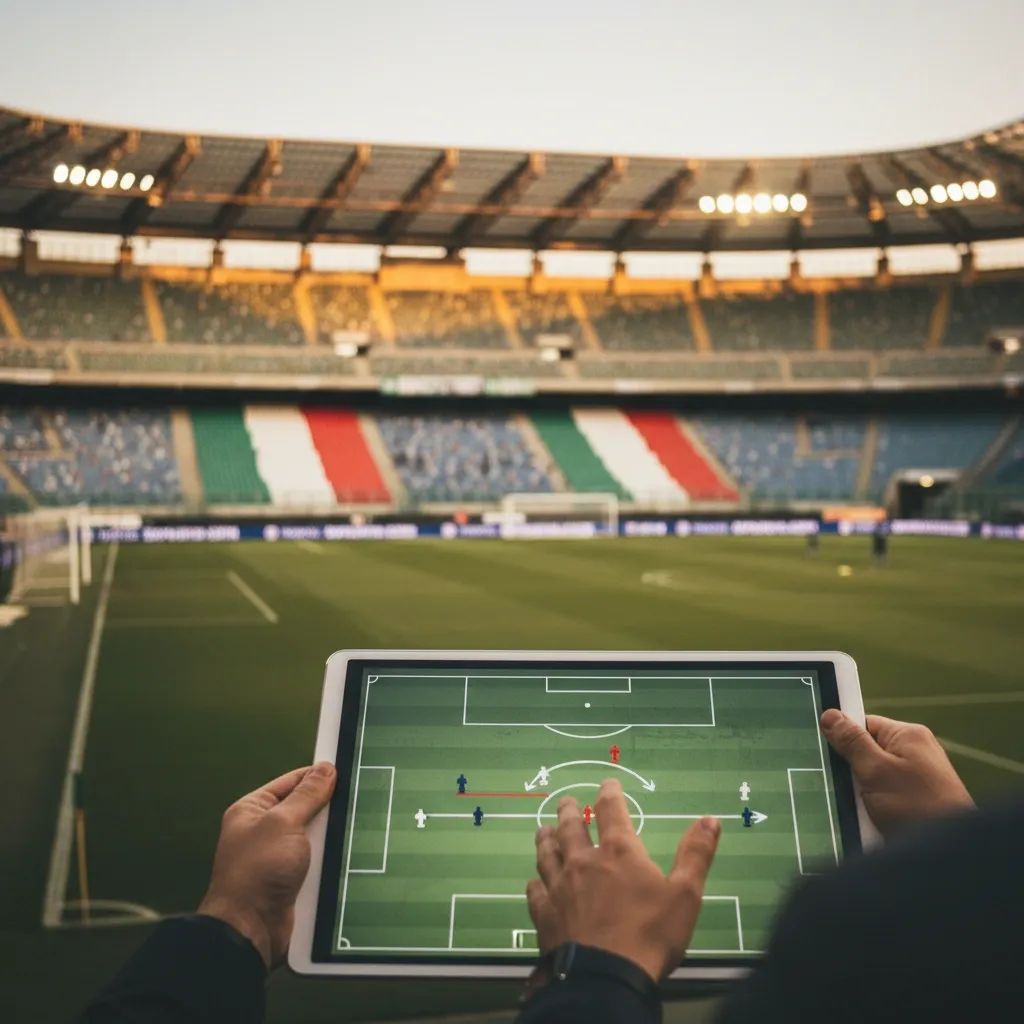
Italy's advertising market hit a speed bump in April, contracting by 1.8% as geopolitical turbulence and economic uncertainty prompted firms to tighten communication budgets. Yet analysts expect a recovery in the second half of the year—though with a crucial caveat. While the Milano-Cortina Winter Olympics (February 2026) and the 2026 FIFA World Cup (June-July 2026 in North America) are forecast to inject between €120 million and €133 million into the market, Italy's failure to qualify for the World Cup will erase €50 million to €80 million from original projections, including €15 million to €20 million in sponsor activations. The upshot: solid support from the Olympics and international World Cup viewing, but significantly diminished by the Azzurri's absence.
Why This Matters
• Short-term pullback: April's decline reflects corporate caution, but the January-April cumulative figure remains positive at +0.7% (excluding search, social, and classified ads).
• Two-event tailwind with a catch: Advertisers are banking on World Cup and Olympic viewership to deliver strong second-half returns, though Italy's World Cup absence dampens the expected bounce compared to scenarios where the national team qualified.
• Digital resilience: Online channels continue to outpace traditional media, with retail media, video, and social segments expanding by 2.7% in the first four months.
• Italy ranks second in EMEA growth: Dentsu forecasts a 5% full-year rise, positioning the country just behind the region's fastest-growing markets.
Sectoral Divergence: Who's Cutting and Who's Doubling Down
April's headline contraction masks a sharply divided advertising ecosystem. Traditional print bore the brunt: daily newspapers fell 13.2% in April and are down 4.2% year-to-date, while magazines slid 5.8% last month and 6.2% since January. Over the first four months, the print sector collectively contracted by 4.9%, with weeklies shedding 12% and monthlies losing 7.4%.
Television, long the anchor of Italy's advertising mix, dropped 6.5% in April but remains nearly flat for the year at -0.2%. Industry watchers interpret this as a tactical pause before the second-half surge: major sporting broadcasts typically command premium rates and draw blue-chip sponsors. Radio dipped 0.4% in April and 1.1% for the January–April period.
By contrast, out-of-home advertising surged 49.7% in the first two months of the year, and cinema jumped 18.4%, suggesting that brands are seeking high-impact, experiential formats to cut through digital noise.
The Pullback Players: Finance, Telecom, and Personal Care
Granular sector data reveal that finance and insurance firms led the retreat, slashing outlays by 34.3% in January as regulatory headwinds and rate volatility cooled appetite for consumer lending promotions. Telecommunications companies—facing saturated mobile markets and price competition—trimmed budgets by 22.4% in January and 18.1% in February.
Personal-care brands reduced spending by 18% in February, household-management products by 11.4% over four months, and housing categories by 8.5%. Retail distribution chains, squeezed by thin margins and cautious consumer sentiment, pulled back 7.9% in February and 3% year-to-date.
The common thread: companies in mature or commoditized categories are reallocating toward performance-driven digital channels rather than broad-reach legacy media, with some earmarking up to 60% of budgets for online platforms.
Geopolitical Shadow and the Missing Azzurri
Luca Bordin, Nielsen's Italy country leader, pointed to the "persisting geopolitical and economic criticalities, exacerbated by the Middle East conflict," as headwinds that dampen both corporate and consumer confidence. The Israel-Hamas escalation has rippled through global supply chains, inflating energy and shipping costs and reviving inflation fears—factors that typically prompt chief marketing officers to adopt a wait-and-see posture.
Yet the most tangible drag on Italy's advertising landscape comes from a domestic disappointment: Italy's national football team failed to qualify for the World Cup. Initial forecasts had penciled in €100 million to €110 million in tournament-related advertising; analysts now estimate the Azzurri's absence will erase €50 million to €80 million from the total, including €15 million to €20 million in sponsor activations. Brands such as Telepass have already withdrawn national-team sponsorships.
Even so, the World Cup remains a global spectacle, and Italian advertisers will still tap into international matches and key fixtures, albeit without the emotional premium that a home-nation run delivers.
Digital Acceleration and the AI Factor
The digital advertising segment remains the market's growth engine. Retail media—ad inventory sold by e-commerce platforms and supermarket chains—has become the fastest-growing subsegment, as brands chase purchase-intent audiences at the point of sale. Video online and social media continue to attract incremental spend, fueled by automation tools and data-driven targeting.
Artificial intelligence is reshaping workflows across the value chain: creative teams use generative models to prototype campaigns at speed, media planners deploy machine-learning algorithms to optimize daypart and channel mix, and measurement platforms leverage natural-language processing to parse sentiment and engagement signals in real time. This technological shift favors nimble digital players over traditional publishers burdened by legacy cost structures.
Small and medium-sized enterprises are also embracing digital at scale. For many SMEs, online channels offer transparent performance metrics and lower entry costs than television or print, democratizing access to sophisticated marketing capabilities once reserved for multinational brands.
What This Means for Residents of Italy
If you work in media sales, creative agencies, or marketing departments, April's dip signals a temporary chill rather than a systemic freeze. Hiring and project pipelines should rebound as June and July approach, when advertisers finalize World Cup and Olympic campaigns. Freelancers and boutique studios that specialize in video production, influencer partnerships, or event activations may find fresh opportunities as brands seek authentic storytelling around the sporting calendar. In Milano and surrounding regions, the Olympics' hosting role may create localized opportunities in event-tied advertising and sponsorships.
For consumers watching Italian television and streaming services, expect increased commercial activity during June-July World Cup broadcasts and the lead-up to the February Olympics. You'll likely see more targeted digital ads tailored to your viewing habits as brands deploy performance-marketing strategies. Media bundles and subscription services may shift their ad-supported tiers, and you may encounter more localized campaigns (particularly in the Milano-Cortina zone) promoting Olympic-related goods and services.
For workers in Italy's advertising, media, and marketing sectors, the market's shift toward digital means skills in data analytics, programmatic buying, and social media management are increasingly valuable. Traditional roles in print and radio may face pressure, but emerging opportunities in retail media and influencer partnerships are expanding.
Investors and business owners should note that Italy's 5% projected growth outpaces much of Western Europe, underscoring the economy's relative resilience and the pull of marquee events. Companies with exposure to digital infrastructure—ad-tech platforms, programmatic exchanges, data-analytics providers—stand to benefit disproportionately.
Outlook: A Tale of Two Halves
Full-year forecasts for Italy's advertising market range from 4% to 7.1% growth, with most analysts clustering around 5%. The gap between April's contraction and the bullish annual view reflects a second-half recovery scenario driven by:
Event-driven demand surges in June through August, when World Cup and Olympic broadcasts dominate prime time, offset by the reality that Italy's World Cup absence reduces the domestic advertising premium compared to a qualification scenario.
Pent-up budgets: Brands that deferred April and May spending will release campaigns timed to peak audience attention.
Digital momentum: Continued adoption of AI tools, retail media, and social commerce sustains online growth even if traditional channels stagnate.
The January–April cumulative gain of 0.7% (net of search and social estimates) suggests the market has absorbed geopolitical shocks without tipping into sustained decline. Barring a sharp deterioration in consumer confidence or energy-price spikes, the consensus view holds that Italy's advertising sector will close 2026 comfortably in positive territory.
Industry Adaptation and the Road Ahead
The April data underline a broader structural shift: advertising in Italy is splitting into two distinct ecosystems. Legacy media—print, terrestrial radio, linear television—face a secular decline in share, cushioned only by tentpole events that deliver mass simultaneity. Digital channels, by contrast, benefit from granular targeting, real-time optimization, and measurable return on ad spend, making them the default choice for risk-averse marketers in uncertain times.
Creative agencies and production houses are responding by bundling services: a single campaign now spans television spots, influencer collaborations, programmatic display, and in-store retail media. This convergence demands cross-platform fluency and forces agencies to invest in data analytics and technology partnerships.
For publishers and broadcasters, survival hinges on hybrid business models—pairing premium content with first-party audience data to compete with tech giants' scale. The Milano-Cortina Olympics, hosted on home soil and occurring in February, offer a high-profile test case: can Italian broadcasters leverage national pride and exclusive rights to command premium rates and recapture advertiser mindshare as the games approach? Meanwhile, June-July World Cup coverage will drive summer advertising peaks, even without Italian team participation.
In the meantime, April's stumble serves as a reminder that even growth markets experience friction. The combination of geopolitical volatility, sectoral reallocation, and the Azzurri's absence created a perfect storm for a monthly dip. Yet with the sporting calendar's brightest jewels still to come and digital channels firing on all cylinders, the Italian advertising industry remains on track for a year of modest but meaningful expansion.


