
The Italian Prime Minister Giorgia Meloni will travel to Azerbaijan within the next two weeks, continuing a diplomatic push to lock in energy supplies and further insulate the country from volatility in global fuel markets. The visit, announced at the 76th General Assembly of Federalberghi (Italy's hotel association), represents the latest step in a multi-year effort to diversify away from Russian gas dependence and secure long-term contracts with alternative suppliers.
Why This Matters
• Pipeline expansion: Azerbaijan already supplies 9.5 billion cubic meters of gas annually to Italy via the Trans Adriatic Pipeline (TAP); capacity rose to 11.2 bcm/y in early 2026 and is projected to reach 20 bcm/y by late 2027.
• Oil flows: State-owned SOCAR delivered 10.34 M tonnes of oil to Italy in 2025, making it the country's single largest petroleum partner.
• Strategic hedging: The trip follows similar missions to Algeria and the Gulf states, cementing Italy's pivot toward African, Caucasian, and Middle Eastern energy corridors.
Azerbaijan as a Cornerstone Partner
Italy's relationship with Azerbaijan now extends far beyond one-off contracts. A strategic partnership launched in 2020 has matured into a comprehensive energy and industrial framework. The Joint Action Plan for 2026–2027, signed between the two governments, lays out 65 initiatives across 18 sectors, from hydrocarbons and electricity to renewables and downstream integration.
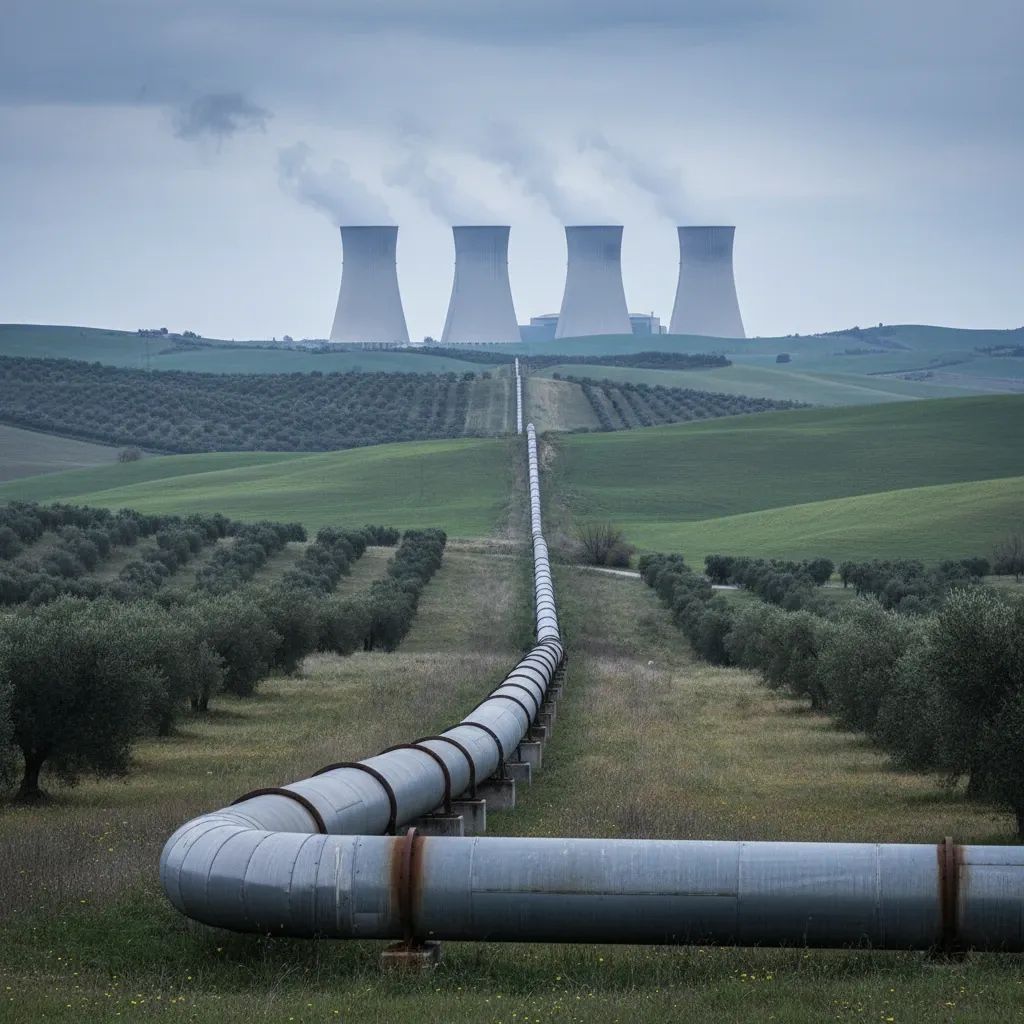
The centerpiece of this relationship is the TAP, the final leg of the Southern Gas Corridor that carries Azerbaijani gas across the Adriatic and into Italy's Puglia region. As of January 2026, a new Gas Transportation Agreement (GTA) added 1.2 bcm/y of capacity, with 1.04 bcm/y reserved exclusively for Italian buyers. This expansion came ahead of schedule, and planning is already underway for a second buildout that would increase throughput to 20 bcm/y by late 2027.
Italy is not the only beneficiary: starting in January 2026, Azerbaijan began shipping gas to Germany and Austria through the same pipeline, underlining the corridor's growing importance to European energy security. The European Union has committed to receiving at least 20 bcm annually from Azerbaijan by 2027—a target the expanded TAP is positioned to support.
On the oil side, SOCAR has moved beyond exports and into Italy's retail fuel market. In September 2025, the Azerbaijani firm signed a deal to acquire Italiana Petroli, a domestic fuel distributor. Pending regulatory approval, the acquisition would give SOCAR a direct stake in Italy's downstream sector, integrating supply chains from well to pump.
Italian contractors are also active in Azerbaijan. Ansaldo Energia, the Genoa-based power-generation firm, won contracts in 2023 to build substations and rehabilitate grid infrastructure, tying the relationship into a two-way industrial partnership.
What This Means for Residents
For households and businesses, Meloni's energy diplomacy aims to deliver price stability and supply continuity. Italy's electricity and heating costs remain sensitive to wholesale gas prices, which in turn depend on import volumes and contract terms.
By locking in long-term, pipeline-based gas from Azerbaijan—alongside similar arrangements with Algeria and the Gulf—Rome reduces exposure to spot-market spikes and geopolitical disruptions. The expansion of TAP capacity means Italy can absorb more gas even during winter demand peaks, lowering the risk of rationing or industrial curtailments. This supply security can help insulate residents and businesses from price volatility, though it does not guarantee lower absolute costs.
For industries that rely on petrochemicals—including textiles, plastics, and pharmaceuticals—the SOCAR oil partnership provides feedstock security.
Meloni's Energy Tour: From North Africa to the Caspian
The Prime Minister's upcoming visit to Baku is part of a broader strategy she has led personally since the 2022 energy crisis triggered by the war in Ukraine. In her remarks to the hotel industry, Meloni emphasized that she traveled first to Algeria, then to the Gulf states, and will now complete the circuit in Azerbaijan.
Algeria has emerged as Italy's largest gas supplier, surpassing Russia's pre-2022 share. The TransMed pipeline, which runs from Algeria through Tunisia and into Sicily, now carries volumes that once flowed from Siberia. Agreements signed in 2022 and 2023 aimed to deliver additional gas volumes, and those flows have materialized.
The Gulf states—primarily Qatar—have become critical sources of liquefied natural gas (LNG). Italy's regasification infrastructure has expanded, with floating terminals at Piombino and Ravenna each capable of handling 5 bcm/y, combined with existing facilities at Panigaglia and Rovigo, giving Italy total regasification capacity exceeding 27 bcm/y.
Looking Ahead
Meloni's imminent trip to Baku will likely yield announcements on contract extensions, infrastructure co-investment, and possibly new areas of cooperation such as hydrogen or carbon capture. The visit signals to European partners and energy markets that Italy's supply chains are robust and diversified.
For residents, the immediate outcome is continued energy supply security. The longer-term question is whether diplomatic dealmaking can buy enough time for a genuine energy transition—one that reduces reliance on imports and anchors the economy in domestically generated renewables.


