
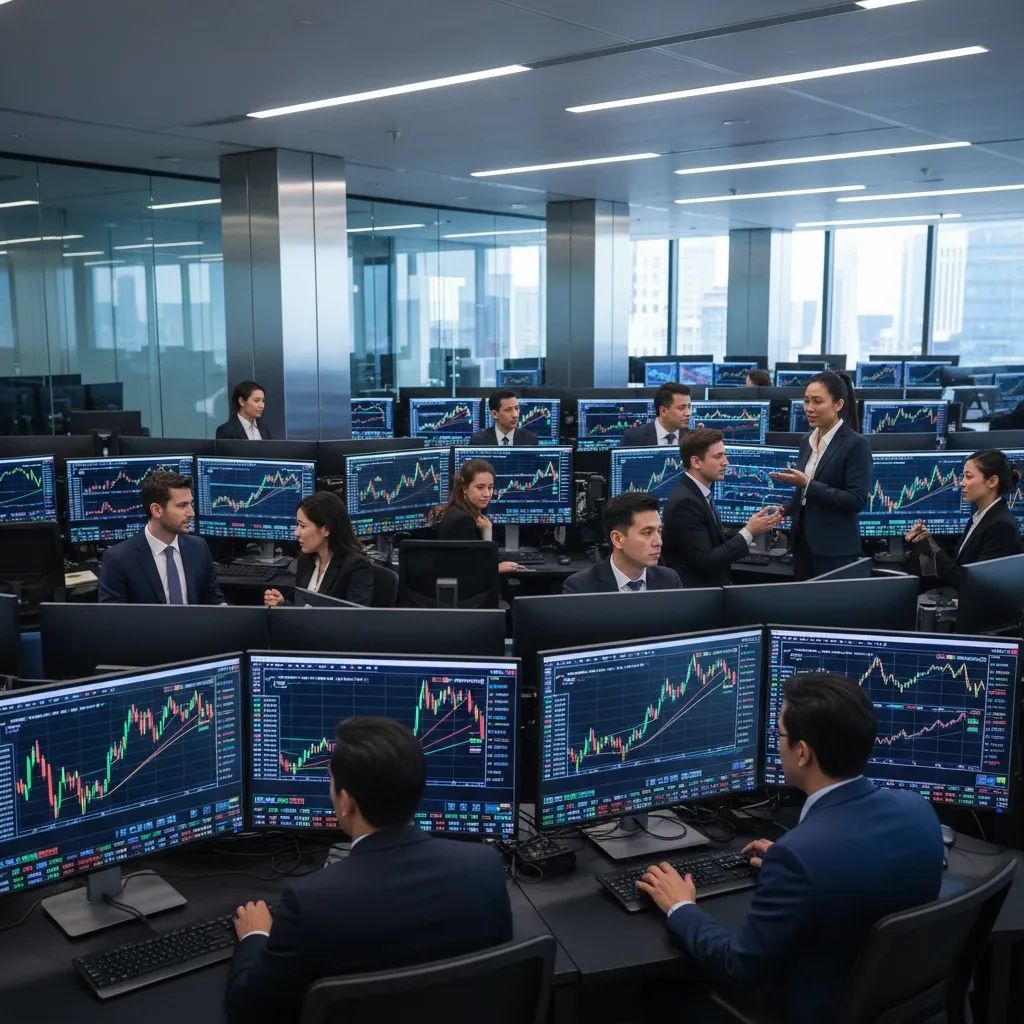
Italy's Borsa Italiana
Italy's Borsa Italiana climbed 1.36% on Tuesday as European equity markets rallied on tentative hope that collapsed negotiations between the United States and Iran might resume—a diplomatic development that could prevent further energy market chaos and ease the inflationary pressure that has hammered household budgets and industrial costs across the continent since March.
Why This Matters
• Energy relief: Crude oil fell more than 3% and natural gas dropped nearly 5% on speculation that progress in ceasefire discussions could stabilize supplies through the Strait of Hormuz.
• Italian banking gains: UniCredit rose 2.7% and Intesa Sanpaolo advanced 2%, reflecting reduced geopolitical risk premium across European financials.
• Stellantis rebound: The automaker surged 2.95% after Chairman John Elkann declared the group has "laid the foundations for recovery."
• Bond yields ease: Italy's 10-year BTP yield fell 6.1 basis points to 3.82%, while the spread over German Bunds held steady near 76.9 basis points.
Energy Prices Drop as Markets Price in Diplomatic Progress
A U.S. official's comment over the weekend—mentioning "progress in attempts to reach an agreement"—triggered a wave of optimism across trading desks in Milan, Frankfurt, and Paris. West Texas Intermediate crude slid 3.35% to $95.74 per barrel, while Brent declined 1.7% to $97.70. Both benchmarks settled below the psychologically critical $100 mark for the first time in weeks, offering a reprieve to European refiners and transport operators.
Natural gas on the Amsterdam TTF hub tumbled 4.88% to €44.15 per megawatt-hour, a sharp correction after prices had spiked sharply in recent months due to concerns about potential supply disruptions. The Strait of Hormuz is a critical waterway for global energy supplies, making any escalation or military incident there an immediate threat to Europe's energy security.
Energy security concerns have been a significant issue for European policymakers and households alike. Every sustained increase in oil prices translates into additional inflationary pressure, complicating efforts to stabilize the eurozone economy without triggering recession.
What This Means for Italian Households and Businesses
For residents and businesses across Italy, the decline in oil and gas prices offers a direct relief from recent cost pressures. Household electricity bills, which had climbed sharply in recent months, may finally stabilize if the diplomatic developments hold. Industrial users, particularly in energy-intensive sectors like ceramics and steel, stand to benefit from lower input costs.
However, analysts caution that diplomatic progress remains uncertain. Any escalation in tensions could reverse these market gains. Negotiations are expected to continue in coming weeks, with both sides reportedly seeking compromise positions.
Banking Sector Rallies on Reduced Risk Premium
Italian banks led the rally on Piazza Affari. UniCredit gained 2.7%, Intesa Sanpaolo rose 2%, and Mediobanca added 1.4%. The sector has been under pressure since escalations of Middle Eastern tensions in March, as investors repriced sovereign and credit risk across peripheral eurozone economies.
Monte dei Paschi di Siena (MPS), which is set to hold its shareholder assembly on Wednesday for board renewals, climbed 1.3%. The bank has been working to restore profitability after years of restructuring. Banco BPM was more cautious, up just 0.64%, while niche lender Banca Profilo surged 11.75% after analysts at Intesa Sanpaolo raised their price target.
The spread between Italian and German 10-year bonds remained stable at 76.9 basis points, a sign that markets are not pricing in imminent fiscal stress despite broader geopolitical volatility. Italian yields fell 6.1 basis points to 3.82%, while German Bund yields declined 3.5 basis points to 3.05% and French OATs dropped 5.2 basis points to 3.69%.
Stellantis and Auto Sector Gain Momentum
Stellantis, one of Italy's flagship industrial names, climbed 2.95% after Chairman John Elkann told reporters the company has "laid the foundations for recovery" following a difficult restructuring period. The automaker, which has faced challenging demand conditions in recent months, is positioning for a rebound in European sales and a transition to electric vehicle production.
Other European carmakers also posted strong gains: Porsche rose 3.76%, Mercedes-Benz gained 1.9%, and Ferrari—still listed on Borsa Italiana—advanced 1.5%. The sector has been sensitive to both energy costs and consumer sentiment, making the stabilization of oil prices a potential tailwind for manufacturers and dealers alike.
Semiconductors Outperform, Energy Stocks Retreat
Chipmakers were among the top performers as risk appetite returned. BE Semiconductor Industries surged 6.62%, boosted by an upgrade from Bank of America analysts. Nordic Semiconductor rose 3.53%, while STMicroelectronics—which has significant operations in Italy—gained 1.55%. The sector has been volatile in recent weeks as investors weighed the impact of supply chain disruptions and geopolitical uncertainty on global tech demand.
In contrast, energy majors retreated as oil prices fell. Eni, Italy's state-controlled energy giant, declined 1.5%. European peers Shell dropped 2.95%, TotalEnergies fell 2.2%, and BP slid 2.1%. The selloff reflects a classic rotation: when geopolitical risk premiums fade, energy stocks often underperform as the market anticipates lower realized prices.
Tobacco stocks also suffered. Imperial Brands plunged 5.9% after warning of market share losses, while British American Tobacco dropped 2.6%.
Currency and Commodities: Dollar Weakens, Gold Holds Steady
The U.S. dollar weakened to €0.8473, ¥158.79, and £0.7364 as markets dialed back expectations for aggressive Federal Reserve rate hikes in the face of improving diplomatic conditions. A weaker dollar is generally supportive for European exporters, including Italian machinery and luxury goods manufacturers.
Gold edged up 0.5% to $4,792 per ounce, maintaining its safe-haven appeal even as equity markets rallied. The precious metal has climbed in recent months as investors sought protection against inflation and geopolitical instability.
Fragile Progress and What Comes Next
Despite Tuesday's optimism, the path forward for geopolitical de-escalation remains uncertain. Any renewed tensions or breakdown in diplomatic discussions could reverse the market gains and likely trigger renewed capital flight from peripheral eurozone assets.
Business groups including the Italy Banking Association (ABI) and Confindustria, the country's main employers' federation, have called for swift diplomatic resolution to avoid a repeat of recent energy price volatility, which has significantly impacted household and business budgets across the eurozone.
For now, Italian investors are cautiously optimistic—but continued diplomatic uncertainty means that the next few weeks will be critical in determining whether this rally has legs or is simply a brief respite before renewed volatility.


