
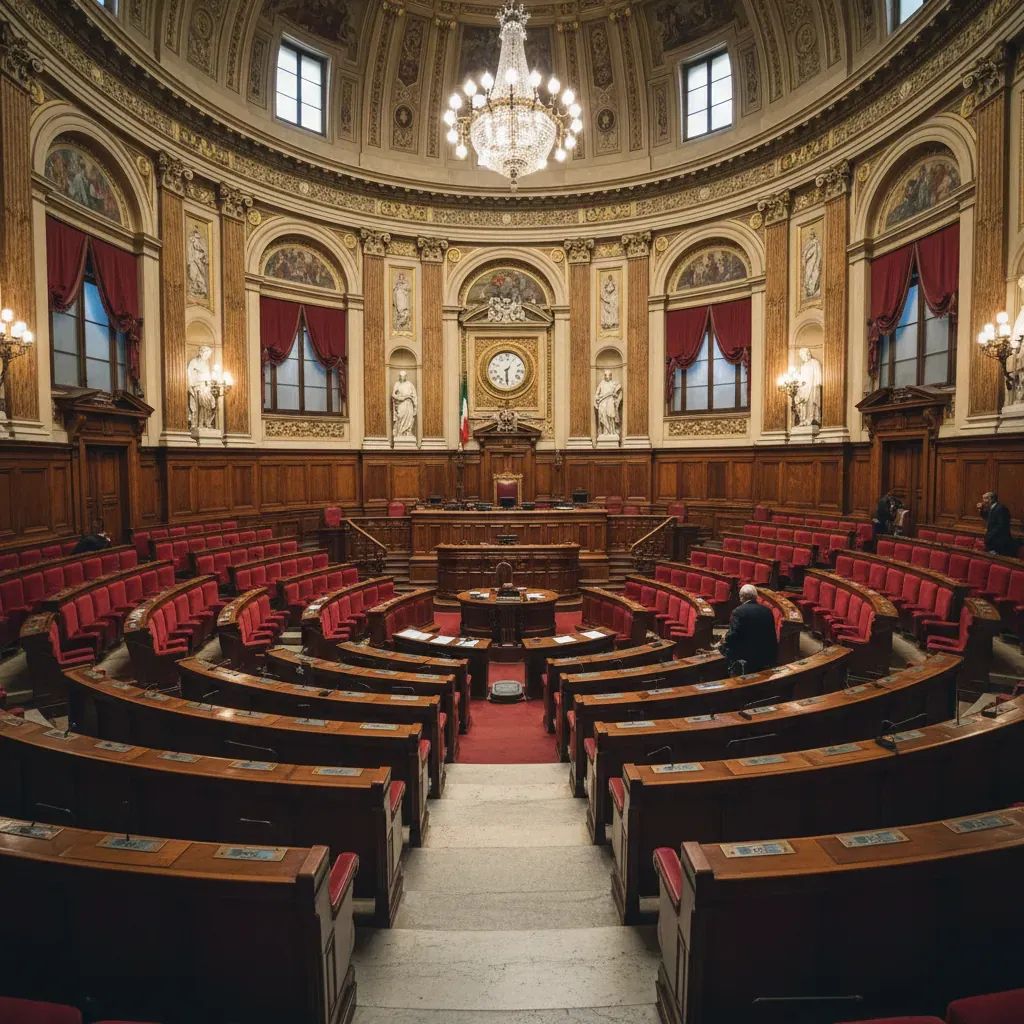
The Italian government has reaffirmed its unwavering commitment to Ukraine this week, with Prime Minister Giorgia Meloni hosting President Volodymyr Zelensky at Palazzo Chigi on 15-16 April for their latest bilateral summit—marking a significant moment in their evolving partnership since Russia's invasion began more than four years ago. The talks underscored Italy's strategic position: that backing Kyiv is not just a moral imperative but a calculation vital to Europe's security and economic stability.
Why This Matters
• Defense cooperation deepens: Italy is exploring joint drone production with Ukraine, leveraging Kyiv's battlefield experience with unmanned systems.
• Financial lifeline continues: Rome has committed over €3B in military aid since 2022, with fresh authorization extending through 2026.
• Reconstruction pledge: Italy anchored a €10B investment package at the July 2025 Rome recovery conference, including restoration of Odessa's cultural heritage.
• EU path remains open: Meloni publicly backed Ukraine's accession process to the European Union, signaling long-term integration.
A Decade-Long Security Pact in Action
The relationship between Meloni and Zelensky has evolved from introductory diplomacy to operational partnership. Their first informal encounter occurred in Brussels in February 2023, just months after Meloni took office. Since then, the cadence has intensified: nine formal bilaterals in Rome and Kyiv, plus additional meetings on the sidelines of NATO, G7, UN, and EU summits, alongside regular phone consultations.
The cornerstone came in February 2024, when Meloni traveled to Kyiv on the war's second anniversary to sign a 10-year bilateral security agreement. That pact commits Italy to sustained military, financial, and humanitarian support, and it remains the legal framework guiding Rome's current posture even as the geopolitical landscape shifts around it.
This week's summit revisited those pledges with fresh urgency. Meloni emphasized that Western support for Ukraine is both a strategic necessity and a moral duty, framing the conflict as a test case for Europe's ability to defend its borders and values. Zelensky, for his part, praised Italy's "active role in generating concrete ideas and defining measures to bring peace closer," a diplomatic acknowledgment of Rome's coordination within the G7 and European Council.
Defense Tech and the Drone Frontier
A notable feature of the April talks was the focus on defense industrial cooperation. Italy has expressed keen interest in co-developing drone technology with Ukraine, which has demonstrated significant capability in unmanned systems. Zelensky underscored Ukraine's need for additional air defense systems, and the two sides discussed the possibility of joint production arrangements that would reduce reliance on third-party suppliers and accelerate delivery timelines.
This pivot toward industrial collaboration reflects a broader European trend: as the United States under President Trump shows signs of shifting priorities, European capitals are exploring ways to sustain and localize defense supply chains. For Italy, partnering with Ukraine offers practical benefits—bolstering Kyiv's resilience while expanding Italian firms' involvement in a sector with growth potential.
Italian defense companies, including Leonardo and Ansaldo Energia, have already signed preliminary agreements as part of the Rome recovery conference framework. The drone cooperation, if realized, would mark a deeper level of integration, potentially involving technology transfer, joint R&D, and co-production facilities.
Financial Backing Amid Trump-Era Uncertainty
Rome's financial commitments to Ukraine have remained robust despite shifting winds from Washington. In December 2025, the Italian Council of Ministers approved a decree authorizing continued transfer of military equipment through 2026. The Italian Senate converted that decree into law in February 2026, ensuring legal continuity for defense shipments.
The legislation prioritizes logistical, medical, and civil-use equipment, as well as systems to counter aerial, missile, drone, and cyber attacks. While the law's language avoids the term "military" in some clauses—a rhetorical concession to domestic political sensitivities—the substance remains clear: Italy will continue supplying weapons and materiel. Total Italian military assistance since 2022 now exceeds €3B, placing Rome among the top European contributors on a per-capita basis.
Italy also plays a central role in multilateral financing. During its 2024 G7 presidency, Rome helped broker a $50B loan to Ukraine backed by frozen Russian central bank assets—a mechanism designed to sustain Kyiv's budget without new taxpayer outlays from donor countries. Meloni has publicly argued that economic pressure on Russia remains important to European strategy, a view that aligns with her cautious stance on direct NATO involvement while maintaining financial leverage.
The context for this steadfastness is the Trump administration's shifting priorities. By early 2026, Washington's focus has turned toward other strategic concerns, leaving European allies to assess their own positions. Meloni, despite past disagreements with Trump on various policy matters, has chosen to maintain Italy's Ukraine support rather than follow signals of disengagement.
Reconstruction: From Rome Conference to Odessa Restoration
The Ukraine Recovery Conference 2025, held in Rome on 10-11 July, was a significant diplomatic event for Italy. Co-hosted by Meloni and Zelensky, the event drew over 30 heads of state and some 4,000 delegates from 70 countries. The conference yielded more than 200 bilateral and multilateral agreements worth over €10B, covering sectors from energy and transport to housing and healthcare.
Italian firms were active participants: Webuild, Ansaldo Energia, Eni, Ferrovie dello Stato, Enel, and Prysmian all inked deals. Rome also pledged €32.5M for the restoration of cultural heritage in the Odessa region, reflecting Italy's interest in preserving European cultural assets.
The conference framed reconstruction as investment in European security and economic stability. Meloni's framing positioned the effort as a strategic commitment to continental security. A "European Fund for Ukrainian Reconstruction," announced with backing from France, Germany, Poland, and Italy, aims to channel private capital alongside public commitments.
Damage assessments paint a sobering picture. As of February 2026, direct war damage had surpassed $195B, with total reconstruction needs estimated at $588B over the coming decade. Roughly 13% of Ukraine's housing stock is damaged or destroyed, affecting more than 2.5 million families. Energy infrastructure, transport networks, and industrial capacity have been systematically targeted, creating substantial reconstruction challenges.
Political Messaging: "Just Peace," Not Surrender
Throughout the bilateral relationship, Meloni has maintained a consistent position on settlement terms. She insists on a "just peace" that does not equate to Ukrainian surrender, a stance that implicitly rejects any settlement involving territorial concessions to Russia without Kyiv's consent. This formula allows her to maintain alignment with Zelensky while signaling openness to diplomatic efforts.
Zelensky's visits to Rome have often coincided with moments of strategic importance. His January 2025 stop came as Trump prepared to take office; the December 2025 meeting addressed Western security guarantees for Ukraine in any future settlement. The April 2026 summit, held against the backdrop of evolving U.S. assistance levels and ongoing diplomatic discussions, served to reassure Kyiv of Italy's continued commitment.
Meloni has also used these meetings to press for concrete Russian gestures toward peace, calling on Moscow to demonstrate willingness to negotiate. Yet her government has avoided endorsing any specific formula that might prematurely constrain Kyiv's negotiating position.
What This Means for Residents
For Italians, the Ukraine commitment translates into specific policy choices and domestic effects. Italy's 2026 defense budget includes allocations for equipment transfers to Ukraine as part of ongoing commitments. The government has extended exceptional residence permits for Ukrainian citizens in Italy through March 2027; current figures show approximately 70,000 Ukrainian refugees are living in Italy under these permits.
The energy market disruptions tied to the conflict have had measurable effects on Italian households. Energy costs, which spiked significantly in 2022-2023, have remained elevated compared to pre-invasion levels. Analysts estimate Italian household energy bills have remained 15-25% higher than 2021 levels, impacting household budgets across the country.
Public insurance coverage for Italian journalists operating in conflict zones has been renewed, a practical acknowledgment of ongoing reporting needs. However, the policy generates debate within Parliament. Opposition voices have questioned defense spending allocations at a time of high public debt, while government supporters argue that investment in European security ultimately protects Italian interests. The Chamber of Deputies debated these commitments in February 2026, with center-left parties expressing concerns about fiscal limits while backing continued support for Ukraine.
For Italians, the policy represents a balancing act: supporting European security while managing economic constraints. Meloni's government has notably declined to join a NATO fast-track procurement initiative for U.S. arms shipments to Ukraine, citing cost concerns and a desire to preserve strategic autonomy. Rome prefers bilateral arrangements and European frameworks over open-ended transatlantic commitments.
The economic dimension is consequential. Italian firms stand to benefit from reconstruction contracts, but the war has created supply chain disruptions that contribute to ongoing inflation pressures. Meloni's framing of Ukraine support as investment rather than aid is designed to justify outlays to a domestic audience managing competing fiscal priorities.
Europe Steps Into the Breach
The April 2026 summit reflects a broader shift: as Washington recalibrates priorities, Europe—and Italy within it—must assess its own security responsibilities. European policymakers have emphasized the need for greater European strategic autonomy in defense and security matters.
Italy's approach combines policy consistency with pragmatic consideration of fiscal constraints. Meloni has maintained coordination with French President Macron and German Chancellor Scholz on Ukraine policy, while Rome guards its fiscal position carefully. The creation of the European reconstruction fund, the joint drone initiative, and Italy's involvement in mechanisms using frozen Russian assets all reflect Italy's role in shaping European strategy.
For Zelensky, Italy represents a significant partner in an evolving alliance landscape. The repeated high-level meetings between the two leaders provide a measure of policy continuity that Ukraine values amid broader geopolitical changes.
The Road Ahead
As the war enters its fifth year, the Meloni-Zelensky partnership has developed into an established diplomatic and operational relationship. The 10-year security pact, the reconstruction commitments, and the defense industrial cooperation all point to sustained engagement.
Yet sustainability depends on outcomes beyond Rome's control. Europe's ability to sustain current support levels will require continued fiscal capacity, political cohesion, and public consensus. Italy's ability to maintain its current posture hinges on continued economic stability, manageable debt servicing costs, and domestic support that remains subject to ongoing political debate.
For now, Meloni's position is clear: Italy intends to sustain its Ukraine commitments through 2026 and beyond. Whether that commitment can adapt to evolving circumstances remains an open question, but the April summit reflected Rome's determination to remain engaged with Ukraine and its European partners.


