
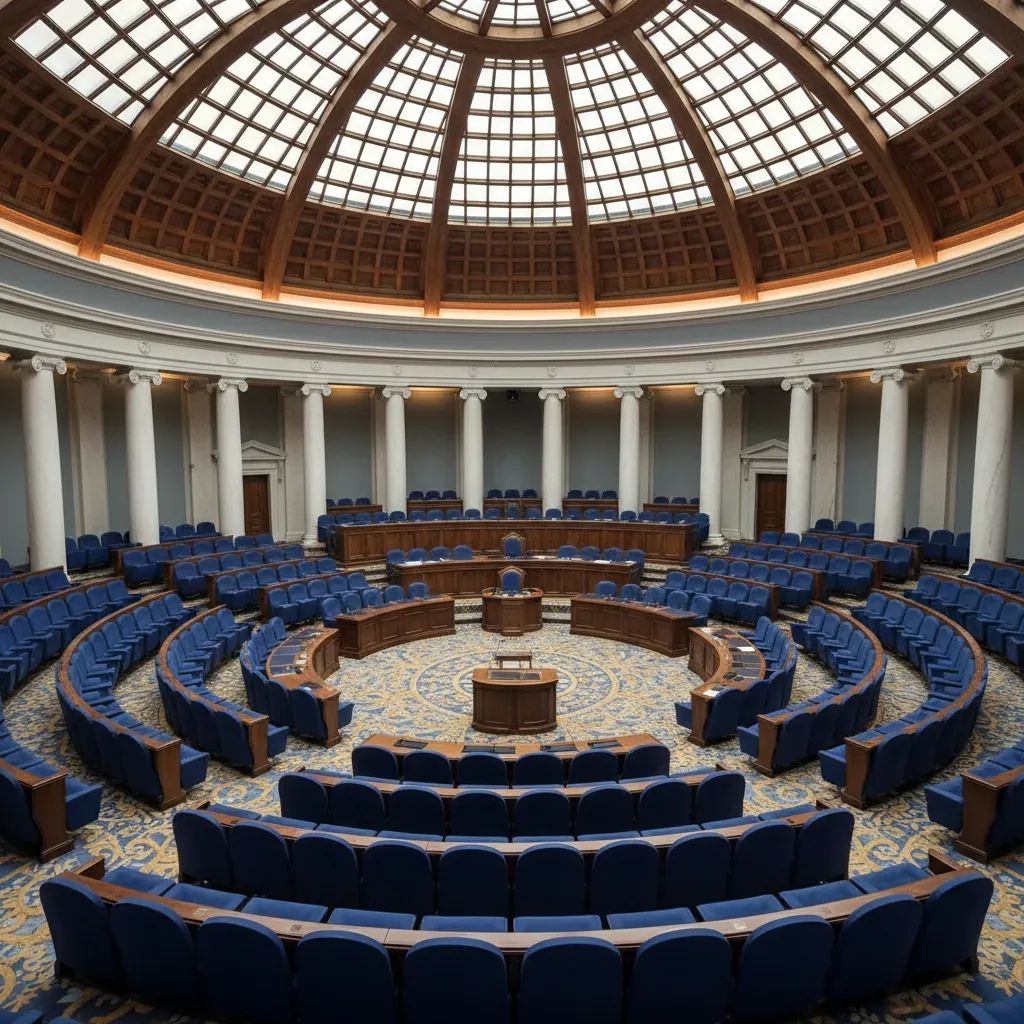
The Italian Cabinet has invoked a confidence vote in the Chamber of Deputies to fast-track a sweeping decree on National Recovery and Resilience Plan (PNRR) implementation, a parliamentary maneuver that will see the legislation approved and sent to the Senate within hours—bypassing ordinary debate on hundreds of proposed amendments.
Minister for European Affairs Tommaso Foti formalized the confidence motion on Wednesday, April 8, 2025, following the conclusion of general debate on the conversion bill. The Chamber held the confidence vote, effectively locking in approval of the government's text without further modifications. The decree, first approved by the Council of Ministers on January 29, 2025, on the proposal of Prime Minister Giorgia Meloni and Foti himself, now faces its final legislative hurdle in the Senate before the constitutional 60-day conversion deadline.
What This Means for You
• When it takes effect: The decree is now approved in the Chamber and moves to the Senate. Once both houses pass it, the law typically enters force 15 days after publication in the Official Gazette.
• If you're a student or parent: €600M is allocated for university student housing in cities like Bologna, Milan, and Rome. Funding flows through regional authorities and university consortia—contact your university's housing office for application details and timelines.
• If you run a small business: Check the National Aid Registry (RNA) to understand your current registrations. You'll no longer need to file duplicate state aid disclosures; the RNA will be your single reference point, reducing paperwork.
• If you're investing in digital or green transformation: The Transition 4.0 certification process has been streamlined. Businesses pursuing tax credits for automation, digitalization, or energy efficiency should expect faster credit recognition.
• For anyone in civil or commercial disputes: Justice sector reforms aim to reduce court backlogs. You may see shorter waits for case resolution, though timelines depend on regional court capacity.
Why This Matters
• Expedited approval: The confidence mechanism removes all amendments from consideration, ensuring passage of the government's original proposal.
• €600M for student housing: The decree allocates substantial funding for university accommodation infrastructure.
• Over €730M for digital transition: Additional resources from the latest budget law flow through this legislative vehicle.
• Administrative burden cuts: Microenterprises and small businesses will see reduced reporting obligations, particularly for state aid disclosures already held in the National Aid Registry.
What's Inside the Decree
The decree-law 19/2025 bundles urgent provisions designed to accelerate Italy's absorption of European recovery funds and strengthen cohesion policy frameworks. Signed into law on February 19, 2025, the measure addresses bottlenecks that have slowed disbursement and risked Italy's compliance with Brussels-imposed milestones.
Simplification forms the legislative backbone. The text slashes bureaucratic formalities for firms and citizens, freeing up resources previously consumed by compliance paperwork. Microenterprises receive dedicated relief: companies will no longer duplicate state aid disclosures when the information already exists in the National Aid Registry (RNA), cutting redundant communication and publication duties.
The Transition 4.0 certification pathway has been streamlined through enhanced integration, making it easier for businesses to qualify investments in digital and ecological transformation. This aligns with the government's push to meet PNRR targets in green and digital sectors, categories that have drawn particular scrutiny from the European Commission.
Justice sector reforms also feature prominently. The decree mandates accelerated timelines for judicial process improvements—a commitment Italy made to Brussels in exchange for recovery fund tranches. Similarly, railway investment productivity receives a boost through measures intended to speed project execution and reduce cost overruns that have plagued infrastructure rollouts.
Critically, the law provides procedural shortcuts for reallocated interventions—projects that failed to meet the PNRR's stringent conditionalities during the latest revision and were shifted to alternative funding streams. By easing the administrative pathway for these displaced initiatives, the government aims to prevent a complete loss of momentum on programs already in motion.
Why the Government Used the Confidence Tool
Invoking a confidence vote—questione di fiducia—is a parliamentary device that bundles approval of legislation with the government's survival. If the Chamber rejects the motion, the Cabinet must resign. In practice, this ensures the majority's discipline: lawmakers from governing parties vote yes or trigger a political crisis.
The maneuver is constitutionally permitted but politically contentious. The Five Star Movement (M5S) immediately questioned the necessity, noting that the decree's conversion deadline was not imminent and that the Chamber had received a substantial number of amendments ready for floor votes. M5S leaders framed the confidence call as evidence the majority lacked the capacity—or the will—to engage in genuine parliamentary debate, describing the government's PNRR management as a "penoso fallimento" (pitiful failure) and promising continued vigilance over every euro spent on green investments, public health, education, and social cohesion.
The Democratic Party (PD) echoed these concerns, particularly regarding provisions that limit the Court of Auditors' oversight powers on PNRR expenditures. PD officials have previously characterized such restrictions as a "double gag" on judges and Parliament, and they reiterated their intention to challenge the approach both in committee and on the floor.
Azione, which routinely votes against confidence motions from the Meloni government, positions itself as an alternative to both the center-left and center-right blocs. While the party did not issue a specific statement on this decree, its general stance remains oppositional to executive overreach through confidence procedures.
Italia Viva has advocated for greater parliamentary transparency and involvement in Recovery Plan execution but did not release detailed commentary on this particular confidence motion in recent days.
What Happens Next in the Senate
Once the Chamber approved the decree, the text moves to the Senate for final conversion. Italy's bicameral system requires both houses to pass identical legislation. The Senate will assign the bill to the relevant committee—likely the EU Affairs or Budget Committee—which will conduct an inquiry and prepare a report for the full Assembly.
If senators introduce amendments, the bill returns to the Chamber in a process known as navette (shuttle), continuing until both houses approve matching text. The entire conversion must occur within 60 days of the decree's publication in the Official Gazette (February 19, 2025), or the measure lapses retroactively. Given the tight timeline and the government's demonstrated willingness to deploy confidence votes, observers expect the Senate to either approve the text as received or force a rapid return to the Chamber.
Following bicameral approval, the President of the Republic promulgates the law, which is then published in the Gazette and typically enters force 15 days later unless the text specifies otherwise.
Impact on Residents and Businesses
For small business owners, the immediate effect is administrative relief. Firms that previously filed duplicate disclosures on state aid to multiple registries will now rely solely on the RNA, cutting compliance hours and legal costs. This matters especially in sectors like retail, hospitality, and artisan manufacturing, where lean operations leave little margin for paperwork overhead.
University students and their families stand to benefit from the €600M earmarked for student housing, addressing chronic shortages in cities like Bologna, Milan, and Rome. The funding will flow through regional authorities and university consortia, though construction timelines remain uncertain.
Tech-sector investors and manufacturers pursuing Transition 4.0 incentives—tax credits for automation, digitalization, and energy efficiency—will encounter a faster certification process. This should reduce the lag between capital expenditure and credit recognition, improving cash flow for medium-sized firms upgrading production lines.
The justice reforms embedded in the decree aim to reduce case backlogs, a persistent irritant for anyone navigating civil disputes, commercial litigation, or administrative appeals. If the accelerated timelines deliver as promised, residents could see shorter waits for court dates and swifter resolution of property, contract, and family law cases.
The Broader PNRR Picture
Italy secured €191.5B in grants and loans under the EU's Next Generation recovery program, the largest allocation of any member state. Disbursement is contingent on hitting quarterly milestones across six policy pillars: digitalization, green transition, infrastructure, education, social inclusion, and health. The government has already negotiated one major revision with Brussels, reallocating funds from stalled projects to more viable initiatives.
Opposition parties, particularly M5S and PD, argue that the Meloni administration has struggled with execution, pointing to delayed public tenders, slow regional coordination, and insufficient staffing in oversight bodies. The decision to curtail Court of Auditors' scrutiny—a provision embedded in earlier PNRR decrees and reinforced here—remains a flashpoint, with critics warning that reduced oversight invites waste and fraud.
Governing parties counter that procedural streamlining is essential to meet Brussels' deadlines and that Italy's public administration, historically slow and fragmented, requires extraordinary measures to absorb such large sums in compressed timeframes.
Political Calculus
The confidence vote reflects the government's calculation that speed trumps consensus. With the Senate phase looming and the 60-day clock ticking, the executive opted to foreclose amendment debates that could have extended Chamber proceedings by days or weeks. The trade-off is political capital: opposition leaders now frame the government as dismissive of parliamentary prerogatives, a narrative that may resonate if PNRR implementation continues to lag or if scandals emerge around fund misuse.
For residents, the immediate consequence is clarity. The decree's provisions are now locked in, and businesses can plan around the new rules without uncertainty over last-minute legislative changes. Whether the streamlined procedures translate into faster project delivery—and whether oversight reductions prove costly—will become evident in the coming quarters as disbursement data and audit reports emerge.


