
Foreign-born political candidates in Italy could soon face administrative fines for campaigning in languages other than Italian or one of twelve officially recognized minority languages. A legislative proposal introduced by deputies from the Lega party would impose penalties of €500 to €1,000 on candidates who violate these restrictions during election campaigns—a measure that directly affects how immigrant communities and foreign-origin candidates engage with voters across Italy's diverse neighborhoods.
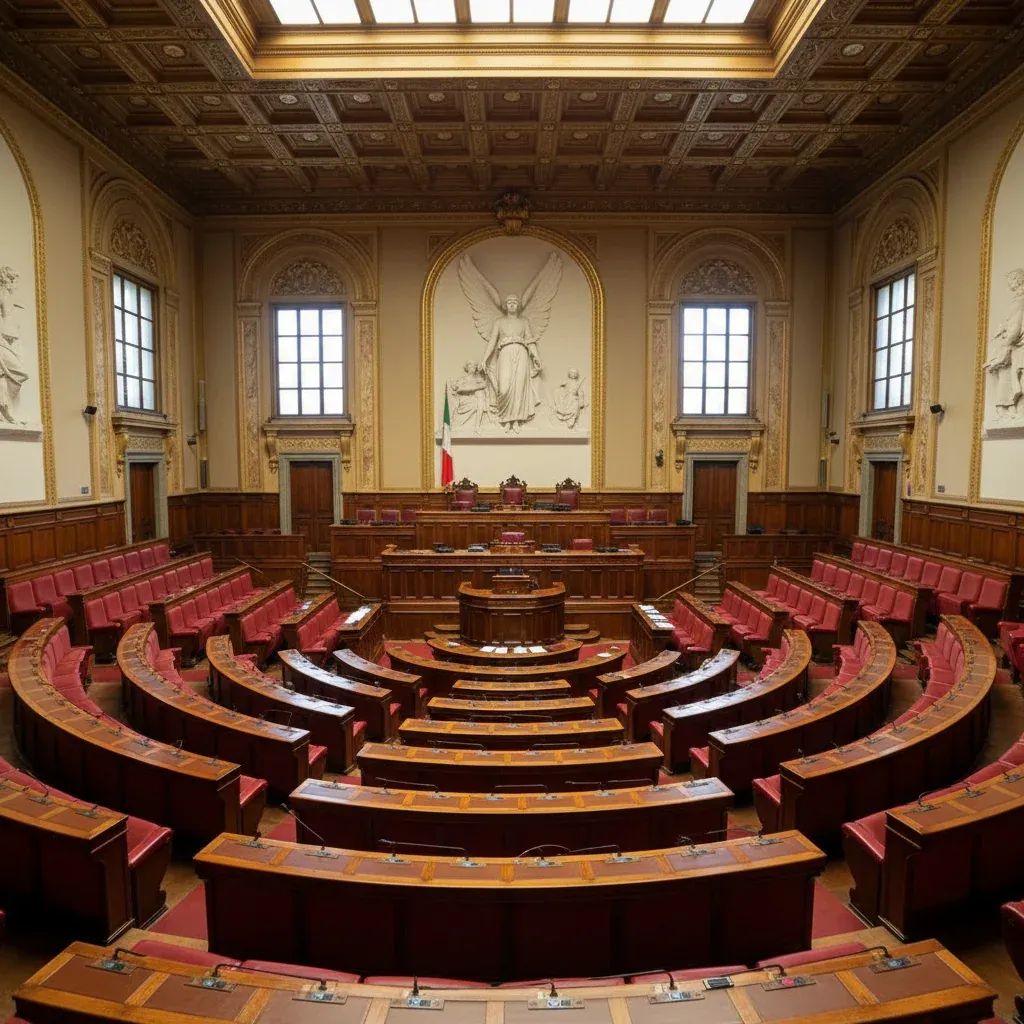
The Italian Chamber of Deputies is currently considering this proposal, which would restrict political communication to Italian or the dozen officially recognized minority languages. The bill, introduced in late May 2026 by several Lega deputies, emerged following a municipal election controversy and reflects broader debates within Italy's political class about integration and linguistic identity.
Why This Matters for Residents:
For foreign-born residents and immigrant communities, this proposal has immediate practical implications:
• Electoral communication would be limited to Italian, or one of 12 historic minority languages—excluding widely spoken regional dialects like Veneto and Lombard.
• Candidates of foreign origin conducting campaigns in their mother tongues would face financial penalties, affecting their ability to reach communities in their native languages.
• Multilingual voter outreach, common in diverse neighborhoods across Italy's cities, could be restricted if candidates cannot communicate campaign positions in the languages their constituents speak.
• Constitutional questions remain unresolved regarding freedom of expression and democratic participation for all residents.
The Vigevano Incident
The legislative initiative emerged after the May 2026 municipal elections in Vigevano, a city in Lombardy, where two candidates of Islamic background running on Lega's ticket distributed campaign materials in Arabic. The incident caused internal friction within the party and sparked public debate about how foreign-born candidates engage with immigrant communities.
Matteo Salvini, Lega's leader, stated that distributing campaign materials "in Arabic praising Allah or featuring the veil crosses a line," framing the concern as one about maintaining shared democratic discourse rather than religious or ethnic objections. His remarks underscored the party's stated concern that such practices fragment the electorate by creating parallel campaign streams potentially inaccessible to the majority of voters.
Deputies Jacopo Morrone and Riccardo Molinari, Lega's parliamentary group leader, spearheaded the bill. Their stated rationale centers on democratic transparency: the bill's preamble argues that "it is impossible for the vast majority of voters to understand the political proposals and commitments made by candidates campaigning in their native language." The lawmakers frame the measure as protecting democratic accountability by ensuring all voters can evaluate candidates' platforms equally.
What This Means Practically
If enacted, the law would affect political rallies, printed materials, social media posts, and advertisements during campaign periods. Candidates would be permitted to use Italian or any of the 12 recognized minority languages: Albanian, Catalan, German, Greek, Slovenian, Croatian, French, Franco-Provençal, Friulian, Ladin, Occitan, and Sardinian. These protections stem from Article 6 of the Italian Constitution, which mandates safeguarding linguistic minorities.
The proposal creates a notable inconsistency: Veneto and Lombard, spoken by millions across Italy's wealthiest northern regions, do not appear on the protected list. A candidate addressing voters in Catalan or Albanian would face no penalty, while using Veneto or Lombard could trigger a €500–€1,000 fine. This oversight has drawn criticism from regional movements and even former Lega figures now aligned with the Patto per il Nord coalition, who characterize the proposal as contradictory to the party's traditional regional constituency base.
For practical context on penalty severity: the €500–€1,000 administrative fine range is comparable to typical Italian traffic violations, not exceptionally high by administrative penalty standards. However, the reputational and practical impact on candidates could be significant, particularly for foreign-origin politicians building campaigns in diverse communities.
Political analysts note the measure may also reflect competitive pressure from figures like Roberto Vannacci, whose nationalist rhetoric has influenced Lega's positioning on identity and integration policy.
Constitutional and European Legal Frameworks
The proposal raises substantive questions about its compatibility with Article 21 of the Italian Constitution, which guarantees freedom of expression "through speech, writing, and any other medium." Italy's Constitutional Court has repeatedly affirmed that political speech enjoys heightened protection, particularly during electoral periods when democratic participation is most active.
While Italian is recognized as the de facto official language through a 1999 presidential decree and judicial interpretation, no explicit constitutional provision mandates its exclusive use in political discourse. The European Union's Charter of Fundamental Rights reinforces this principle through Article 11, guaranteeing freedom of expression without interference, and Article 22, which mandates respect for linguistic diversity.
Recent EU regulations on political advertising, effective since April 2024, focus on transparency and foreign interference, requiring clear disclosure of ad sponsors and prohibiting foreign-funded campaigns three months before elections. However, these rules do not restrict the languages candidates may use to reach constituents.
Legal experts have warned that a language restriction on political campaigning could violate both domestic constitutional protections and Italy's obligations under the European Convention on Human Rights (ECHR). Any challenge to the law, if passed, would likely proceed to the Constitutional Court, which has historically defended minority linguistic rights and broad interpretations of free expression.
Political Reactions and Coalition Dynamics
Within the governing coalition, the proposal has exposed fault lines. Forza Italia, Lega's center-right ally, urged caution. Chamber leader Enrico Costa stated that "a responsible legislator should not make decisions driven by the emotional wave of news events," advocating for "balanced and thoughtful norms designed to endure."
Fratelli d'Italia, the coalition's dominant party, maintained a measured stance. While some members expressed sympathy for concerns about integration, parliamentary leader Galeazzo Bignami questioned whether "the safeguards in our Constitution would permit such a law to be promulgated," signaling doubts about its legal viability.
Opposition forces expressed strong reservations. Giuseppe Conte, leader of the Movimento 5 Stelle, characterized the measure as incompatible with democratic pluralism. Riccardo Magi of Più Europa argued the bill reflects nationalist sentiment at the expense of constitutional principles, while representatives from the Green-Left Alliance (AVS) emphasized that the government should prioritize other policy areas including public safety.
Precedents and Practicalities
No clear precedent exists in modern Italian or European law for explicit linguistic restrictions on campaign communication. While many European nations enshrine an official language in their constitutions, none impose blanket bans on foreign-language political messaging.
The practical enforcement mechanism outlined in the bill remains vague. It is unclear which agency would monitor compliance, how violations would be identified across social media and print, or whether penalties would apply to grassroots supporters distributing materials on behalf of candidates. These ambiguities could complicate implementation and invite legal challenges on vagueness grounds.
The legislation now awaits committee review in the Chamber of Deputies. Whether it advances to a floor vote will depend on coalition negotiations and potential amendments. Given the constitutional concerns and internal disagreements, passage is uncertain. Even if approved, the bill would likely face immediate legal scrutiny, potentially delaying or nullifying its effects before the next national election cycle.
What Residents Should Know
For Italy's immigrant communities and foreign-born candidates, the proposal signals tension over who participates fully in democratic processes and on what terms. If passed, the law would directly affect how political candidates communicate with residents in multilingual neighborhoods—potentially limiting residents' ability to engage with candidates in their native languages during campaigns.
As Italy continues to grapple with integration, identity, and linguistic diversity, this legislative debate underscores ongoing friction between national cohesion and pluralism—a balance that remains contested in both law and practice.


