
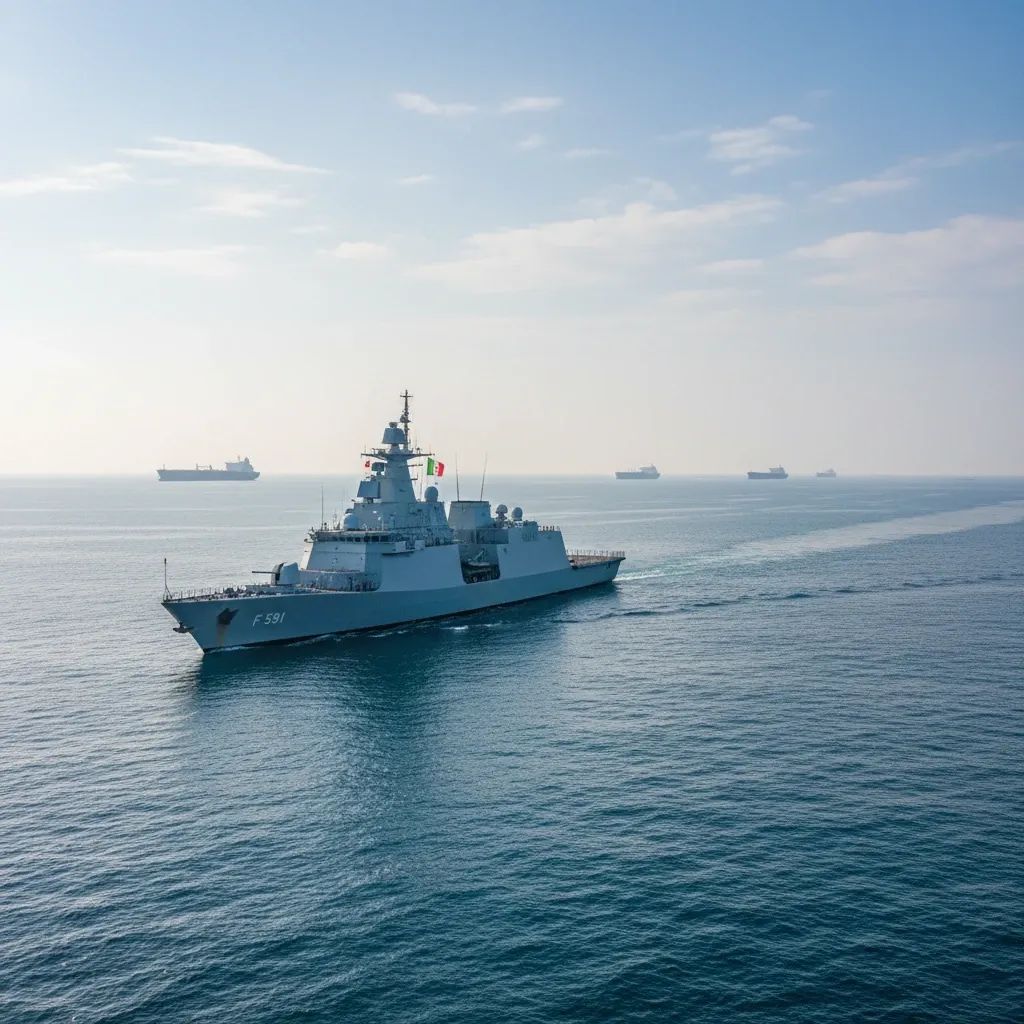
The Italian Cabinet is preparing to seek parliamentary approval for a potential naval deployment to the Strait of Hormuz, a strategic move contingent on a preliminary U.S.-Iran peace accord scheduled for signature on June 19 in Geneva. Prime Minister Giorgia Meloni confirmed Monday that Italy is positioning itself to participate in stabilizing the world's most important oil chokepoint—but only if the agreement is finalized and Parliament grants authorization.
Why This Matters for Italian Residents
• Potential energy relief: Around 25% of Italy's liquefied natural gas transited through Hormuz before the strait's closure earlier this year. If reopened as planned, this could ease pressure on household heating and electricity costs, though full relief depends on successful implementation and compliance with accord terms.
• Parliamentary vote required: No ships can operate in contested zones without a Chambers mandate. This vote is expected in coming weeks if the peace deal is formally signed. The process could take months, meaning any benefits would not be immediate.
• Current supply reality: Italy has adapted through alternative routes and LNG diversification. Any Hormuz contribution would supplement—not replace—existing gas imports from other sources.
• Military deployment: Italy plans to deploy up to four naval units (two minesweepers, an escort vessel, and a logistics ship) if authorized, already pre-positioned in the Red Sea.
• Commercial opportunities: Italy is the second-largest EU trade partner of Iran after Germany. Normalized shipping lanes could create export opportunities, though sanctions clarity remains uncertain.
The Proposed Peace Framework
The preliminary U.S.-Iran memorandum, brokered by Pakistan, is scheduled for official signature later this month in Switzerland. The accord would establish an immediate and permanent ceasefire and mandate toll-free reopening of the Strait of Hormuz, through which roughly 20% of global oil and significant LNG volumes flow. Planners estimate that if fully implemented, traffic could return to pre-conflict levels within 30 days of signing.
However, several conditions must hold for benefits to materialize: the accord must be signed as scheduled, all parties must comply with terms, Iran must honor sanctions relief conditions, and negotiations on nuclear issues must proceed over a planned 60-day window. U.S. President Donald Trump has warned that military action remains possible if nuclear talks stall, underscoring the fragility of this framework.
For Italy, the current situation is acute. When the strait was effectively closed earlier this year, Qatari gas supplies—which accounted for approximately a quarter of national LNG consumption—were choked off. LNG tankers were forced to reroute around Africa, adding weeks to delivery times and billions to freight costs. These pressures have kept Italian energy prices elevated.
What Residents Could See—If All Conditions Are Met
If the peace accord holds and the strait reopens as planned, Italians could experience gradual easing of energy costs. However, full relief would require: successful implementation of the accord, Iran's compliance with sanctions conditions, and sustained international commitment. Timeline estimates suggest any noticeable impact would extend into autumn 2026 at the earliest, not immediate summer relief.
Industrial manufacturers—particularly energy-intensive sectors like chemicals, steel, and ceramics—stand to benefit from more predictable and affordable feedstock pricing if LNG flows normalize. However, as with household savings, these benefits are contingent on accord durability.
Beyond energy, the proposed sanctions adjustment could revive bilateral trade. Italian machinery, luxury goods, and engineering services have historically found markets in Iran, and exporters in Emilia-Romagna and Lombardy are watching closely for signs that commercial credit lines will normalize. Conversely, Iranian petrochemicals and textiles could diversify European supply chains—but this requires sustained sanctions relief and international coordination.
The Parliamentary Hurdle
Defense Minister Guido Crosetto and Foreign Minister Antonio Tajani have emphasized that any deployment hinges on explicit Chambers authorization, as required by Italy's framework law on overseas missions. The Cabinet has approved a decree extending current international missions for 2026, but the Hormuz component requires a separate parliamentary vote once the peace framework solidifies—a process that could extend into July or August.
The Five Star Movement has already cautioned the government against rushing Parliament's decision, reflecting concerns about Middle Eastern entanglement. Lawmakers will scrutinize the mission's scope, rules of engagement, and duration—particularly the demining and freedom-of-navigation mandate—before granting approval. Officials insist the posture will remain strictly defensive, avoiding any appearance of anti-Iranian coalition alignment that could undermine Italy's historical dialogue with Tehran.
This parliamentary process means real deployment would not occur until late summer or autumn 2026, further delaying any energy market impact.
Naval Assets and Operational Readiness
Italy's Maritime Command has pre-positioned two modern minesweepers in the Red Sea, equipped for autonomous underwater demining—capabilities developed during previous Gulf operations in the late 1980s and early 1990s. The proposed full task force would include a frigate or destroyer for escort duties and a logistics support ship, enabling sustained operations without heavy reliance on foreign ports.
Defense planners are also evaluating whether to assign a missile-defense platform, given persistent drone and ballistic threats in the region. Italy's current command of the European-led Aspides mission in the Red Sea provides operational experience with multinational naval coordination.
Rome's Diplomatic Balancing Act
Italy has consistently advocated for a UN-endorsed, multilateral presence in the Gulf rather than joining a U.S.-led coalition perceived as anti-Iranian. Officials argue that any credible maritime security architecture must include China, India, and Asian stakeholders, reflecting the strait's global significance. This stance aligns with Italy's "extended Mediterranean" doctrine, connecting southern Europe's security to stability across North Africa, the Sahel, the Horn of Africa, and the Persian Gulf.
Analysts view Italy's approach as pragmatic balancing: maintaining Atlantic alliance commitments while preserving diplomatic and economic channels to Tehran. Unlike the International Maritime Security Construct coordinated by Washington and London, Italy's participation would deliberately avoid confrontational posturing—positioning Rome as a credible neutral presence rather than part of an anti-Iran coalition.
Regional Stability and the Lebanon Connection
Prime Minister Meloni has explicitly linked the Hormuz initiative to cessation of hostilities in Lebanon, signaling that Italy views the accord through a broader regional lens. Italy is the second-largest troop contributor to UNIFIL, with 1,099 personnel deployed, and plans to maintain a military presence even after UNIFIL's current mandate expires this year.
The government is also exploring requests from Gulf states for defensive military aid, including SAMP/T air-defense batteries and anti-drone systems, to protect approximately 2,000 Italian troops and civilians stationed across the region. The Cabinet's decision to couple Hormuz readiness with Lebanese stability reflects Rome's calculation that durable peace requires addressing multiple regional flashpoints simultaneously.
Timeline and Uncertainties Ahead
If the June 19 signing in Geneva proceeds and nuclear negotiations launch on schedule, Italy's Parliament will face a decision in coming weeks. However, critical uncertainties remain:
• Nuclear dossier: Iran's commitment to forego weapons development remains vaguely worded, and Trump's public threat of renewed strikes underscores Washington's impatience.
• Political constraints: Opposition parties will demand strict mission timelines, transparent cost accounting, and regular parliamentary reviews—potentially limiting operational flexibility.
• Regional risks: Any resumption of hostilities would instantly re-close the strait, rendering the naval deployment's purpose obsolete.
• Supply chain recovery: Even if the strait reopens, Italy's energy markets have adapted to alternative routes. Full benefit realization depends on sustained accord implementation and competitive LNG pricing.
For Italian residents: The most realistic timeline suggests that if all conditions align—accord signature, parliamentary approval, and successful implementation—energy relief would materialize gradually in autumn 2026 or later, not immediately. The potential benefits are real but contingent, requiring sustained international commitment and compliance across multiple actors and months ahead.


