
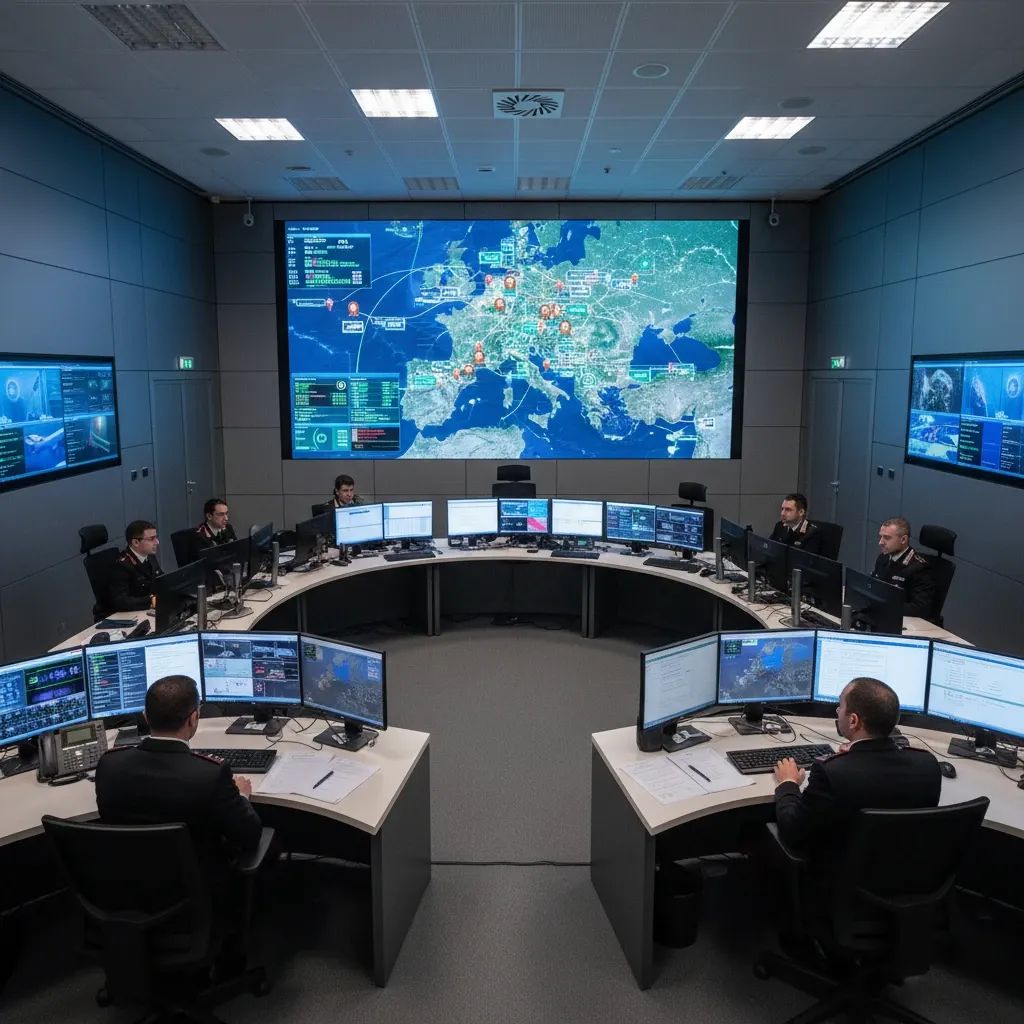
Italy Prime Minister Giorgia Meloni has extended the tenure of Prefect Giovanni Caravelli as head of the nation's foreign intelligence agency, ensuring continuity at the helm of one of the country's most sensitive security institutions. The extension, effective from May 16, 2026, will allow Caravelli to remain director of AISE until May 2028, completing his maximum allowable eight-year tenure under Italian law. The decision underscores Meloni's confidence in Caravelli's handling of Italy's external intelligence operations at a time of heightened geopolitical uncertainty.
Why This Matters:
• Caravelli will remain director of AISE (Agenzia Informazioni e Sicurezza Esterna) until May 2028, marking approximately eight years total in the role since his initial appointment in May 2020.
• The extension was approved after consultation with Italy's Interministerial Committee for the Security of the Republic (CISR) and notified to the Parliamentary Committee for the Security of the Republic (COPASIR).
• This signals political stability in Italy's intelligence leadership during a period of complex international threats, from cyber espionage to proliferation risks.
• Under Italian law, intelligence chiefs can serve a maximum of eight years, meaning this extension represents the final permitted term for Caravelli under current statute.
The Man Behind Italy's Foreign Intelligence
Giovanni Caravelli is not a household name, but his fingerprints are on some of Italy's most delicate foreign operations. Born in Frisa on March 18, 1961, the 65-year-old career officer began his military service in 1979 at the Modena Military Academy. Over four decades, he accumulated experience across artillery units, military intelligence divisions, and international peacekeeping missions spanning Afghanistan, Iraq, Bosnia-Herzegovina, Kosovo, and Lebanon.
His intelligence career began in earnest in 2002 when he joined SISMI (the predecessor to AISE), where he served as Director of Military Intelligence Division until 2008. He later commanded the Army's Information, Reconnaissance and Electronic Warfare Brigade and served as military adviser to the UN Secretary General's Special Representative in Afghanistan. In September 2024, he was formally appointed to the rank of prefect, a recognition that elevates his standing within Italy's civil administration while continuing his intelligence duties.
Caravelli first took the reins at AISE on May 16, 2020, during the Conte government, initially for a two-year term. He was subsequently reappointed by the Draghi administration in 2022 for a four-year mandate. Today's extension, effective from May 16, 2026 for a two-year period, brings his total tenure to eight years—the statutory maximum for an Italian intelligence director.
What AISE Does and Why It Matters for Italy
For those unfamiliar with Italy's intelligence architecture, AISE is the country's foreign intelligence service, tasked with safeguarding national interests beyond Italy's borders. Think of it as Italy's equivalent to the CIA or MI6—though with a more narrowly defined remit focused on external threats.
AISE's core responsibilities include:
• Gathering and analyzing foreign intelligence on political, military, economic, scientific, and industrial matters that affect Italy's security and sovereignty.
• Counterproliferation operations, tracking the spread of weapons of mass destruction and dual-use materials—a domain in which AISE has exclusive competence among Italian agencies.
• Countering espionage directed at Italy from foreign actors and protecting Italian interests abroad from sabotage or subversion.
• Coordinating with domestic counterparts: AISE can operate on Italian soil only in collaboration with AISI (the domestic intelligence agency) and under the coordination of the Department of Information for Security (DIS), which reports directly to the Prime Minister.
The agency's Latin motto—"Intellego ac tueor" (I understand and I protect)—captures its dual mandate of intelligence collection and active defense. In practice, this means everything from monitoring terrorist networks in North Africa to tracking cyber intrusions originating in Eastern Europe, to protecting Italian companies from foreign economic espionage.
Impact on Italy's Security Posture
The renewal of Caravelli's mandate is more than a routine administrative act—it signals continuity in Italy's approach to external security at a moment when the Mediterranean basin, Eastern Europe, and the Middle East are all experiencing turbulence. Meloni's decision reflects confidence in Caravelli's operational record, particularly his handling of high-stakes crises.
One of the most visible recent examples was Caravelli's direct involvement in the release of journalist Cecilia Sala from detention in Iran. The operation, which required delicate coordination with Iranian authorities and international partners, showcased AISE's capacity to execute complex diplomatic-intelligence missions under intense public scrutiny.
For residents and businesses in Italy, the implications are tangible and practical. A stable, experienced intelligence leadership means better early warning of external threats to critical infrastructure—whether that's detecting cyberattacks targeting Italian energy grids, banking systems, or telecommunications networks that residents and businesses depend on daily. It also means more effective counterintelligence against foreign economic espionage, protecting the Italian companies where residents work from intellectual property theft or sabotage. Additionally, it ensures more consistent protection for Italians working abroad, from corporate executives and technology professionals operating in unstable regions to journalists and aid workers in conflict zones, while strengthening AISE's role in identifying threats that could destabilize the economic environment affecting employment and investment at home.
Legal Framework and Oversight
Italian intelligence agencies operate under strict legal constraints, a legacy of the country's post-war experience with surveillance abuses. Law 124 of 2007 governs the intelligence system, stipulating that agency directors serve renewable terms of up to four years each, with a hard cap of eight years total. This means Caravelli's current extension will be his last under Italian law unless the statute is amended.
The decision-making process is deliberately multi-layered. The Prime Minister (currently Meloni) holds ultimate authority over intelligence policy, advised by the CISR, an interministerial body that includes the Ministers of Foreign Affairs, Interior, Defense, Economy, and Justice. Once a decision is made, it must be communicated to COPASIR, the bicameral parliamentary committee that exercises oversight over intelligence activities. While COPASIR does not have veto power, its role ensures a degree of legislative scrutiny over appointments and operations.
This governance structure is designed to balance operational secrecy with democratic accountability—a tension that every Western intelligence service must navigate. For Italy, which has historically been wary of concentrated executive power, this layered oversight is a key safeguard.
Political Context and Continuity
Caravelli's career has spanned five Italian governments—from Conte to Draghi to Meloni—a remarkable feat of institutional continuity in a country known for political volatility. His reappointment by Meloni, a center-right leader who has emphasized national sovereignty and strategic autonomy, suggests that his approach aligns with the government's broader security priorities.
Meloni and Undersecretary Alfredo Mantovano, who serves as the Delegated Authority for the Security of the Republic, have publicly expressed confidence in Caravelli's leadership. This political backing is crucial, as intelligence chiefs must navigate not only external threats but also internal bureaucratic rivalries and parliamentary scrutiny.
There have been no significant controversies or public criticisms of Caravelli during his tenure, according to available records. While earlier in his career he reportedly faced "management divergences" with Admiral Bruno Branciforte during his time at SISMI, those disputes predate his directorship at AISE and appear not to have impacted his subsequent rise.
What This Means for Residents
For people living in Italy—whether Italian citizens, long-term residents, or expatriates—the extension of Caravelli's mandate translates into predictability and institutional memory at the top of the country's foreign intelligence apparatus. In practical terms, this means:
• Enhanced protection for Italian interests abroad and at home, including corporate assets, diplomatic missions, and citizens working or traveling in high-risk regions, with consistent threat assessments that help protect the economic and security environment residents depend on.
• Improved counterintelligence capacity to detect and neutralize foreign espionage targeting Italian companies, research institutions, and government networks—particularly important for residents employed in technology, defense, energy, and manufacturing sectors vulnerable to foreign cyber operations and theft.
• Stronger coordination with European and NATO partners on shared security threats, from terrorism to hybrid warfare, enhancing Italy's strategic position and economic stability.
• Continuity in crisis response, reducing the risk of operational disruption during transitions in leadership and ensuring consistent protection mechanisms remain in place.
For businesses, especially those operating in sensitive sectors like defense, energy, or technology, a stable intelligence leadership means more consistent threat assessments and protective guidance that helps safeguard company operations and employee safety. For the broader public, it means that the machinery of external security—largely invisible but critical—continues to function without the dislocations that can accompany leadership changes, maintaining the stable security environment that underpins economic activity and quality of life.
Looking Ahead
Caravelli will now serve until May 2028, when he will have reached the maximum allowable tenure under Italian law. By then, he will be approaching his 67th birthday, and Italy will need to identify a successor capable of managing an increasingly complex threat landscape. The coming two years will likely test his agency's capabilities across multiple fronts: managing Italy's role in European defense cooperation, countering disinformation campaigns, protecting critical infrastructure from cyberattacks, and navigating the geopolitical rivalry between the United States, China, and Russia.
For now, the message from Palazzo Chigi—the seat of Italy's government—is clear: continuity and experience remain the watchwords of Italian intelligence policy. Whether that proves sufficient in the face of 21st-century threats will be the measure of Caravelli's final term.


