
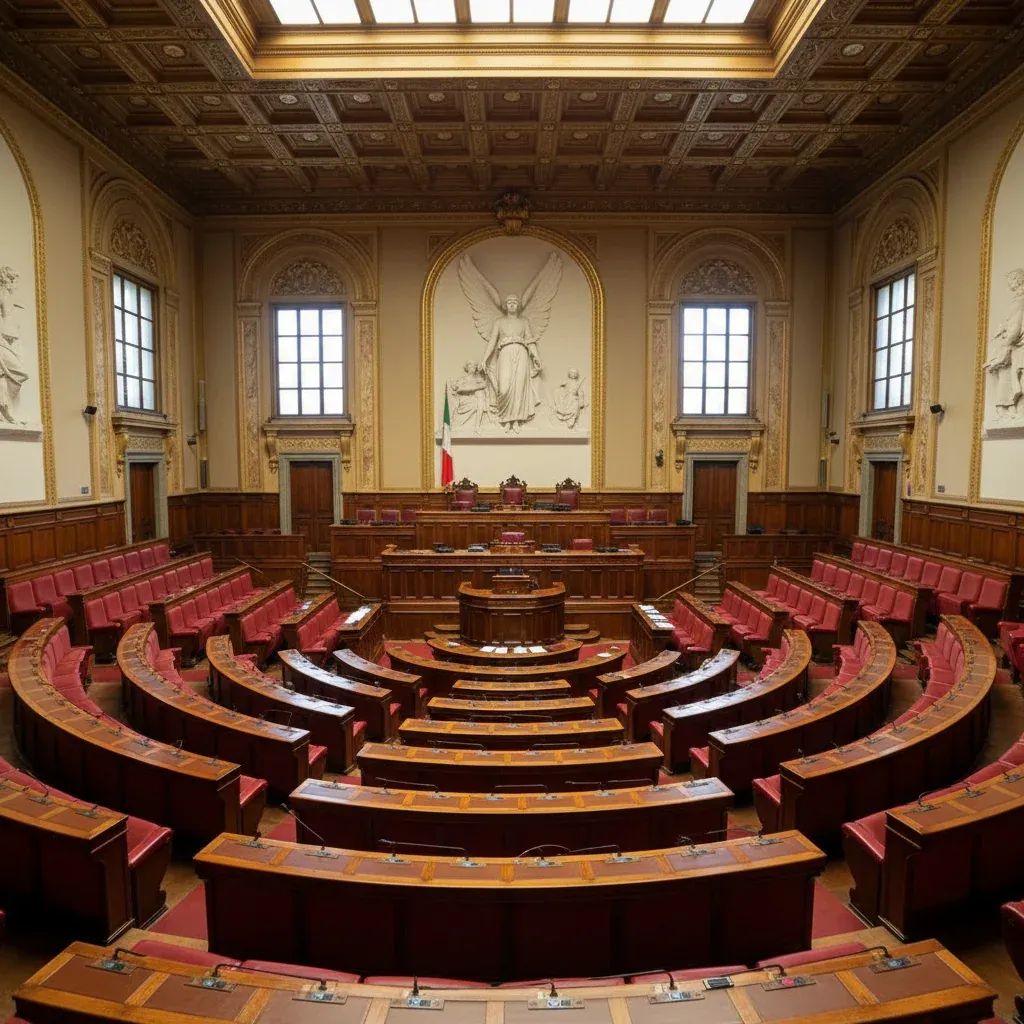
The Italy Parliament witnessed fresh sparring this week as Movimento 5 Stelle (M5S) president Giuseppe Conte pushed back sharply against suggestions that Prime Minister Giorgia Meloni might try to handpick her preferred opponent for the 2027 general election. Speaking to reporters in the Chamber, Conte dismissed any notion that the premier would influence who leads the opposition's "campo progressista"—a loose but pivotal coalition of center-left and progressive forces.
"Meloni can relax," Conte said. "She will not decide who, when, or how the progressive camp chooses its leader. She will not be the one interpreting our program."
The rebuke followed recent parliamentary exchanges in which Meloni made pointed references to Partito Democratico (PD) secretary Elly Schlein, prompting speculation that the premier was already framing Schlein as her chief adversary for the next national contest. Conte's statement underscores a deepening fault line: not only between government and opposition, but also within the fragmented left itself over leadership, strategy, and control of the narrative.
Why This Matters
• Leadership battle heating up: Conte is openly competing with Schlein to lead Italy's opposition, proposing primary elections to decide the matter—a move the PD has received with caution.
• Referendum result: The March 2026 justice referendum delivered a 53.7% "No" vote, widely interpreted as a setback for Meloni's government and a morale boost for the left.
• 2027 election clock ticking: Italy's next general election is due by December 22, 2027, but the political positioning is already defining 2026 as the decisive year for coalition-building and leadership decisions.
The Power Struggle Inside the Opposition
The core tension in Italy's opposition today revolves around who will stand against Meloni when voters return to the polls. The M5S under Conte has surged in recent months, consolidating its position as an indispensable partner for any credible center-left alternative. Yet that very success has emboldened Conte to challenge the PD's traditional claim to leadership of the progressive bloc.
Conte has been vocal about his preference for open primaries, arguing that such a process would legitimize the coalition's candidate and energize the base. Supporters of Conte's approach claim he stands a stronger chance of defeating Meloni than Schlein does, citing recent polling data. Genoa mayor Silvia Salis has also been mentioned as a potential contender in opposition discussions.
Schlein, for her part, has not ruled out primaries but insists that program must come before personality. She has emphasized the need to define shared policy priorities—labor protections, healthcare investment, education reform, and a pro-European stance—before staging a leadership contest. Her strategy is to present the opposition as a programmatic alternative rather than focusing on individual candidates, using the Italian Constitution itself as a blueprint for governance.
Yet the PD is not unified. Reformist voices within the party complain of being sidelined by Schlein's leftward tilt and her openness to collaboration with M5S and Alleanza Verdi-Sinistra (AVS). Some veteran figures have quietly left the party, citing internal power struggles and a lack of strategic clarity. The idea of primaries has become a flashpoint: supporters see them as democratizing and energizing; detractors worry they will amplify divisions and weaken the coalition before it even takes shape.
Meloni's Calculated Provocations
Meloni's recent parliamentary remarks have added fuel to the fire. During heated exchanges, the premier has singled out Schlein repeatedly, rebutting her criticisms with phrases like "È tutto falso" ("It's all false") and accusing her of spreading "verifiable lies" about rising job precarity under the current government. Meloni has framed Schlein as out of touch with economic reality, pointing to data she claims disprove opposition narratives about declining wages and rising inequality.
For Conte, those interventions crossed a line. His response this week was not just a defense of the opposition's autonomy, but also a clear assertion of his own relevance in the leadership conversation. By declaring that Meloni has no say in the matter, Conte positioned himself as a key player in determining the opposition's direction.
Meloni, for her part, has ruled out early elections and vowed that her government will serve its full mandate through 2027. Her party, Fratelli d'Italia, still polls around 28.3%, a slight dip from its post-election peak but still the largest single force in Parliament. Yet there are signs of strain: political observers note challenges in her recent performances, attributed to economic stagnation and friction with the Presidency of the Republic over judicial and institutional matters.
What This Means for Residents
For residents of Italy, the immediate impact of this political positioning is limited—no snap election is expected in 2026, and the government's legislative agenda continues largely unaffected. But the stakes are significant for the country's medium-term trajectory. If the opposition remains fractured and unable to settle on a leader or unified program, Meloni's coalition is likely to maintain its grip on power, shaping policy on everything from income tax rates and public spending priorities to immigration enforcement and renewable energy investment.
Conversely, if Conte and Schlein can negotiate a functional alliance—whether through primaries or other means—the campo progressista could present a credible alternative by late 2027. That would mean a real contest over issues like wage standards, public healthcare accessibility, climate commitments, and Italy's role in the European Union. For residents and those planning their futures in Italy, clarity on the political direction matters: uncertainty influences business confidence, real estate decisions, and long-term economic planning.
The Referendum as Turning Point
The March 2026 justice referendum has emerged as a significant moment in the broader political debate. The 53.7% "No" vote was widely interpreted as a rebuke to Meloni's reform agenda, particularly her attempts to reshape the judiciary. Schlein, Conte, and their allies pointed to the result as evidence that residents are open to alternatives. Conte criticized aspects of Meloni's governance; Matteo Renzi, leader of Italia Viva, declared that the premier had faced challenges in voter confidence.
Yet the referendum's implications are contested. Meloni's camp argues that the vote was narrow and reflected specific concerns about judicial reform, not a broad rejection of her government. The premier has since called for a "debate on real politics", challenging the opposition to engage on substance rather than symbols. That challenge has gone largely unanswered, as the left remains engaged in internal negotiations.
The Road Ahead
The next 18 months will determine whether the campo progressista becomes a cohesive force or remains a coalition of tactical convenience. Key variables include:
• The primary question: Will Conte and Schlein agree to a competitive primary, or will party leaders negotiate a unity candidate through other means?
• Programmatic alignment: Can M5S, PD, AVS, and smaller formations like Più Europa and Italia Viva reconcile differences on issues like Ukraine policy, energy infrastructure, and fiscal priorities?
• Electoral law changes: Any move by the center-right majority to alter the electoral system could reshape opposition strategy, particularly if it affects how coalition agreements influence electoral outcomes.
• New voices: Various figures are exploring projects aimed at strengthening the center-left, and their roles could either unify or further complicate the political landscape.
For now, Conte's message is clear: the opposition will choose its own direction on its own terms and timeline. Whether that will be led by Conte, Schlein, or another figure remains the most consequential question in Italian politics as the country moves toward its next election cycle.


