
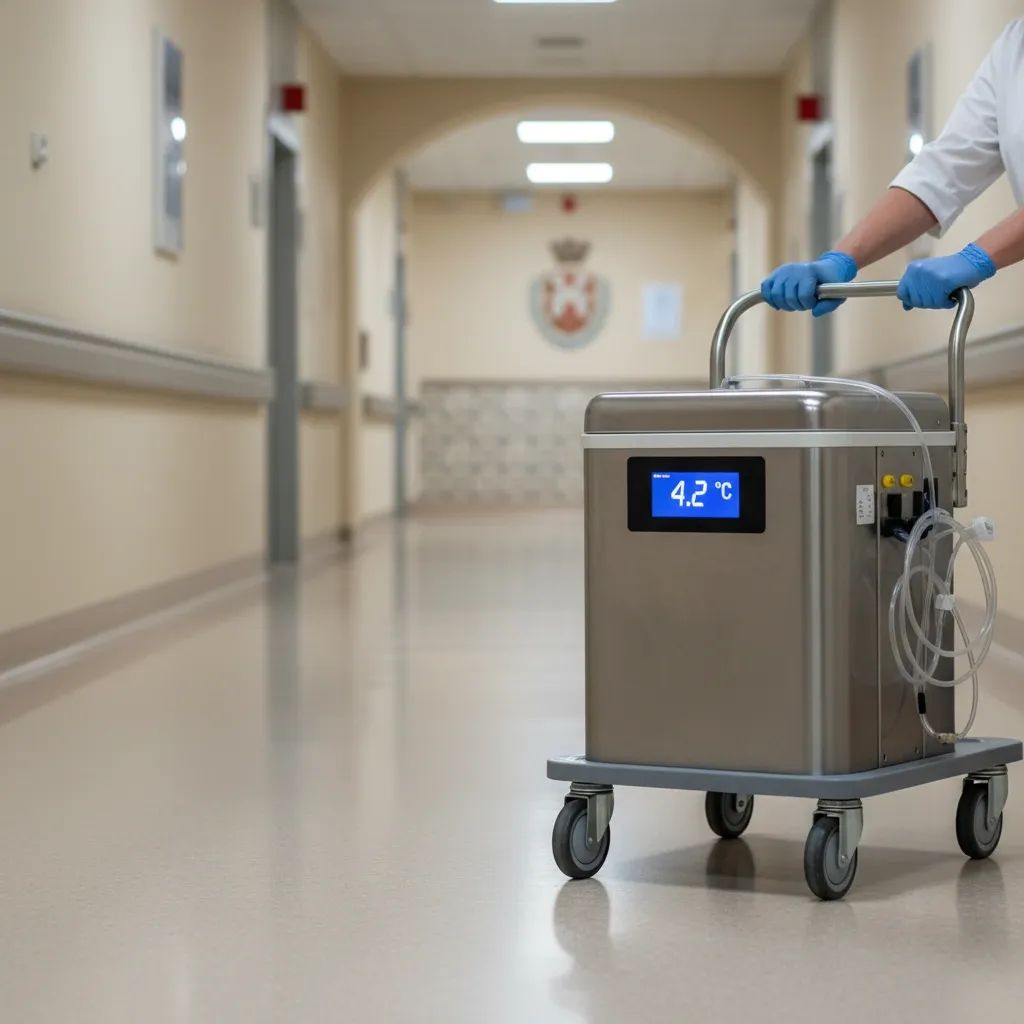
The Italian Public Prosecutor’s Office in Naples has seized the cooler used to ferry a donor heart from Bolzano, a move that throws a harsh spotlight on gaps in the national organ-transport chain and could trigger stricter rules as early as spring.
Why This Matters
• Safer future transplants: The inquiry may force hospitals to switch to smart, temperature-tracked containers now used only by a handful of Italian centres.
• Potential criminal liability: Six clinicians already face probes for grievous bodily injury; convictions would set a precedent for medical-logistics negligence.
• Faster reporting duties: A 24-hour cap for alerting the Italian National Transplant Centre to mishaps is likely to become legally binding, not merely “good practice.”
• Public confidence at stake: Almost 9,000 people in Italy wait for an organ; any drop in donation rates after this scandal would lengthen queues and cost lives.
From Bolzano to Napoli: Where the Chain Snapped
Investigators say the heart implanted in 2-year-old Tommaso on 23 December 2025 travelled in an off-the-shelf plastic picnic box chilled with ghiaccio secco (dry ice, –80 °C). Both choices clash with 2025 national guidelines that insist on medical-grade isothermal containers kept between 1 °C and 6 °C and equipped with real-time data loggers.
Carabinieri from the Italian NAS units of Trento and Naples are reconstructing the hand-off: who packed the organ in Bolzano, who sourced the dry ice, and who cleared the box for flight. Prosecutors in Bolzano have opened a parallel file for “colpa medica transfrontaliera,” the Alpine province’s first such case.
A Child Between Two Futures
Tommaso remains on an ECMO machine in Naples’s Monaldi Hospital. The facility re-entered him on the Eurotransplant high-urgency list last week, but liver markers now suggest multi-organ stress. Experts from Milan’s Niguarda and Rome’s Bambino Gesù will gather today to weigh three scenarios:
Immediate second transplant if a blood-group-O heart materialises.
Bridge therapy using a paediatric ventricular assist device.
Palliative care should systemic damage prove irreversible.
What Went Wrong Technically
Surgeons normally nest the heart inside three sterile bags, surround it with melting ice slush and place the bundle in a CE-certified cooler that logs temperature every minute. Dry ice is banned because carbon-dioxide crystals can “freeze-burn” myocardial tissue within minutes. Sources close to the inquiry say the heart surface measured –22 °C on arrival—a level compatible with irreversible cell rupture.
What This Means for Residents
• Patients on waiting lists should ask their transplant centre whether it already uses data-logging coolers; most northern hubs do, some southern ones do not.
• Living donors will likely sign consent forms that explicitly describe the transport protocol, a change the Italian Health Ministry is drafting for May.
• Taxpayers may fund a €5 M upgrade because the ministry is considering bulk purchasing smart containers to lend to hospitals—much as it did for COVID ventilators.
• Clinicians face a coming decree that will classify transport errors as reportable adverse events under the Gelli-Bianco law, exposing staff to civil suits.
Political & Regulatory Fallout
Premier Giorgia Meloni phoned Tommaso’s mother, promising “justice.” Behind the sympathy call, Palazzo Chigi has ordered the Health Ministry to deliver a revised national transport protocol within 30 days. Regions risk losing reimbursement for transplants performed with non-certified equipment.
Meanwhile, the Italian National Transplant Centre is debating whether to create a central dispatch service—similar to the French “Agence de la biomédecine”—that would book flights, couriers and containers directly, removing hospitals from the logistics business.
Similar Cases Abroad – And Fixes Italy Could Borrow
Germany reduced cold-storage mishaps by mandating the Organ Care System, a warm-perfusion device, for any journey longer than 3 hours. Spain’s Catalonia region pairs every cooler with a GPS beacon that pings temperature and location to the transplant hub every 5 minutes. Italian regulators are studying both models.
Next Steps in the Investigation
A court-appointed engineer will test the seized box’s insulation capacity this week in Rome.
Witness interrogations of Bolzano theatre nurses are scheduled for early March.
Prosecutors may widen charges to “omission of safety measures” if they prove cost-cutting motivated the choice of a picnic cooler.
The Bottom Line for Italy
Organ donation remains a life-saving act: in 2025 the country hit a record 24.6 donors per million inhabitants. Yet one botched journey now threatens to erode that hard-won trust. If the Naples probe forces Italy to modernise its medical logistics, Tommaso’s suffering could still yield a safeguard for thousands on the waiting list.


