
The Italy Senate’s Forza Italia bloc has filed a bill to add Article 280-quater to the Penal Code, a move that could send rail or road saboteurs to prison for up to 20 years just months before the Milan-Cortina 2026 Winter Games.
Why This Matters
• Harsher jail terms: Terror-motivated attacks on trains, buses or planes would carry 12-20 years instead of the patchwork penalties now applied.
• Olympic readiness: The draft law dovetails with the Interior Ministry’s €50 M security plan for Milano-Cortina 2026.
• Insurance & fares: Higher security costs will feed into ticket prices and cargo premiums next year.
• Legal clarity: Police and prosecutors gain a single, precise article for charging suspects, cutting procedural delays.
The Legislative Push
Senators Maurizio Gasparri and Pierantonio Zanettin of Forza Italia lodged the text on 16 February after a spate of railway arsons in Emilia-Romagna and the Marche. They argue that the existing Article 280 (which targets violence against people) leaves infrastructure strikes in a grey zone. By carving out a specific offence, Parliament would bring Italy in line with France and Spain, where transport-terror articles already exist. The proposal has early backing from the Italy Infrastructure Ministry and Interior Minister Matteo Piantedosi, who convened an emergency security committee hours after the bill appeared.
Why Now: Sabotage on the Tracks
Investigators link at least 49 acts of rail sabotage in 2025—five times the 2024 figure—to anarchist cells protesting the Games. Recent attacks involved fire accelerants, homemade timers and precise cuts to signalling cables near Bologna and Pesaro. FS Group CEO Stefano Donnarumma told ANSA that culprits “know exactly which junction to hit to strand 100,000 passengers.” The damage tally so far: €12 M in repairs and roughly 300,000 passenger-hours lost.
How the Proposed Article 280-quater Would Work
Under the text, anyone who, “with terrorist intent,”
uses a vehicle as a weapon;
strikes infrastructure, rolling stock or digital control systems; or
creates a grave danger to traffic safetyfaces 12-20 years’ imprisonment. Accomplices and planners receive identical brackets. Judges may also order lifetime transport-network bans and seizure of assets used in the plot. Crucially, police could apply pre-trial wiretaps normally reserved for mafia cases, a point welcomed by anti-terror magistrates.
Critics and Unresolved Questions
Criminal-law scholars at the University of Bologna warn that “terrorist intent” is notoriously hard to prove and may invite constitutional challenges if defined too broadly. Civil-liberties groups fear the law could sweep up environmental protesters blocking highways. The government counters that the wording mirrors Article 280-ter (terrorism with nuclear material), already upheld by the Constitutional Court. Whether the text will be folded into February’s Decreto Sicurezza 2026 or travel as a stand-alone bill remains unclear.
What This Means for Residents
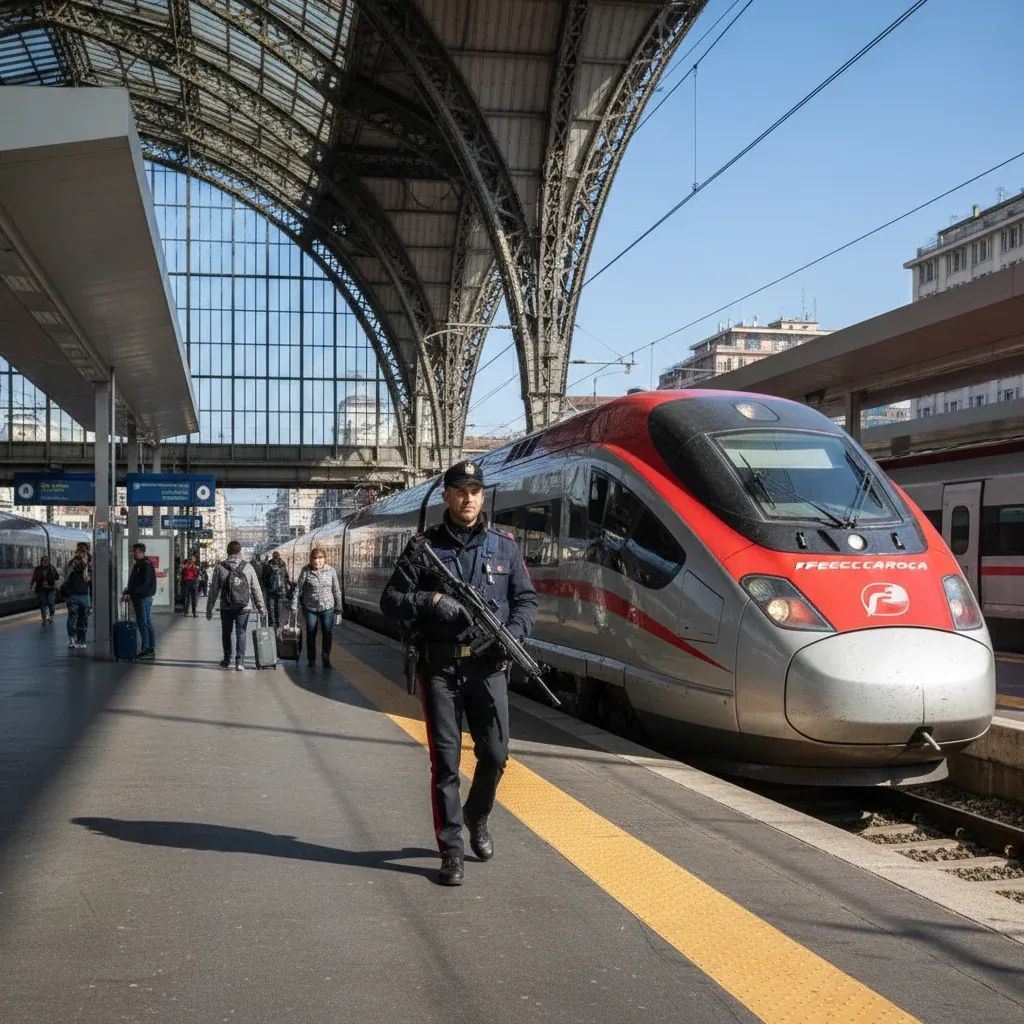
• Expect heavier police presence in major stations—particularly Milano Centrale, Venezia Mestre and Verona Porta Nuova—starting this spring.• Insurance on freight wagons and long-haul buses is likely to climb by 3-5 %, a cost logistics firms say will be passed onto consumers via higher shelf prices.• For commuters, FS has warned of targeted evening closures on the high-speed line for security inspections; plan for longer travel times on select weekends.• On the upside, the single criminal article should speed up prosecutions, meaning fewer repeat disruptions by serial saboteurs.
Bottom line: if Parliament signs off before summer recess, Italy will enter the Olympic semester with one of Europe’s toughest legal shields for trains, planes and motorways.


