
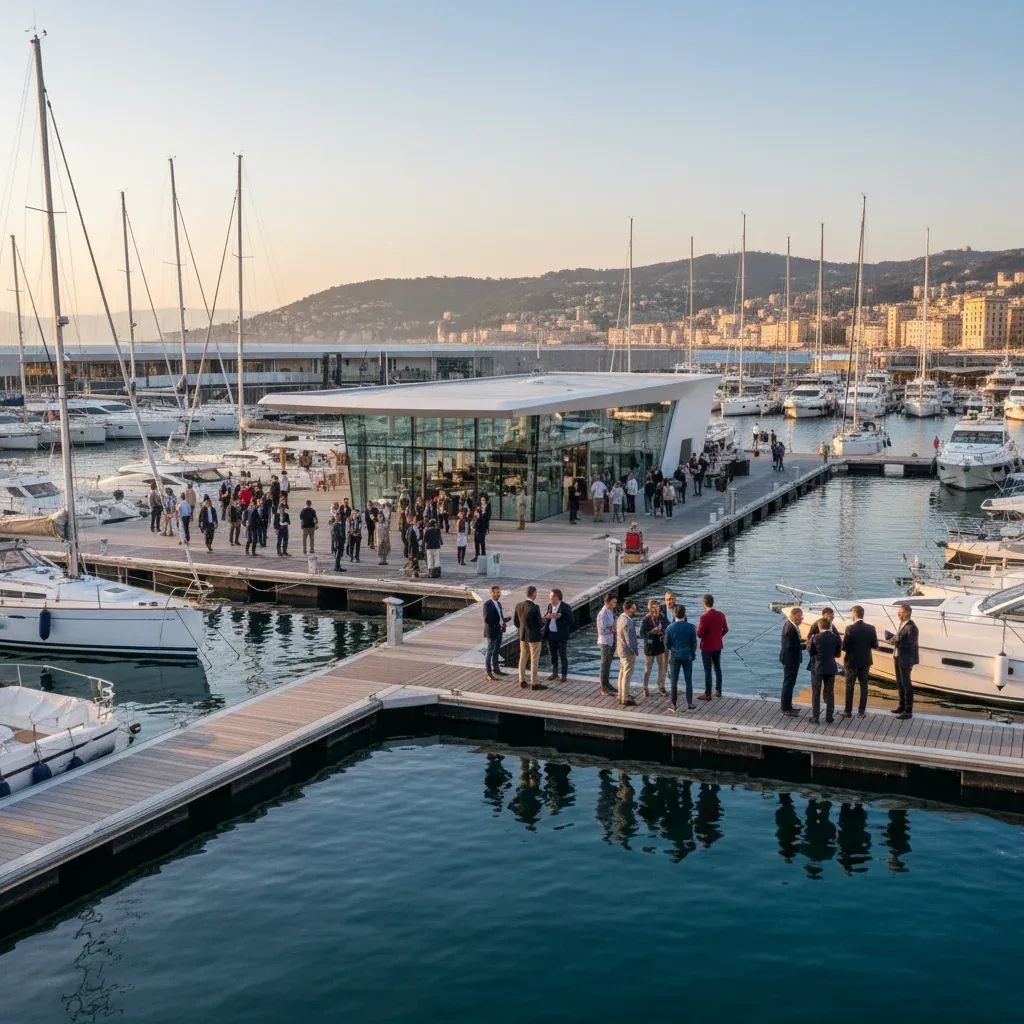
Italy's preeminent yachting showcase, the 66th Salone Nautico Internazionale, is charting its course beyond the Mediterranean by deploying a targeted promotional offensive in the United States, where Italian shipbuilders command roughly 23.6% of the global superyacht ownership market and face a customer base that has grown simultaneously younger and more exacting.
The Italian Trade Agency (ITA) orchestrated a four-day immersion event from May 12 to 15, 2026, in Manhattan, positioning Italian nautical craftsmanship alongside fashion, design, and luxury goods under the Italy on Madison banner. More than 200 Made in Italy brands converged on the ITA townhouse on Madison Avenue, leveraging New York's concentration of ultra-high-net-worth individuals to solidify commercial relationships ahead of the October boat show in Genoa.
Why This Matters
• Timing is strategic: The Manhattan event functions as a pre-sale platform six months before the October 1–6 Genoa fair, when over 1,000 vessels will be displayed across five dedicated segments.
• Market alignment: The U.S. luxury yacht market is projected to reach $4.82 billion in new sales in 2025 and climb to $7.16 billion by 2030, reflecting an annual growth rate above 8%.
• Design integration: Italian yacht interiors increasingly mirror residential luxury, blending heritage furniture houses like Poltrona Frau with automotive design studios such as Pininfarina to meet evolving owner expectations.
• Younger buyers: The average yacht owner age has dropped roughly 10 years over two decades, now clustering in the 40–50 bracket, demanding wellness amenities and multigenerational charter layouts.
What the Manhattan Event Delivered
The centerpiece was a panel discussion titled Yachting Design in Motion – from Exteriors to Interiors, moderated by Khoi Vo, chief executive of the American Society of Interior Designers. The session drew Stefano Pagani Isnardi, research director at Confindustria Nautica (the Italian marine industry association); Paolo Trevisan, senior vice president of design at Pininfarina of America; and Francesco Secchiaroli, vice president of sales for Poltrona Frau Americas.
Discussions centered on how Italian shipyards are responding to a market that prizes sustainability, experiential living, and bespoke interiors as much as hull performance. Secchiaroli highlighted the brand's long-running collaboration with the Ferretti Group's Pershing line, which has outfitted models from the 64-footer to the 108-footer with custom captain's benches, bridge seating, and salon configurations that replicate the tactile luxury of a Milan townhouse.
Trevisan outlined Pininfarina's pivot from automotive forms to marine projects, noting partnerships with shipyards including Rossinavi, Oceanco, and Fincantieri. The studio's Super Sport 65 concept for Rossinavi, unveiled in 2020, translated supercar aerodynamics into a yacht silhouette, while the Oceanco Kairos project—developed with Lateral Naval Architects—explored modular interior layouts that owners can reconfigure seasonally.
Pagani Isnardi presented data showing that North America will account for 36.4% of global yacht market share by 2035, driven by wealth accumulation among individuals with ultra-high net worth and a cultural shift toward private, mobile leisure platforms. He noted that Italian yards hold order books stretching into 2028 and 2029, a backlog sustained by labor shortages, raw material costs, and the integration of advanced propulsion and navigation systems.
The Genoa Blueprint: Five Segments, One Showcase
Scheduled to occupy the Fiera di Genova exhibition grounds at Piazzale J.F. Kennedy, the October fair will organize exhibitors into five thematic zones: Yacht & Superyacht, Boating Discovery, Sailing World, TechTrade, and Living the Sea. Nearly 1,480 companies are expected to display everything from inflatable tenders and outboard engines to carbon-fiber masts (advanced composite structures that reduce weight while maintaining strength) and zero-emission propulsion units (engines powered by battery or hydrogen technology to minimize environmental impact).
New pontoon layouts and dedicated on-water demonstration areas will allow prospective buyers to conduct sea trials during the six-day event. The fair will also host technical forums on sustainability standards, institutional meetings with port authorities, and the Design Innovation Award for startups developing next-generation marine technologies.
Organizers opened exhibitor registration in February, positioning the show as the launchpad for products entering the Mediterranean charter season and the transatlantic delivery calendar.
Impact on Residents and Industry Stakeholders
For Italian yacht manufacturers and suppliers, the Manhattan preview serves a dual function: it reinforces brand visibility in the largest single national market for superyacht ownership, and it gathers direct feedback from brokers, interior designers, and prospective owners before finalizing October exhibits. Companies based in Liguria, Tuscany, and Veneto—the traditional hubs of Italian boatbuilding—rely on international orders to sustain employment in coastal towns where shipyards anchor local economies.
For Italian taxpayers, ITA's promotional investment in the Manhattan event represents a strategic use of trade promotion resources to defend an industry that generates significant export revenue and maintains specialized manufacturing jobs in coastal regions where employment alternatives are limited.
Residents of Genoa will experience heightened tourism and hospitality demand during the October fair, with hotels, restaurants, and transport services benefiting from an influx of industry professionals and wealthy visitors. The event historically draws tens of thousands of attendees, generating economic activity that extends beyond the fairgrounds into the historic port district.
For design and furniture manufacturers in the Milan and Brianza areas, the nautical sector represents a growing revenue stream. Poltrona Frau's nautical division, for example, has expanded its product line to include modular seating systems like the Jacques-Yves series, developed with Zuccon International Project, which uses marine-grade materials while maintaining the aesthetic of a residential sofa.
Shifting Buyer Priorities
Industry analysts report that 2026 yacht buyers approach purchases with a longer decision cycle and sharper focus on resale value and maintenance documentation. The speculative fervor that characterized the pandemic-era market has cooled, replaced by negotiations that emphasize build quality, warranty terms, and operational efficiency.
Wellness charter has become a standard offering rather than a premium add-on. Owners now request detox menus, yoga decks, meditation spaces, and spa-grade cabins as baseline features. Multigenerational family charters—bringing together three generations for extended cruises—have surged, prompting shipyards to design flexible cabin layouts and install child-safety systems without compromising luxury aesthetics.
Explorer yachts, characterized by extended range, shallow draft (the minimal depth of water needed to float the vessel), and reinforced hulls, are gaining traction among buyers seeking access to remote anchorages in the Pacific, Scandinavia, and the Arctic. These vessels prioritize autonomy and stability over speed, often incorporating hybrid propulsion and expanded storage for water toys, tenders, and diving equipment.
The Italian Design Advantage
Italian yards maintain competitive advantage by integrating heritage craftsmanship with advanced engineering. Collaboration between automotive design studios, furniture houses, and naval architects produces interiors that feel simultaneously timeless and technologically sophisticated. Pininfarina's work on the X2-Explorer X Experience concept, developed with De Simoni Yacht Design and previewed at the 2022 Monaco Yacht Show, exemplifies this approach: the vessel's exterior echoes mid-century Italian sports cars, while the interior incorporates modular furniture and AI-assisted climate control.
Poltrona Frau's involvement dates to the 1930s, when the brand supplied luxury ocean liners. Its current marine portfolio includes collaborations with Ocean Alexander for the 35P Puro series, where bespoke pieces blend domestic comfort with marine-specific functionality such as saltwater-resistant treatments and vibration-dampening mounts.
Looking Ahead
The Italian Trade Agency positions the Manhattan event as part of a broader strategy to maintain Italy's dominance in the luxury yacht sector, where competition from Dutch, German, and Turkish builders intensifies annually. By showcasing the integration of design, sustainability, and experiential luxury six months before the flagship Genoa fair, Italian exhibitors aim to secure advance orders and reinforce relationships with American brokers who influence purchasing decisions across the Western Hemisphere.
For the 1,480 exhibitors preparing for October, the challenge will be balancing heritage appeal with the technological and environmental expectations of a buyer demographic that values privacy, customization, and long-term value over conspicuous display. The Genoa show remains the primary calendar event where Italian boatbuilders demonstrate whether they can translate centuries of maritime tradition into vessels that meet the demands of a market where the average owner is a decade younger and substantially more informed than a generation ago.


