
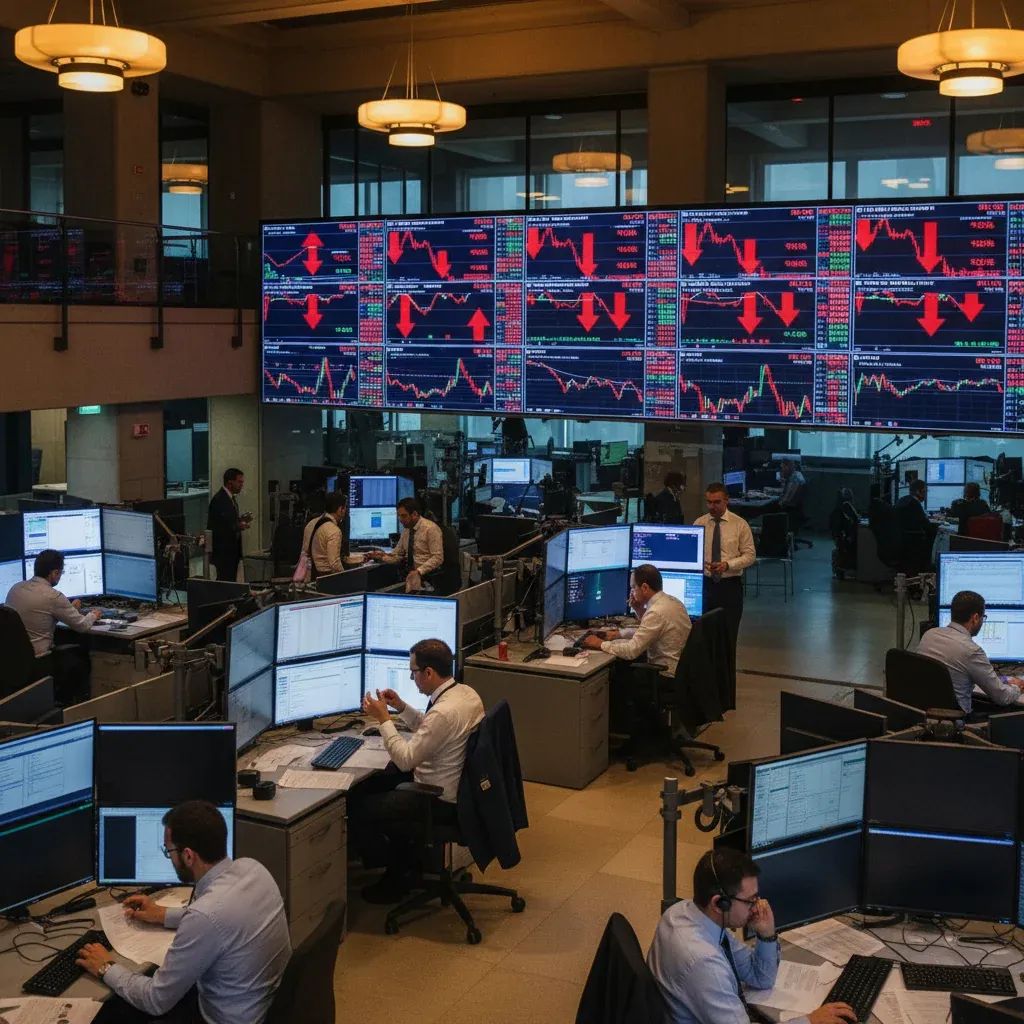
The Italy stock exchange closed its Monday session with a modest gain of 0.2%, as the financial sector propped up the broader market amid choppy trading conditions across European bourses. Defense giant Leonardo surged 1% after Moody's upgraded the company's long-term rating, while banking heavyweight Banco BPM matched that climb with a similar 1% advance.
Why This Matters
• Leonardo rating boost: Moody's raised the defense contractor from Baa3 to Baa2 with a positive outlook, signaling stronger credit fundamentals and lower future borrowing costs.
• Spread stability: The BTP-Bund spread held steady at 79 basis points, with Italy's 10-year bond yield at 3.80%—near month-long lows despite geopolitical turbulence.
• Banking sector resilience: Italian lenders continue to outperform, buoyed by robust profitability, generous dividends, and historically low non-performing loans.
• Energy stocks rallied: Oil-linked equities gained ground, reflecting positive investor sentiment in the energy sector.
Defense Contractor Gets Credit Boost
Leonardo's share price rallied after Moody's Ratings elevated the aerospace and defense group's long-term credit assessment to Baa2, up one notch from Baa3, while maintaining a positive outlook. The ratings agency cited Leonardo's "solid operating performance" and steadily improving credit metrics, including significant revenue growth, enhanced profitability, strong cash generation, and a marked reduction in financial leverage over recent years.
The upgrade comes as Leonardo digests its acquisition of Iveco Group's Defence division, a deal that Moody's analysts believe will not erode the company's credit profile. Instead, the transaction strengthens Leonardo's positioning in land defense systems and unmanned aerial vehicles, particularly through joint ventures with Rheinmetall and Baykar Technologies.
With 71% of Leonardo's revenues tied to defense contracts, the company stands to benefit from the global surge in military spending. For fiscal 2026, the Rome-based firm projects orders totaling approximately €25B, revenues around €21B, earnings before interest, taxes, and amortization (EBITA) of roughly €2.03B, and free operating cash flow near €1.11B. Net group debt is forecast at about €800M, excluding outlays for the Iveco Defence Vehicles acquisition.
Banking Sector Defies Uncertainty
Italian financial institutions once again demonstrated their resilience, with several lenders posting solid gains. BPER Banca advanced 0.9%, UniCredit climbed 0.8%, and Intesa Sanpaolo edged up 0.5%, while mid-tier players Banca Monte dei Paschi (MPS), Mediobanca, and Generali each added 0.1%.
The banking sector's strength reflects a combination of robust profitability, stable net interest margins, expanding fee income from wealth management services, and disciplined cost control. The five largest Italian banks collectively generated approximately €26B to €27B in profits during 2025, and analysts expect that momentum to carry into 2026 despite macroeconomic headwinds.
Asset quality remains high across the sector, with non-performing loan (NPL) ratios at historic lows. Many lenders are also rewarding shareholders through generous dividend distributions and share buyback programs, with UniCredit, Banco BPM, and Mediobanca among those distributing returns this month.
However, the sector faces emerging regulatory uncertainty. New fiscal measures under consideration include an increase in the regional business tax (IRAP) and a levy on non-distributable reserves, which could marginally reduce capital buffers. While the overall impact is deemed manageable, the unpredictability of legislative changes represents a structural risk for long-term investor sentiment.
Energy Sector Advances
Oil-linked equities posted solid gains, with Saipem up 1.2%, pipe manufacturer Tenaris gaining 1.1%, and integrated major Eni advancing 0.8%. The sector's performance reflects continued investor interest in energy equities as market conditions evolve.
Luxury and Insurance Hold Steady
The luxury goods segment posted moderate gains, with Moncler rising 0.8% and Brunello Cucinelli adding 0.4%. Both fashion houses continue to navigate a complex consumer landscape, balancing slowing Chinese demand with resilient spending in Europe and North America.
Among diversified financials, Assicurazioni Generali edged up fractionally, reflecting cautious optimism in the insurance sector as rising interest rates improve investment income on premium reserves.
Tech and Utilities Lag
Payment processor Nexi tumbled 2%, making it the session's worst performer on the FTSE MIB index. Aerospace manufacturer Avio dropped 1.7%, semiconductor player STMicroelectronics slipped 0.6%, and utility giant Enel retreated 0.5%. The declines underscore ongoing pressure on rate-sensitive sectors and companies exposed to elevated energy input costs.
Broader European Context
Italy's performance mirrored mixed trading across European equity markets. Frankfurt's DAX climbed 0.3% to 24,193 points in early trading, while Paris's CAC 40 inched up 0.1% to 8,165 points. The Euro Stoxx 50, the Eurozone's benchmark index, rose 0.26% to 5,899 points. London's FTSE 100 was essentially flat, slipping 0.1% to 10,375 points.
Markets across the continent are bracing for a week of central bank meetings, with both the Federal Reserve and the European Central Bank set to convene. Investors are parsing signals on future interest rate policy amid conflicting data: sticky inflation versus signs of moderating economic growth.
What This Means for Residents
For individuals living in Italy, the day's market action carries several practical implications. The BTP-Bund spread holding near 79 basis points is positive news for the Italy Treasury, as it suggests stable borrowing costs for the government. Lower spreads translate into reduced interest expenses on new debt issuance and refinancing, potentially preserving fiscal space for public services and social programs.
The Bank of Italy has revised its 2026 GDP growth forecast downward to 0.5%, citing weaker domestic demand and persistent macroeconomic uncertainty. Consumer price inflation is projected at 2.6% for the year.
For savers and investors, the banking sector's resilience offers a degree of reassurance. Italian banks' strong profitability and low NPL ratios suggest systemic stability, even as global uncertainties persist. Those holding bank shares or relying on dividends may continue to benefit from sector strength, though regulatory changes could introduce future volatility.
Market Outlook
The Italy stock market enters the remainder of the week on a cautiously positive note, supported by financial sector strength and energy gains, but weighed down by tech and utility weakness. The FTSE MIB opened at approximately 47,682 points and climbed modestly to around 47,714 points by mid-morning before settling near 47,679 points—a gain of roughly 0.05% to 0.12% depending on the session snapshot.
With central bank meetings on the immediate horizon, traders are positioning for continued volatility. Market direction in the weeks ahead will likely be shaped by monetary policy developments and evolving economic data. For now, Italian equities are holding their ground, buoyed by sector-specific strengths that offset broader macroeconomic headwinds.


