
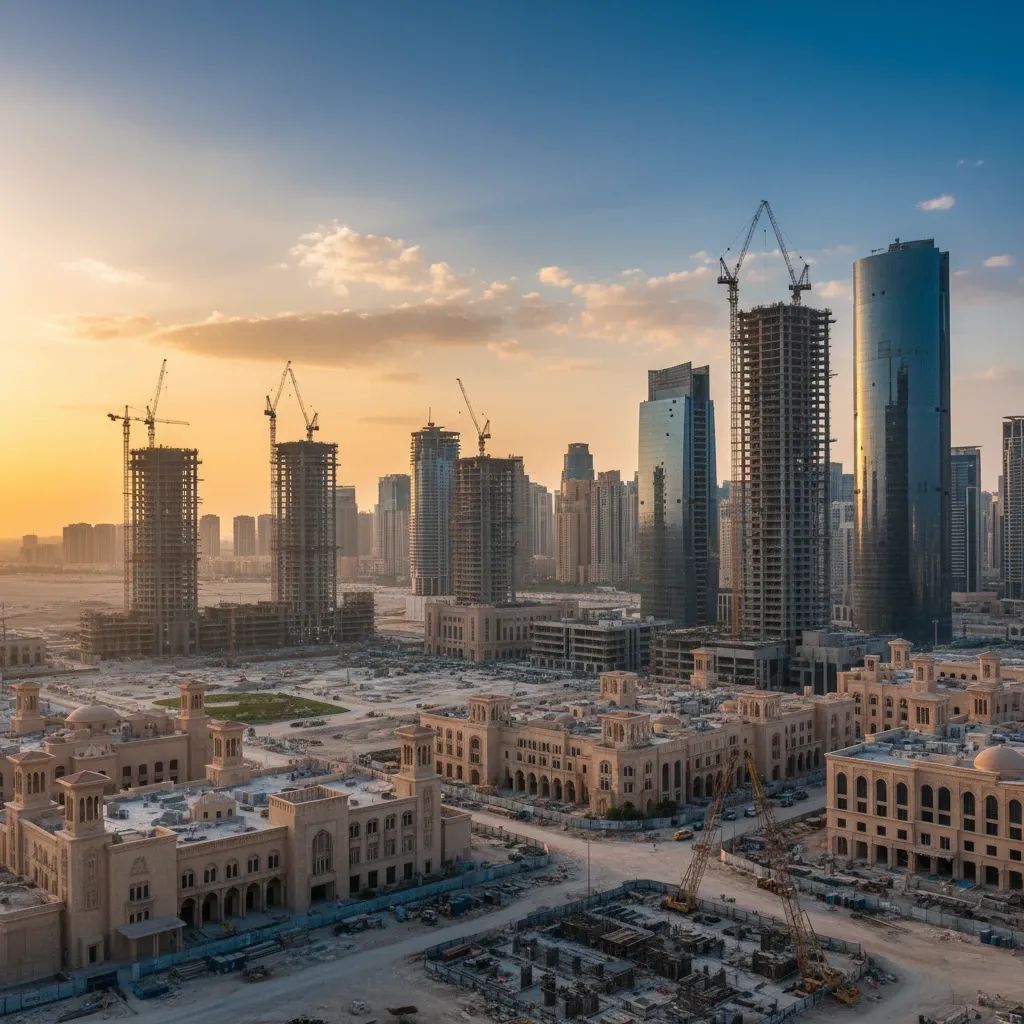
Italy-based Recs Architects has finalized a landmark $10 billion real estate alliance with Egypt's Precision Consulting Engineering (PCE)—also known as Al Diqa—positioning Italian design expertise at the center of one of the most ambitious construction booms unfolding across the Middle East. The partnership, first announced in January 2025 and formalized in April 2026, locks in roughly 150 development projects over the next three years spanning Egypt, Saudi Arabia, and the United Arab Emirates, with a focus on high-value residential towers, hotels, industrial complexes, and tourist infrastructure.
Why This Matters
• Contract pipeline: 150 projects across three countries in 36 months, targeting Egypt's New Administrative Capital, Jeddah's waterfront, and Dammam's Corniche redevelopment.
• Strategic shift: The deal marks a transition from traditional consultancy toward an integrated delivery model combining architecture, engineering oversight, and execution acceleration.
• Italian footprint: Italy is now the third-largest European player by firm count in Middle Eastern architecture and engineering, with Gulf revenues nearly doubling since 2021.
• AI and sustainability: The collaboration explicitly aims to deploy artificial intelligence in design workflows and embed energy-saving technologies as standard.
The Architects Behind the Alliance
Recs Architects, led by president Pier Maria Giordani, brings decades of Italian design sensibility and a global project portfolio to the table. The Milan-headquartered studio announced the PCE partnership in January 2025, initially targeting Egypt and Gulf markets with an emphasis on Saudi Arabia's Vision 2030 megaprojects. By mid-2026, that strategic intent had crystallized into a concrete deal worth up to $10 billion, covering everything from luxury residential complexes to industrial parks.
On the Egyptian side, Walid Sweida, president of PCE (Al Diqa Engineering Consultancy), emphasized the fusion of "Italian architectural touch with Egyptian execution experience." PCE is known for large-scale engineering consultancy across North Africa and the Levant, and the firm's ground-level familiarity with regulatory frameworks, labor markets, and supply chains in Egypt and the Gulf complements Recs' design innovation.
Giordani framed the alliance as a blueprint for cross-border collaboration, stating that it "represents a model of integration between local competencies and a global vision, enabling both parties to shape the future of architecture in the region." The integration he describes is more than rhetorical: the partnership replaces a traditional fee-for-service advisory model with a joint venture approach focused on value creation and faster project delivery.
What This Means for Italy's Construction Sector
For Italian firms and investors, the Recs–PCE deal is a case study in how mid-sized European studios can leverage partnerships to scale rapidly in high-growth markets. The Middle East, particularly the Gulf states, has become a proving ground for Italian engineering and architecture, with the sector's regional revenues surging as governments pour capital into infrastructure, tourism, and urban expansion tied to diversification strategies like Saudi Vision 2030 and the UAE Energy Strategy 2050.
Italy's competitive edge in the region rests on three pillars: design heritage, interdisciplinary technical capability, and institutional support. Organizations like OICE (the Italian association for engineering and architecture firms) and ICE-Agenzia (the trade promotion agency) actively facilitate market entry through trade missions, collective pavilions at events like Big 5 Global Dubai, and advisory services for legal and fiscal setup. The success of the Italy Pavilion at Expo 2020 Dubai further cemented the "Made in Italy" brand as synonymous with quality, creativity, and cultural sophistication.
The Recs partnership also highlights a broader trend: Italian studios are no longer content to operate as subcontractors or consultants. Instead, they are structuring joint ventures, opening regional offices, and embedding themselves in local ecosystems. Examples include Bellacasa Arch with offices in Dubai and Jeddah, IEArchitect with a dual base in Milan and Abu Dhabi, and Peluffo & Partners working on the Monte Galala new-town development in Egypt.
Geographic Scope and Project Types
The 150-project pipeline spans three core markets:
• Egypt: Focus on the New Administrative Capital east of Cairo, a $58 billion government-backed city designed to relieve congestion in the capital, as well as mixed-use developments in Cairo and coastal tourist zones.
• Saudi Arabia: Projects include work in Jeddah, where the government is investing heavily in waterfront revitalization, and the Dammam Corniche, a flagship public space and commercial corridor along the Persian Gulf.
• United Arab Emirates: The deal targets Dubai and Abu Dhabi, where demand for luxury residential towers, hospitality projects, and corporate headquarters remains robust despite regional economic headwinds.
Project typologies range widely: skyscrapers, residential complexes, five-star hotels, tourist resorts, and industrial facilities. This diversity reflects the Gulf's push to diversify away from oil dependency and build out sectors like tourism, logistics, and advanced manufacturing.
Technology Integration: AI and Sustainability
Giordani explicitly cited the partnership's commitment to "sustainable architectural solutions based on intelligent systems and the application of artificial intelligence technologies, while implementing the latest solutions for energy and water savings." While Recs has not disclosed granular details about which AI platforms or energy systems it will deploy, the language signals alignment with broader regional trends.
Across the Gulf, AI is being woven into architecture in several ways:
• Predictive planning and cost modeling: Machine learning algorithms analyze historical data to forecast budgets, timelines, and supply chain bottlenecks.
• Augmented reality walkthroughs: Clients and stakeholders can experience designs before construction begins, reducing costly revisions.
• Building management systems: Sensors and automation optimize HVAC, lighting, and water use in real time, cutting operating costs and carbon footprints.
On the sustainability front, Gulf states are investing heavily in solar farms, green hydrogen, and geothermal cooling to decarbonize new developments. Saudi Arabia's NEOM project, for example, aims to run entirely on renewable energy. The Recs–PCE alliance's emphasis on energy and water efficiency aligns with client expectations in a region where extreme heat and water scarcity drive design priorities.
Competitive Landscape and Italian Advantage
Italian architecture and engineering firms hold fourth place globally and third in Europe by active firm count in the Middle East, trailing only the United States, the United Kingdom, and France. Between 2021 and 2025, Italian revenues in the Gulf nearly doubled, driven by major contracts in infrastructure and transport (34.8% market share), energy (31%), and planning and construction (10.7%).
Key Italian players in the region include Webuild, which leads metro and rail projects in Riyadh and Doha; 3TI Progetti, involved in the Salalah port expansion in Oman; and luxury-focused studios like Antonio Citterio Patricia Viel, behind the Bulgari Resort Dubai. The Italian advantage lies in a combination of aesthetic rigor, technical depth, and adaptability—qualities that Gulf clients, accustomed to hiring Western firms for prestige projects, continue to value.
The Recs–PCE partnership also benefits from timing. Post-pandemic construction demand in the Gulf remains strong, fueled by government stimulus, mega-event preparations (Saudi Arabia will host Expo 2030 in Riyadh), and the region's role as a safe-haven destination for global capital amid geopolitical uncertainty elsewhere.
Execution Model and Value Proposition
The partnership's shift to an integrated delivery model is significant. Traditional architecture-engineering relationships involve sequential handoffs: architects design, engineers specify, contractors build. Delays, cost overruns, and quality issues often arise at each interface.
Recs and PCE aim to collapse those silos. By co-locating design and engineering teams, sharing project management software, and jointly overseeing construction supervision, the alliance promises faster timelines, tighter quality control, and fewer change orders. For developers and government clients, this translates to predictable budgets and accelerated revenue generation—critical in markets where project finance hinges on meeting delivery milestones.
Sweida noted that the alliance seeks to "expand the realization of large projects" by combining Italian design flair with Egyptian engineering rigor and regional market knowledge. That blend is particularly valuable in Saudi Arabia, where foreign firms often struggle with procurement rules, labor regulations, and cultural expectations around public space.
Opportunities for Italian Professionals in the Gulf
The Recs–PCE partnership creates concrete pathways for Italian professionals seeking to build careers in the Middle East. Architects, structural engineers, MEP specialists, and project managers with Gulf experience are in high demand across Egypt, Saudi Arabia, and the UAE. Italian professionals typically enter these markets through three channels: direct employment with international firms like Recs or PCE, secondment from Italian headquarters offices, or roles with regional subsidiaries of global consulting firms.
Visa and employment considerations for Italian nationals working in Gulf states vary by country. Saudi Arabia and the UAE both offer multiple visa categories for skilled workers, including renewable multi-year contracts, but require employer sponsorship. Professional registration with local engineering associations—such as the Saudi Council of Engineers or equivalent UAE bodies—is often mandatory. Italian university degrees are generally recognized, though credential verification through local bodies can take 4-8 weeks.
Salary and benefits for Italian architects and engineers in the Gulf typically exceed home-market rates by 30-50%, with additional perks including housing allowances, end-of-service bonuses, and tax advantages (particularly in the UAE and Saudi Arabia). Entry-level roles for recent graduates with Italian qualifications typically range from €3,500–€5,500 monthly; mid-career professionals with 5-10 years' experience command €6,000–€10,000 or more.
In-demand skills in the Recs–PCE pipeline include BIM (Building Information Modeling) proficiency, experience with megaprojects or mixed-use developments, and fluency in English (Arabic proficiency is a strong asset but not always required for design roles). Familiarity with Gulf Building Codes and Islamic architectural principles adds significant value.
Italian professionals can access opportunities through several channels: job portals like LinkedIn, Gulf-focused recruitment sites (Bayt.com, GulfTalent), and direct outreach to Italian firms operating regionally. The Italian Chamber of Commerce in Dubai, Abu Dhabi, and Riyadh maintain job boards and can provide introductions to member firms. Organizations like OICE also publish information on placement opportunities tied to major projects.
Risks and Outlook
The $10 billion figure represents the maximum potential value of the alliance, not guaranteed revenue. Actual earnings will depend on project approvals, financing availability, and the broader macroeconomic environment. Gulf construction markets face headwinds including volatile energy prices, inflation in materials costs, and geopolitical friction stemming from regional conflicts and sanctions.
Additionally, the partnership will need to navigate local content requirements—regulations that mandate a minimum share of local labor, materials, and subcontractors. Both Saudi Arabia and the UAE have tightened these rules in recent years to support domestic job creation and reduce reliance on foreign contractors.
Still, the fundamentals remain favorable. Gulf governments continue to prioritize infrastructure and real estate as pillars of economic diversification, and the 150-project pipeline gives Recs and PCE a three-year runway to prove the integrated model works at scale. If successful, the alliance could serve as a template for other mid-sized European firms seeking to compete in the region without the capital firepower of global giants like Bechtel or AECOM.
The Bottom Line for Italy
For Italian professionals, suppliers, and service providers, the Recs–PCE deal underscores the Middle East's role as a growth engine. Italian material exporters—ranging from marble and ceramics to HVAC systems and smart building controls—stand to benefit from the project pipeline, as do Italian engineering graduates seeking international experience. The Chamber of Commerce offices in Dubai, Abu Dhabi, and Riyadh are already fielding inquiries from smaller firms hoping to replicate Recs' model.
More broadly, the deal reinforces Italy's positioning as a design and innovation bridge between Europe and the Global South. As Gulf markets mature and demand more sophisticated, sustainable, and culturally sensitive architecture, Italian firms with deep design traditions and technical versatility are well placed to capture market share—provided they can navigate the regulatory, cultural, and logistical complexities of operating in the region.


