
The Italy industrial sector faces a stark choice between modest growth and outright contraction in 2026, with the outcome hinging entirely on whether diplomatic efforts can end the US-Iran conflict that has paralyzed the Strait of Hormuz for the past six weeks. Emanuele Orsini, who leads Confindustria, Italy's main industrial lobbying organization representing over 150,000 companies, issued the warning as a fragile two-week ceasefire entered its final days.
Why This Matters
• GDP trajectory: Italy's economy could expand by 0.5% in 2026 if the war ends quickly, or hit zero growth if fighting drags on for four months.
• Energy costs: Italian businesses have seen a fivefold increase in energy expenses since the conflict erupted on February 28.
• Deadline pressure: The temporary truce expires April 21, just four days away, with no breakthrough yet announced.
• Global stakes: The International Monetary Fund projects worldwide growth could plummet to 2% in a prolonged conflict scenario, effectively a global recession.
The Hormuz Bottleneck
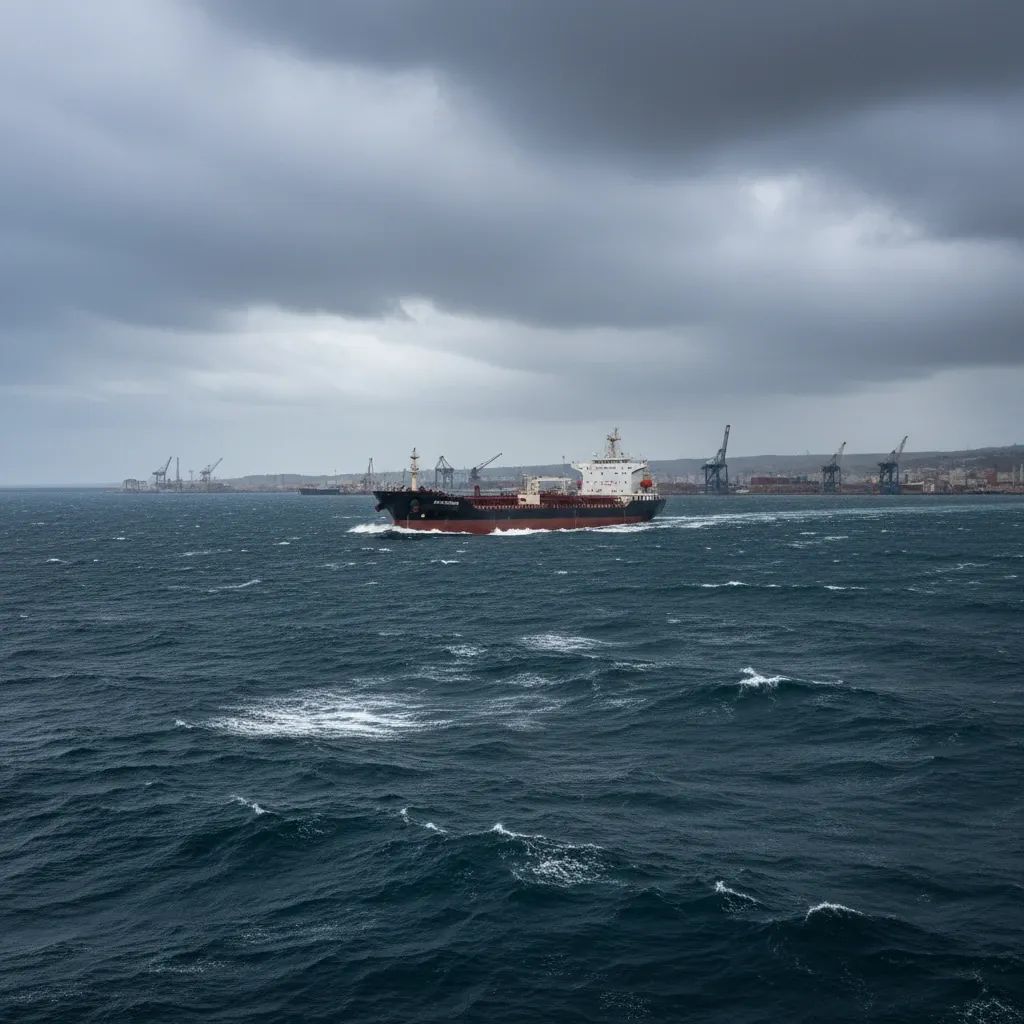
Roughly one-fifth of the world's energy supply flows through the narrow waterway separating Iran from the Arabian Peninsula. Since late February, when the United States and Israel launched joint airstrikes that killed Iran's Supreme Leader Ali Khamenei, the strait has become the epicenter of a broader confrontation. Iran initially closed the passage entirely, then briefly imposed transit fees denominated in Chinese yuan, before the US Navy responded with a full blockade of Iranian ports starting April 13.
Tehran has branded the blockade "illegal piracy" and threatened to halt all Gulf traffic if Washington maintains its position. The standoff has sent Brent crude above $100 per barrel, with physical markets pricing barrels near $150 in some transactions. European gas benchmarks in Amsterdam have surged in parallel, reviving the specter of the energy crisis that followed Russia's 2022 invasion of Ukraine.
What This Means for Italian Industry
Orsini delivered his assessment on the sidelines of a maritime economy conference in Genoa, connecting the dots between geopolitical chaos and factory-floor reality. Speaking just days after the IMF released its spring outlook, he noted that Confindustria's research arm had reached the same conclusion nearly three weeks earlier: without a swift diplomatic resolution, recession is inevitable.
The federation's spring forecast report, published in March, modeled two scenarios. In the baseline case—where the Middle East conflict remains short-lived—Italy would record 0.5% GDP growth for the year. But in the adverse scenario, with fighting dragging on and energy prices spiraling, the economy would contract by 0.7%. The divergence between those two paths amounts to a 1.2-percentage-point swing, enough to determine whether companies hire or furlough workers, whether investment plans proceed or get shelved.
Orsini emphasized that the four-month mark represents a critical threshold. Beyond that point, the cumulative damage to supply chains, consumer confidence, and corporate balance sheets becomes difficult to reverse within a single calendar year. Industrial zones in northern and central Italy, which rely heavily on energy-intensive manufacturing, have already felt the quintupling of power costs. In the south, inflation is eroding household purchasing power, suppressing domestic demand.
The Diplomatic Clock
Indirect talks between Washington and Tehran, facilitated by intermediaries in Islamabad during early April, collapsed without agreement. Both sides accused the other of intransigence. Yet the parties did manage to broker a 14-day pause in hostilities starting April 8, creating a narrow window for further diplomacy. That window closes in four days.
The sticking points are familiar but no less intractable. The United States demands Iran halt uranium enrichment immediately and dismantle its nuclear infrastructure. Tehran insists on its sovereign right to enrich and views its nuclear capability as essential deterrence, especially after the assassination of its leadership. Washington also wants the strait fully reopened and an end to Iranian support for regional militias; Iran claims full sovereignty over the waterway and considers those allied forces part of its defense architecture. On the economic front, Iran seeks comprehensive sanctions relief and war reparations, terms the White House has shown little inclination to accept.
Historically, Oman and Qatar have served as bridges between the adversaries. The 2015 Joint Comprehensive Plan of Action—from which the US withdrew in 2018—offered a blueprint for limiting enrichment under international oversight in exchange for economic benefits. Whether that framework can be resurrected amid active hostilities remains uncertain. President Trump has expressed optimism about an "imminent end" to the conflict while maintaining a hard line on nuclear activities and freedom of navigation.
Global Ripple Effects
The economic shockwaves extend far beyond Italy. Asia absorbs more than 80% of Gulf energy exports, and countries such as India—which sources roughly 40% of its oil and 80% of its gas from the Middle East—are scrambling to secure alternative supplies. Asian refineries have bid aggressively for cargoes originally destined for European and American buyers, tightening global markets and pushing physical crude prices toward record highs.
Alternative pipelines that bypass the strait exist, but their combined capacity falls well short of the volume that typically moves by tanker through Hormuz. The International Energy Agency has slashed both its demand and supply forecasts for 2026, citing the destruction of Middle Eastern infrastructure and the paralysis of the strait. OPEC followed suit, cutting its second-quarter demand estimate. The result is a dual squeeze: consumers face higher prices even as global economic activity contracts, a classic stagflation dynamic.
Europe confronts the risk of physical shortages once the last pre-war tankers discharge their cargoes. Electricity and transport fuel costs are climbing, squeezing energy-intensive industries and household budgets alike. Gulf producers, including Saudi Arabia, paradoxically suffer revenue losses despite higher prices, because their export volumes have collapsed.
Impact on Residents and Investors
For people living in Italy, the implications are immediate and tangible. Fuel prices at the pump are rising, fed by both crude benchmarks and refining margin expansion. Heating and electricity bills—already elevated after the 2022 shock—are set for another upward lurch if the conflict persists. Food inflation is also accelerating, because fertilizers and agricultural commodities often transit the same Gulf chokepoint.
Business owners face difficult choices. Companies that locked in forward energy contracts before late February enjoy temporary insulation, but those hedges will expire. Firms without hedges are absorbing cost increases that squeeze margins and force difficult conversations about layoffs, reduced hours, or plant closures. Orsini has called for emergency support measures at both the national and European levels, drawing parallels to the fiscal firepower deployed during the COVID-19 pandemic, including the possible issuance of common European debt instruments akin to the recovery bonds of 2020–2021.
Investors are repricing risk across asset classes. Italian government bonds have widened slightly against German Bunds, reflecting concerns that fiscal space to cushion the economy remains limited after successive crises. Equity markets have sold off, particularly shares of transport, logistics, and manufacturing companies with high energy exposure. The euro has weakened against the dollar as traders anticipate divergent central bank responses: the European Central Bank may need to tolerate higher inflation to avoid deepening a downturn, while the Federal Reserve retains more room to maneuver given America's relative energy independence.
The Next Four Days
All eyes now turn to whether the ceasefire holds beyond April 21 and whether mediators can bridge the chasm separating Washington and Tehran. The official casualty toll as of April 13 stood at more than 6,000 dead among US and Israeli forces, over 49 senior Iranian officials killed, and 1,400 Hezbollah fighters along with 85 members of Iraqi militias. Those numbers underscore the human cost and the domestic political pressures each government faces.
Orsini's message to policymakers is unambiguous: the difference between a difficult year and a disastrous one depends on decisions made in the coming days. For Italy—a country that imports the vast majority of its energy and depends on global trade for industrial competitiveness—the stakes could hardly be higher. Whether diplomatic skill can avert the economic cliff that looms just days away will shape not only 2026 growth figures but also the political and social stability of a nation still recovering from successive shocks.


