
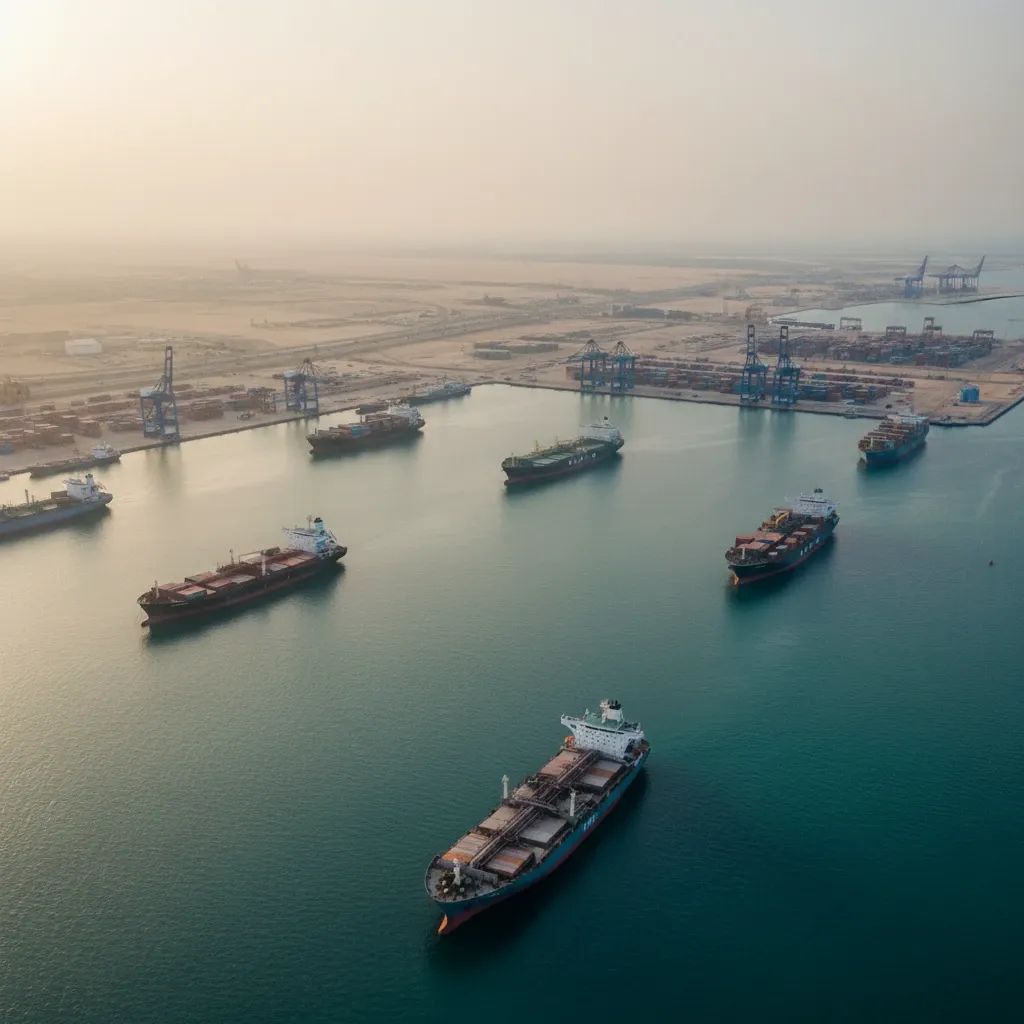
The Islamic Republic of Iran has declared it will maintain its blockade of the Strait of Hormuz until both a ceasefire in Lebanon is honored and sanctions on Iranian oil exports are lifted, according to the state-affiliated Tasnim news agency, which cited sources close to Iran's negotiating team. The announcement marks the most significant disruption to one of the world's most critical energy corridors.
Why This Matters for Italy:
• Energy dependency: Italy imports roughly 90% of its oil and gas, much of it originating from or transiting through the Persian Gulf. Roughly 25% of seaborne oil and 20% of global liquefied natural gas (LNG) pass through the 21-mile-wide Strait of Hormuz.
• Disputed closure: While Iran insists the strait is closed, the U.S. Central Command (CENTCOM) reported that merchant vessels continue to transit the waterway, though with heightened tensions and increased insurance costs.
• Price impact: Oil prices have surged significantly in recent months. Current Italian gasoline prices average around €1.70 per liter; a sustained blockade could push prices 20-30% higher, potentially reaching €2.04-2.21 per liter.
Conflicting Claims Over the Strait's Status
The Iran Revolutionary Guard Corps Naval Force has formally refused to authorize the transit of vessels, according to Iranian media reports. Tehran frames the blockade as a response to alleged breaches of ceasefire agreements by the United States and Israel.
However, the U.S. side disputes that the strait is closed. CENTCOM states that commercial shipping continues to flow, and American naval assets are actively patrolling the waters to ensure freedom of navigation, a principle enshrined in international maritime law under the United Nations Convention on the Law of the Sea (UNCLOS).
The International Legal Framework
Under international maritime law, the Strait of Hormuz is classified as a waterway "used for international navigation," which places it under the regime of "transit passage." Article 44 of UNCLOS prohibits coastal states—in this case, Iran and Oman—from suspending or obstructing this right.
Iran has not ratified UNCLOS and has historically insisted on stricter standards for passage. Legal scholars note that the rules governing international straits are considered customary international law, binding even on non-signatories. The European Union has emphasized that freedom of navigation is "non-negotiable" and essential to regional stability and the global economy.
Direct Impact on Italian Residents and Businesses
For anyone living in Italy, the implications of a sustained Strait of Hormuz disruption are immediate and measurable:
• Higher fuel costs: Gasoline and diesel prices at Italian pumps have already climbed in recent months. A sustained closure could push them 20-30% higher—translating to approximately 30-50 cents per liter increase.
• Inflation pressure: Energy-intensive sectors—steel, ceramics, glass, food processing—would see margins squeezed, leading to higher consumer prices for everyday goods.
• Transport disruptions: Budget airlines and freight companies spend significant portions of operating costs on fuel; these costs would be passed to consumers through higher ticket and shipping prices.
• Supply chain delays: Rerouting tankers around Africa's Cape of Good Hope adds 10-14 days and raises insurance premiums, delaying delivery of raw materials and finished goods to Italian businesses.
The European Central Bank has warned that an energy shock could create economic pressure across the eurozone, with Italy—already grappling with sluggish growth—particularly exposed.
Diplomatic Response and Negotiations
Negotiations between the United States and Iran are ongoing, with international mediators working toward a resolution. The EU Council has reaffirmed its commitment to safeguarding commercial shipping in the Gulf, with European naval assets positioned to ensure safe passage.
Italian officials have activated coordination with Eni, Italy's national energy company, to monitor the situation and explore alternative energy procurement options if necessary.
Historical Context
This is not the first time Iran has used the strait as a pressure point. During the Iran-Iraq War in the 1980s, Tehran deployed mines and fast-attack boats to disrupt tanker traffic. More recent tensions flared in 2007-2008, 2011-2012, and 2019, with various standoffs between Iranian vessels and international naval forces.
What Residents Should Know
For Italian residents and businesses, practical considerations include:
• Monitor official government updates from Italian civil protection authorities and the Ministry of Ecological Transition
• Fuel prices may increase, but rationing has not been announced
• Alternative energy arrangements are being explored by Italian utilities and energy companies
• The situation remains fluid, with diplomatic efforts ongoing
The outcome of current negotiations will significantly affect Italy's energy costs and economic stability in the coming months. Updates from official Italian sources—including Eni and government energy ministries—will provide the most reliable information as the situation develops.


