
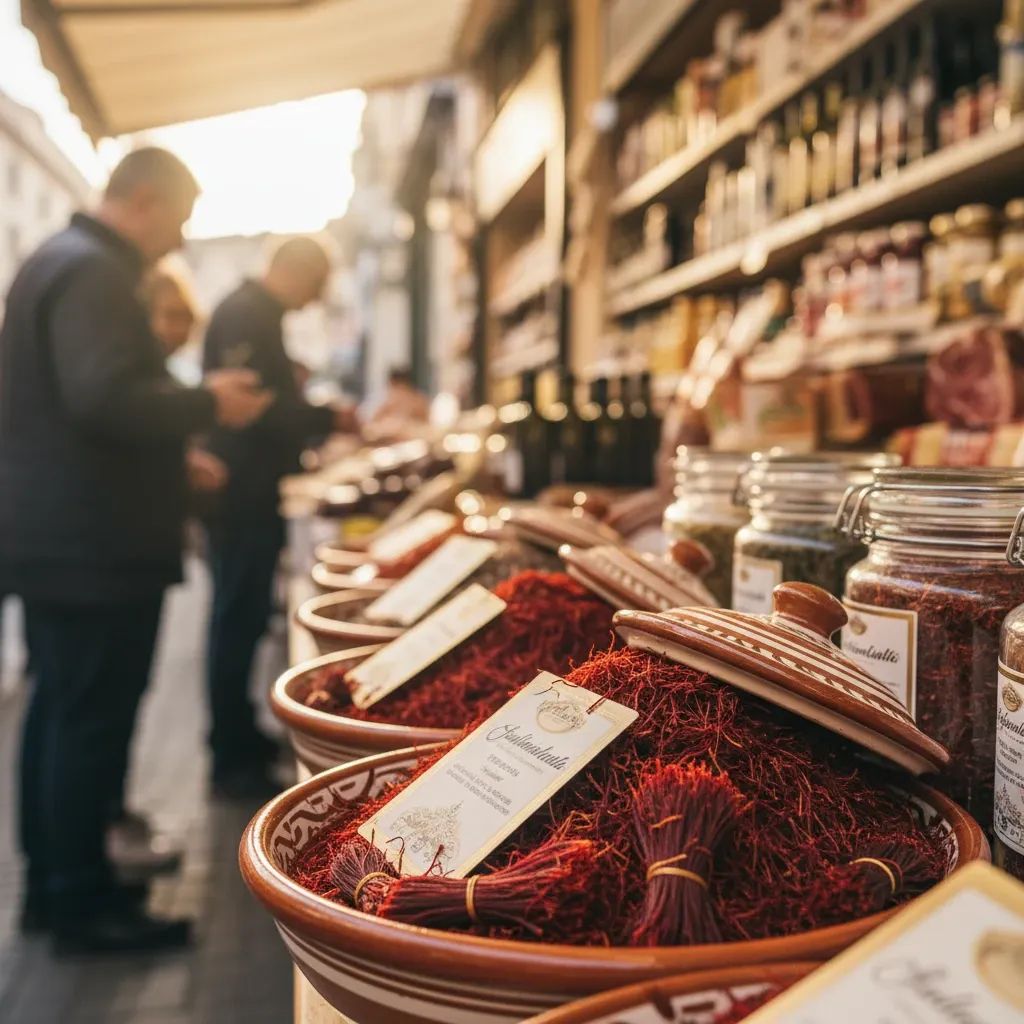
Italian food importers are closely monitoring a supply chain disruption that could drive up prices for one of the country's most valued culinary ingredients: saffron. A record-breaking 59-day internet blackout in Iran, the world's dominant saffron producer, has effectively paralyzed export operations and handed market share to competitors like Afghanistan—while Italy's importers warn their stockpiles could run dry within six to seven months.
Why This Matters
• Italy's saffron supply is at risk: Italy ranks among Europe's top importers of Iranian saffron, and domestic reserves may last only until late autumn if disruptions persist.
• Price increases likely: The blackout has already cost Iran's economy an estimated $1.8 billion in the first 48 days alone, with daily losses ranging from $30 M to $80 M when indirect costs are included.
• Afghanistan is seizing market share: The country's saffron production jumped 12% to 41 tonnes in 2025, and it is now selling Iranian saffron under its own label due to the communication breakdown.
• Shipping routes remain uncertain: The first LNG tanker to cross the Strait of Hormuz since the conflict began has resurfaced, but vessels are using evasive tactics—disabling transponders or broadcasting false identification numbers—to avoid targeting.
What the Blackout Means for Italian Consumers and Businesses
Iran supplies 85% to 95% of global saffron, according to FAO and World Bank data, making the country virtually irreplaceable in the short term. For Italian restaurateurs, pasta makers, and home cooks who rely on saffron for risotto alla milanese and other regional dishes, the blackout represents a clear and present threat to both availability and cost.
Industry contacts in Italy report that while the situation remains manageable for now, existing stocks will cover demand for only six or seven months. If the internet shutdown and the broader conflict persist beyond that window, Italy could face shortages and elevated prices. The concentration of global production in a single geopolitical flashpoint exposes the entire supply chain to systemic risk.
For food businesses and importers with direct exposure to Middle Eastern supply chains, credit conditions are tightening. However, the most immediate concern for Italian residents remains the practical impact on saffron availability and cost rather than broader macroeconomic effects.
How the Internet Shutdown Crippled Saffron Exports
NetBlocks, an internet monitoring organization, has described the Iranian blackout as "the longest national-scale internet shutdown ever recorded in any country." Traffic levels plummeted to 1% to 2% of normal, effectively severing digital communication between Iranian exporters and their international clients.
The vice president of Iran's National Saffron Council stated that many exporters have been unable to contact buyers or dispatch shipments on schedule. This communication vacuum has created a lucrative opening for competitors. Afghanistan, now the second-largest producer globally with 41 tonnes in 2025, is actively rebranding and reselling Iranian saffron under its own name. Afghan industry experts are pushing for improved transport routes, better packaging, compliance with international standards, expanded logistics networks, and financial support for farmers to cement their position in the global market.
Spain, Morocco, and India—though smaller producers—are also positioned to capitalize. Spain in particular has a history of importing Iranian saffron, repackaging it, and selling it at a premium on international markets. With Iran offline, these countries are poised to capture additional market share.
The Broader Economic Collapse Inside Iran
The internet blackout is not an isolated technical failure; it is part of a broader economic crisis that has pushed annual inflation from 50% in December 2025 to over 70% by late February 2026. Prices for staples like meat, dairy, and cooking oil have surged significantly, rendering basic goods unaffordable for millions of families.
More than 10 million Iranians who depend directly on the web for income—including freelancers, online retailers, and digital service providers—face serious threats to their livelihoods. One fashion retailer reported sales collapsing by more than 95%. Bookstores, e-commerce platforms, and digital marketers have effectively ceased operations. The government's domestic intranet, sanctioned as an alternative, is viewed with suspicion over privacy concerns and lacks the functionality required for international commerce.
International banking transactions and trade settlements are frozen, paralyzing millions of individuals and businesses. Freelancers cannot send files abroad; exporters cannot confirm orders; hospitals and universities struggle to access essential online resources. The petrochemical and steel industries have been further battered by infrastructure damage, triggering mass layoffs and supply chain interruptions. Iran's oil production has been hit hard as well, with exports of crude collapsing by nearly 70% to roughly 567,000 barrels per day due to international restrictions on shipping through the Strait of Hormuz.
Shipping Routes and Digital Threats in the Strait of Hormuz
The first LNG tanker to traverse the Strait of Hormuz since the conflict began has been tracked re-emerging off the western coast of India, according to shipping data from ICIS LNG Edge, MarineTraffic, and LSEG. The 136,357-cubic-meter vessel was last observed in the Gulf on March 30 before disappearing from tracking systems. Its reappearance confirms that ships navigating the strait are employing evasive tactics—disabling Automatic Identification Systems (AIS) or transmitting false identification codes—to avoid being targeted.
Iran has also issued warnings that undersea internet cables in the Strait of Hormuz represent a vulnerable point for the digital economies of Gulf states. An attack on these cables could trigger a "digital blackout" across the region, paralyzing financial markets and e-commerce platforms. The threat underscores the fragility of both physical and digital infrastructure in the Middle East's most strategic waterway.
What This Means for Italian Residents
For Italians, the immediate concern is the potential for higher saffron prices and reduced availability in supermarkets and specialty food stores over the next six to seven months. Restaurants and food manufacturers that depend on saffron for traditional recipes should consider locking in supply contracts now or exploring alternative sourcing arrangements from Spanish or Afghan producers.
Current market response: Italian specialty retailers have already begun stocking alternative saffron sources—particularly Spanish and Afghan varieties—though at higher prices than Iranian saffron typically commands. Some Italian importers are also expanding relationships with smaller producers in Kashmir and Morocco to diversify their supply chains.
For consumers: While premium saffron prices are likely to increase, the shortage impact for households remains limited to specialty foods. Home cooks may notice price increases of 10-15% over the coming months at local markets and food shops, but saffron will remain available through alternative sources. Italian-grown saffron production remains minimal and cannot absorb lost Iranian volumes.
For businesses: Food manufacturers and restaurants should prepare for supply constraints and budget for higher ingredient costs. However, diversification options exist for those willing to adapt recipes or accept slight variations in product sourcing.
The Drought Factor
Iran is also enduring its sixth consecutive year of drought, exacerbated by climate change and inefficient water management. This has compounded the damage to agricultural output, including saffron, which is grown primarily in the province of Khorasan Razavi. Even before the blackout and conflict, saffron exports had been constrained by international sanctions, which forced exporters to rely on intermediaries and fueled smuggling to neighboring countries.
Before the crisis, Iranian saffron exports had been on an upward trajectory, reaching a record $60 M in the first four months of the Persian calendar year beginning March 21, 2025—a 45% increase year-over-year. That momentum has now been obliterated.
Looking Ahead
The convergence of a historic internet blackout, armed conflict, a multi-year drought has effectively disrupted the world's largest saffron supplier. Afghanistan is capitalizing, and European importers are adapting. For Italy, the implications are straightforward: expect moderately higher saffron prices and temporary supply tightness over the next six to seven months, manageable through diversification and planning.
Italy's saffron importers, chefs, and consumers should prepare for elevated prices and potential availability constraints at specialty retailers. The situation serves as a timely reminder of the risks of depending on a single supplier for valued culinary ingredients, but the actual impact on Italian residents remains contained to food cost adjustments rather than broader economic disruption.


