
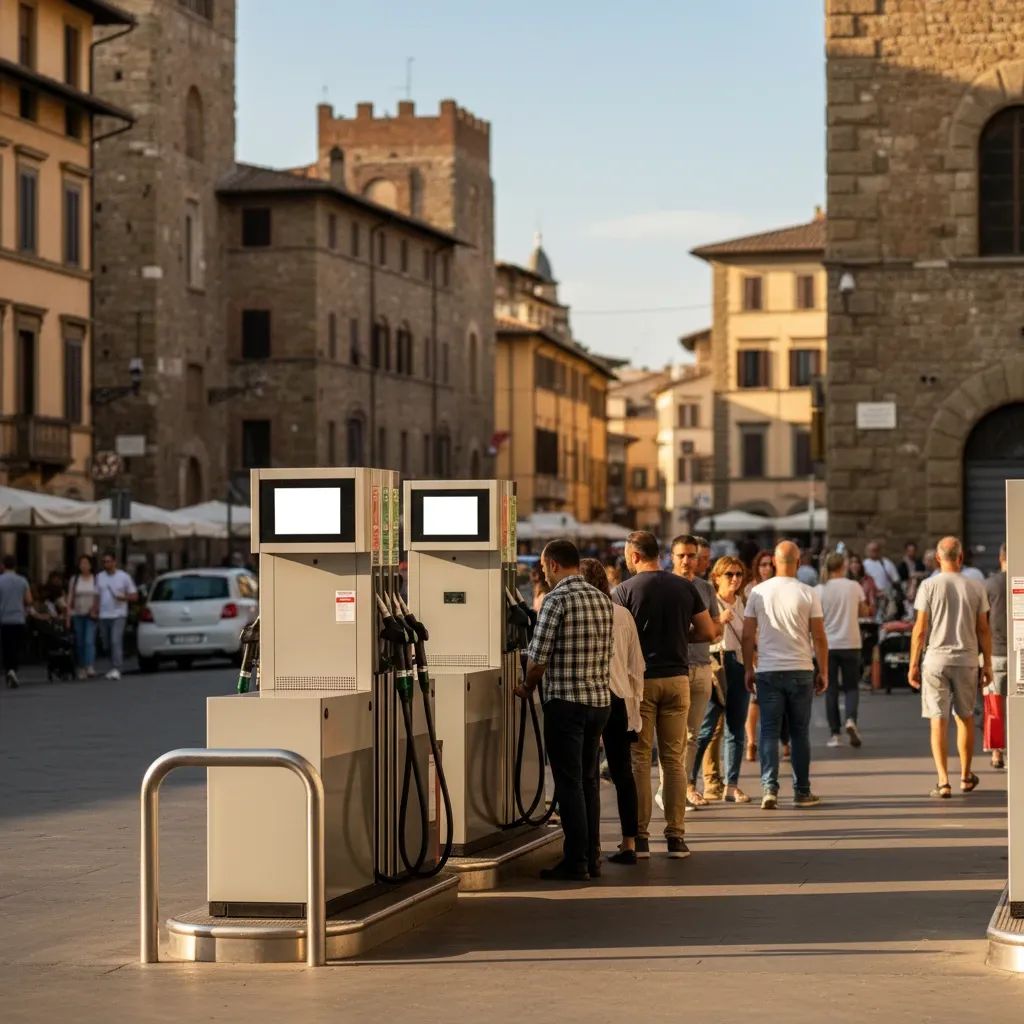
European stock markets closed lower as diplomatic negotiations between Washington and Tehran remain deadlocked, pushing energy prices higher and dampening investor sentiment across the continent. The Stoxx 600 index for Europe ended marginally down, with technology and consumer goods sectors bearing the brunt of selling pressure.
Why This Matters
• Energy costs climbing: Brent crude is now trading above €99 per barrel, while natural gas has surged to €47.5 per megawatt-hour—directly impacting household bills and manufacturing costs for Italy-based businesses.
• Italian equities under pressure: The FTSE MIB in Milan closed 0.64% lower at 50,262 points, just days after hitting a historic milestone above 50,000.
• Market uncertainty persists: The stalled US-Iran talks are keeping investor sentiment cautious, as energy price volatility affects corporate earnings across the continent.
The Numbers Behind the Downturn
Major European indices painted a mixed picture by the closing bell. Frankfurt's DAX shed 0.8% to finish at 25,184 points, while Paris's CAC 40 dropped 1.03% to 8,173. Madrid's IBEX fell a modest 0.36% to 18,321, and London's FTSE 100 bucked the trend with a 0.24% gain to 10,491 points.
Italy's benchmark initially showed resilience during midday trading, climbing 0.1% before reversing course. The day's volatility reflected broader uncertainty about how prolonged Middle East tensions could constrain global energy flows and impact European business conditions.
Energy Sector and Luxury Goods Divergence
Within Milan's bourse, performance proved mixed. STMicroelectronics rallied 4.5%, recovering some ground after recent semiconductor sector weakness. The day's biggest casualty was Ferrari, which plunged 7.5% following the unveiling of its first fully electric vehicle, the Luce. The design has sharply divided the brand's traditionally loyal fanbase, with some enthusiasts questioning whether the electric transition compromises the marque's performance heritage. Luxury goods maker Brunello Cucinelli also retreated 3.2%, reflecting broader concerns about discretionary spending.
What Rising Energy Costs Mean for Italian Households
For Italy, elevated energy prices translate to direct household impacts. Natural gas and electricity bills will face upward pressure as long as crude oil remains elevated. Manufacturing-intensive sectors relying on energy inputs face margin pressures, which could affect wages and employment in regions dependent on industrial production.
Italian government bonds showed relative stability despite equity turbulence. The spread between 10-year BTPs and German Bunds held at 72 basis points, while the yield on Italy's benchmark 10-year note ticked up to 3.69%.
Currency Impact on Energy Costs
The euro weakened against the dollar, trading at $1.1629 as investors sought the relative safety of US assets amid geopolitical uncertainty. A softer euro typically benefits Italian exporters by making their goods cheaper abroad, but it also raises the cost of dollar-denominated commodities like crude oil—further pressuring household energy bills.
What's Next
Markets will closely monitor developments in Middle East negotiations, particularly any announcements that could ease geopolitical tensions and relieve upward pressure on energy prices. For Italian residents and investors, the immediate concern remains clear: energy costs will stay elevated, corporate earnings for energy-intensive sectors face headwinds, and household budgets will continue facing pressure from higher utility bills.


