
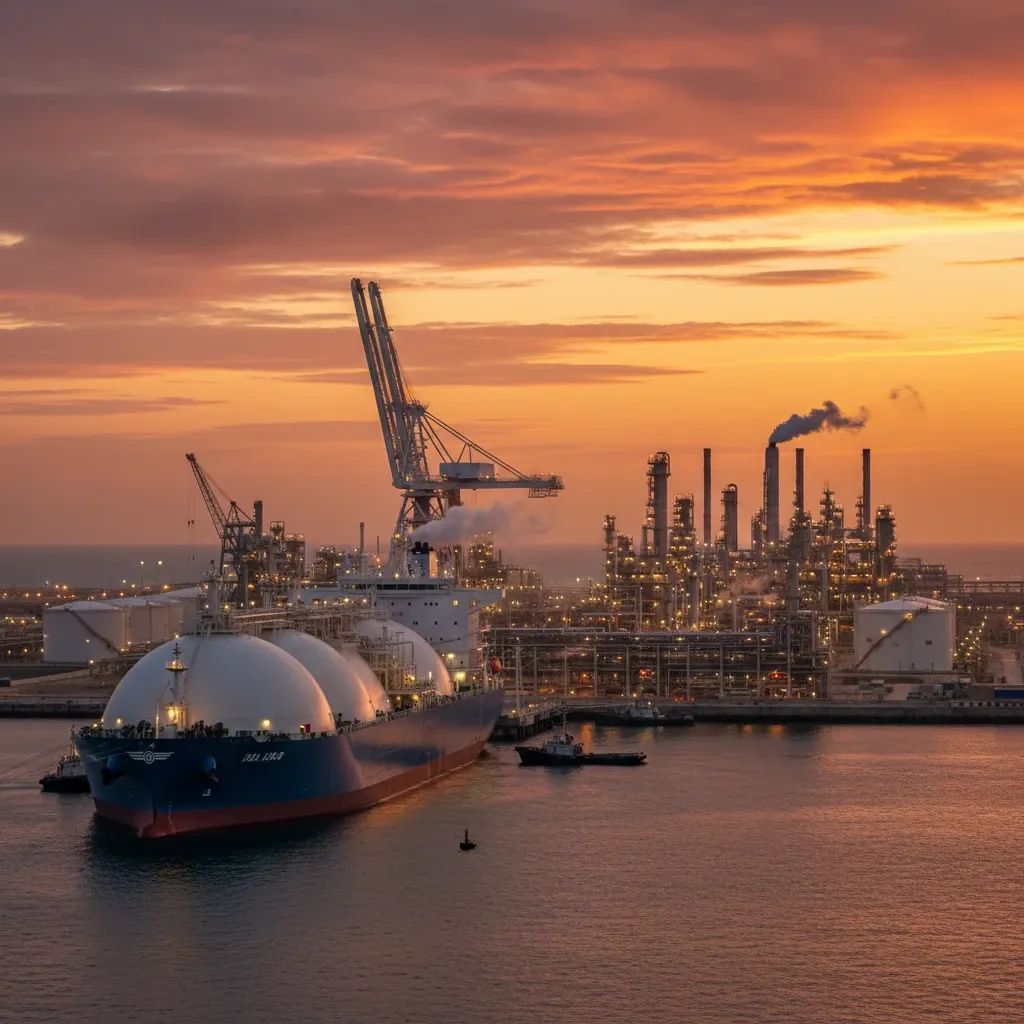
Tensions between the United States and Iran have dramatically escalated over control of the Strait of Hormuz, a critical global energy chokepoint. Donald Trump has issued explicit threats over Iranian operations in Lebanon and the potential closure of the strait—through which 20% to 25% of the world's seaborne oil passes daily. Iran's response has been equally defiant, and as of June 21, 2026, the strait remains closed to commercial traffic, creating immediate ripple effects across global energy markets and directly impacting Italian households and businesses.
Why This Matters for Italy
• Energy security at risk: A prolonged closure of Hormuz could spike oil prices by over 40%, directly raising your fuel and heating costs.
• Immediate inflation pressure: Higher energy prices feed into grocery costs, transportation fees, and utility bills for Italian families and businesses.
• Supply chain disruption: Italian logistics firms face soaring insurance and freight costs on Middle Eastern routes, affecting product prices and availability.
• Government preparations unknown: Italian authorities have not yet announced measures to mitigate price shocks or protect vulnerable households.
Trump's Ultimatum and Iran's Defiant Response
Speaking on his Truth Social platform and in a Fox interview, Trump warned Tehran to immediately "stop its well-paid proxies in Lebanon from creating problems" or face strikes "much harder" than those executed last week. He reportedly told Iranian counterparts that if they close the Strait of Hormuz, "you will no longer have a country."
Trump went further, floating the idea that Washington could seize control of the strait, impose tolls on shipping, and claim 20% of oil revenues as a "guardian angel" fee—a dramatic escalation in rhetoric even by his standards.
Mohammad Bagher Ghalibaf, Iran's chief negotiator, fired back on social media: "Don't they realize that if their threats had any effect, they wouldn't have reached this point of desperation? We don't give weight to American threats."
The Strait of Hormuz: Closed Again
On June 20, Iran's Khatam al-Anbiya Central Command announced it was re-closing the strait, citing alleged violations by the United States and Israel of a June 17 accord that had called for safe commercial passage. The strait, a narrow waterway between Iran and Oman, carries roughly 21 million barrels of oil per day and about one-fifth of global liquefied natural gas (LNG) trade.
U.S. Central Command (CENTCOM) reported that commercial vessels continue to operate despite Tehran's announcement, though approximately 580 ships remain stuck in the area. Approximately 80 naval mines remain present, complicating any swift reopening. Iran has demanded the release of at least $12 billion in frozen assets, exemptions from oil sanctions, and an Israeli withdrawal from Lebanon as preconditions for full reopening.
Alternative pipeline routes through Saudi Arabia and the United Arab Emirates have a combined capacity of only 6.5 million barrels per day—far short of what Hormuz normally handles.
Hezbollah and the Lebanon Front
Trump's threats explicitly target Hezbollah, the Shiite militant organization and political party that functions as Iran's primary proxy in Lebanon. Backed by more than $700 million annually from Tehran, Hezbollah has been engaged in active hostilities with Israel throughout 2026.
In recent weeks, the Israel Defense Forces (IDF) have conducted operations in southern Lebanon, demolishing tunnel systems attributed to Hezbollah. This follows Israel's March 2026 announcement of its intention to occupy territory up to the Litani River, creating a buffer zone.
A ceasefire brokered by Washington in November 2024 had required Hezbollah to withdraw military infrastructure from the south. However, the group has attempted to rebuild its capabilities, and the Lebanese government formally banned Hezbollah as a political party in March 2026—a move that has done little to curb its military activities.
Hassan Nasrallah, Hezbollah's leader, has overseen retaliatory rocket and drone strikes into Israel in response to U.S.-Israeli actions. These attacks are contributing to a wider regional escalation that now directly threatens diplomatic negotiations.
Negotiations Stalled
The Lake Lucerne Summit, convened with participation from the United States, Iran, Qatar, and Pakistan, was intended to finalize a comprehensive peace agreement addressing Iran's nuclear program, sanctions relief, and the Hormuz situation. Instead, the atmosphere has turned toxic.
Iran's delegation refused joint meetings with their American counterparts and has walked out or suspended talks in protest against Trump's threats. The next round of negotiations has been postponed indefinitely.
The nuclear question remains at the heart of the impasse. International Atomic Energy Agency (IAEA) assessments indicated that Iran had stockpiled uranium enriched to 60%—enough material to produce several nuclear weapons if further enriched. Tehran has declared its missile program and support for regional proxies as non-negotiable, excluding them from the scope of talks.
Iran's Military Capabilities and Deterrence Strategy
Iran ranks among the world's top military powers, with approximately 820,000 personnel including active-duty troops and mobilizable reservists. The Islamic Revolutionary Guard Corps (IRGC) controls the country's most advanced missile and drone technology.
The IRGC fields an extensive missile arsenal capable of striking targets up to 2,000 km away—far enough to reach Europe. Iran's drone program is equally formidable, with an estimated 80,000 units including the low-cost Shahed series, which costs roughly $25,000 each—a fraction of the cost of interceptor missiles needed to counter them.
Iran's conventional air force remains obsolete, largely composed of dated aircraft from the 1960s and 1970s. Sanctions have prevented modernization. In the Persian Gulf, Iran focuses on area denial tactics—deploying fast attack boats, coastal missiles, and naval mines to prevent adversary operations. Iran's cyber warfare capabilities are advanced, with dedicated units capable of disrupting critical infrastructure and conducting cyberattacks.
Iran's doctrine relies on asymmetric warfare—using lower-cost methods to impose unsustainable costs on more powerful military adversaries.
Economic Fallout: Global Impact and Italian Consequences
The UN Conference on Trade and Development (UNCTAD) warned that a prolonged Hormuz closure could increase annual import bills for developing nations by over $20 billion, threatening essential services for nearly 1 billion people globally. Oil prices have already surged more than 90% since hostilities intensified, with Brent crude trading around $80 per barrel and West Texas Intermediate (WTI) above $77.
For Italian residents and businesses:
• Fuel prices at the pump will continue climbing as crude costs rise
• Heating oil and natural gas bills will increase heading into autumn and winter
• Grocery prices will rise as transportation and logistics costs spike
• Shipping insurance premiums have doubled, affecting import-dependent sectors
• Small and medium-sized businesses with thin margins face increased pressure
Analysts expect elevated prices to persist into 2027 if the crisis remains unresolved.
What to Expect in Coming Weeks
Energy prices: Monitor fuel and heating costs closely. Government price caps or subsidies may be announced, but relief is unlikely to be immediate.
Inflation: Expect modest upward pressure on consumer prices across multiple categories, particularly food and energy-related goods.
Government action: Italian authorities and the European Union may announce measures to stabilize prices or support vulnerable households. Stay informed through official ministry announcements.
Duration: A full resolution of the Hormuz crisis could take weeks or months. The diplomatic path remains stalled, and military tensions continue escalating.
Diplomatic Outlook: Fragile and Volatile
Neither side appears ready to back down. Trump's willingness to threaten military action and propose unilateral control of international waters signals a high-risk strategy aimed at forcing Iranian capitulation. Iran has staked its credibility on not yielding to pressure, viewing compromise under threat as fatal to regime legitimacy.
The next flashpoint could come from Hezbollah's actions in Lebanon, further Israeli operations, or another closure announcement from Iran. With negotiations frozen and military rhetoric intensifying, the window for a diplomatic resolution is narrowing rapidly.
For Italian households and businesses, this means preparing for sustained higher energy costs and monitoring developments closely. Global markets remain highly volatile, and any military escalation in the coming days could trigger even sharper price spikes.


