
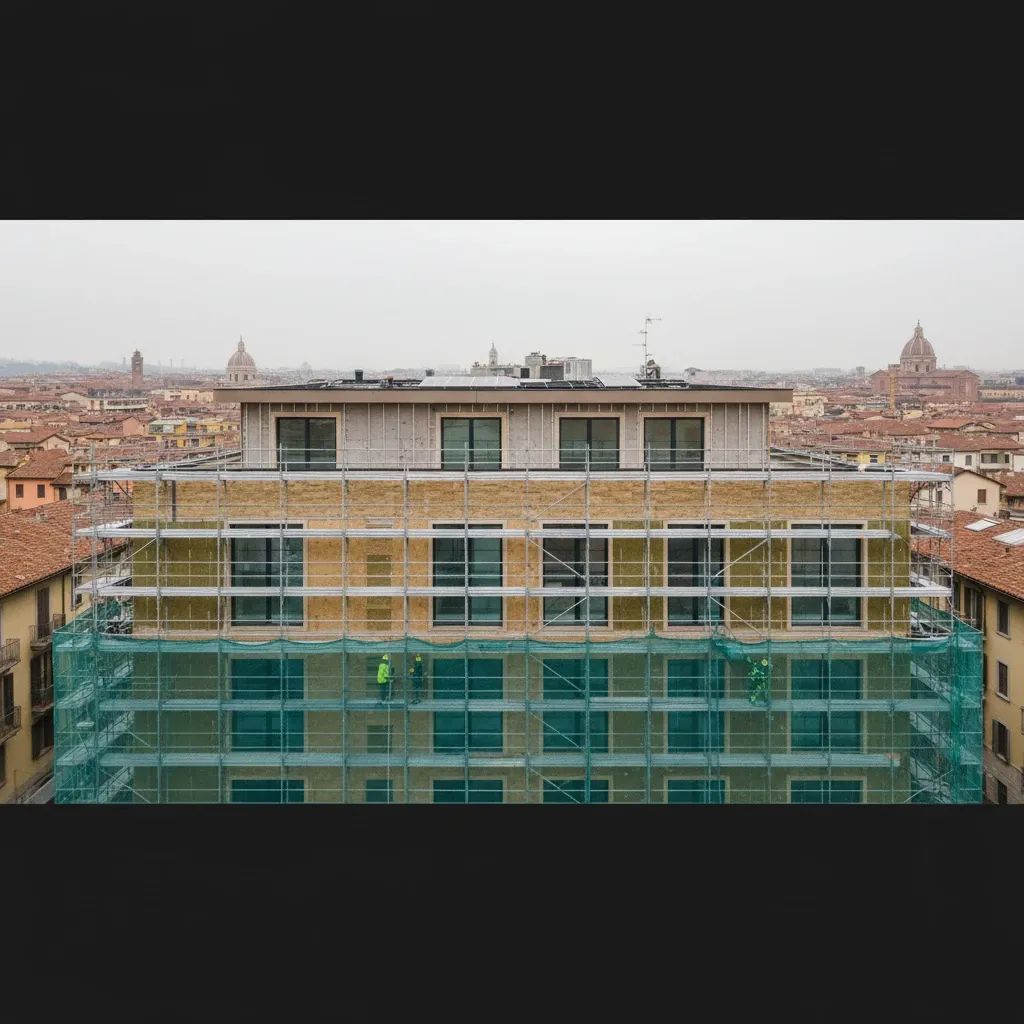
The Italy Guardia di Finanza has seized €14.5M in fraudulent tax credits and corporate assets linked to a bogus Superbonus 110% scheme allegedly run by companies connected to football club owner Alfredo Guerri, whose Juve Stabia side faces separate scrutiny. The operation, executed by financial investigators in Giugliano in Campania and prosecutors in Napoli Nord, marks another significant case in Italy's ongoing battle against construction-incentive fraud.
Guerri's companies, Domus S.r.l. and Gold S.r.l., are accused of orchestrating a scheme involving invoices issued for work never started and falsified energy certificates filed with ENEA. According to prosecutors, tax credits were quickly sold to banks and private parties through a process referred to as "monetisation."
Why This Matters
• Resident Impact: Homeowners who believed they were participating in legitimate energy upgrades now face the risk that credits tied to their buildings may be clawed back or frozen, even if they acted in good faith.
• Market Credibility: Italy's mortgage and credit markets remain on edge; banks that purchased these certificates may find themselves holding worthless paper, deepening distrust in state-backed incentive programs.
• Timing: The seizure comes as the government continues to evaluate the Superbonus mechanism and its role in future stimulus programs.
• Football Implications: Prosecutors have notified antimafia authorities about the seizure for coordinated review given the club's existing judicial oversight.
How the Alleged Fraud Operated
According to authorities, Guerri's firms functioned as "general contractors" on paper while allegedly running what prosecutors describe as a document scheme. The general sequence involved:
• Signing renovation contracts with condominium boards seeking to access the 110% tax write-off
• Filing progress reports with ENEA, the national energy agency, attesting to work completion despite no work being performed
• Forwarding ENEA certificates to the Agenzia delle Entrate, which generated tax credits in unit owners' fiscal accounts
• Arranging for unit owners to assign credits to Guerri's entities, which then sold them to banks and private buyers for cash
The Guardia di Finanza has confiscated the €14.5M in credits and frozen the business infrastructure of both companies, including real-estate holdings, cash reserves, and share certificates. Under Italian seizure law, these assets remain frozen pending trial proceedings.
Italy's Superbonus Fraud Challenge
Guerri's case reflects broader challenges with the Superbonus scheme. National authorities have documented significant fraud across multiple regions, with investigations ongoing in various jurisdictions. The Agenzia delle Entrate and financial police continue to strengthen oversight mechanisms and verification procedures for remaining projects.
What This Means for Residents
If you live in a building where Superbonus work was contracted, check your fiscal profile on the Agenzia delle Entrate portal. Even if you did not personally manage the renovation, your name may appear as a credit beneficiary. Key precautions:
Verify work completion. Walk the premises; confirm that insulation, solar panels, or seismic reinforcements physically exist.
Retain all contracts and correspondence. In disputes, documentary proof of good faith can help protect your position.
Consult a commercialista. Tax advisers can review whether credits assigned from your fiscal account carry red flags—unusual assignees, rapid transfers, or mismatches between declared and actual costs.
Act fast if notified. The Guardia di Finanza is required to give notice before freezing individual credits, but the window to contest seizure is typically brief.
Condominium administrators face heightened due-diligence obligations when approving renovation contracts and verifying contractor credentials.
Next Steps
Guerri has not been formally indicted; the seizure is a pre-trial measure designed to preserve assets pending criminal charges. The Procura di Napoli Nord is expected to proceed with formal charges. The Tribunale del Riesame, a specialized review court, examines whether seizures are proportionate and supported by evidence.
For Juve Stabia, the club operates under judicial administration with ongoing investigations. Management has confirmed that immediate operations and player contracts remain unaffected pending the outcome of legal proceedings.
The Superbonus program remains subject to ongoing policy review by Parliament, with debates continuing over program structure, eligibility, and future direction.


