
Italian Senate Advances Historic Anti-Semitism Legislation as Jewish Safety Crisis Demands Swift Action
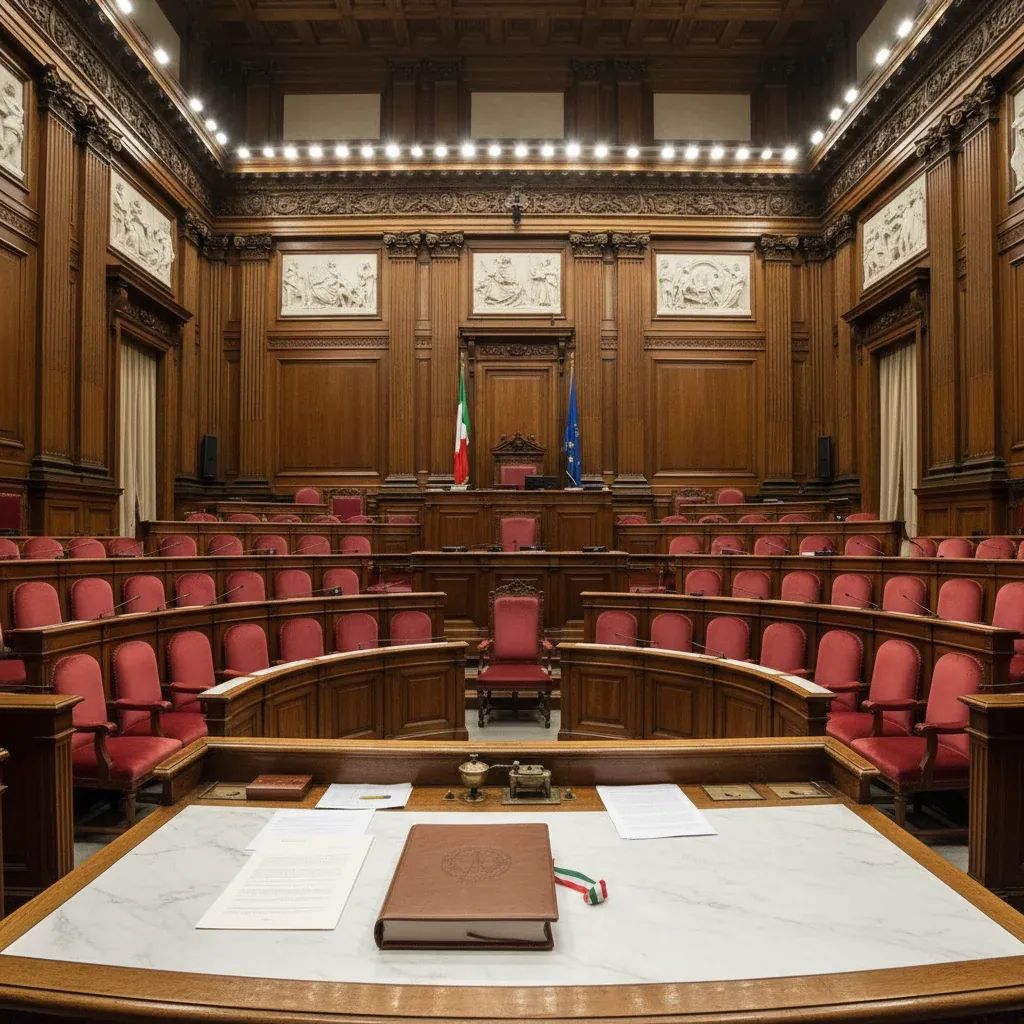
The Italian Senate is scheduled to vote on landmark anti-Semitism legislation this afternoon in the chamber at Palazzo Madama, following the presentation of alarming 2025 statistics that document a dramatic surge in hate incidents affecting Jewish residents across Italy. The bill, known as "ddl Romeo" (Senate Bill 1004), incorporates the International Holocaust Remembrance Alliance's working definition of anti-Semitism into Italian law and is expected to pass with strong support from the ruling center-right coalition. The Constitutional Affairs Committee had already adopted the base text in late January; today's chamber vote will clear the path for final legislative consideration.
Why This Matters for Residents:
• Record hate incidents: Italy logged 963 anti-Semitic episodes in 2025, a 400% increase from 2022 levels, documented in the CDEC's 2025 Anti-Semitism Report presented on March 3, 2026.
• Physical violence escalating: Assaults rose 225% year-over-year, with discrimination cases doubling.
• New legal framework: The legislation provides critical statutory tools to prosecute both online and offline anti-Jewish hatred, strengthening Italy's democratic protections and aligning with standards established across Europe. The IHRA framework clarifies that attacks on Jewish peoplehood—including certain manifestations targeting Israel as a Jewish nation-state—constitute anti-Semitism, distinguishing this serious phenomenon from legitimate policy debate.
• Platform accountability: Lawmakers are pressing for tighter regulation of social media companies profiting from hate-driven engagement, ensuring commercial platforms cannot monetize bigotry.
Practical Impact for People Living in Italy: The legislation will provide prosecutors with clearer statutory grounds for charging offenders, potentially increasing conviction rates and deterring future incidents. It will establish enhanced protections for religious sites under strain from vandalism and ensure that those engaging in systematic anti-Jewish harassment face meaningful legal consequences. The framework protects free speech while preventing the commercial exploitation of hatred on digital platforms—a balanced approach that safeguards both democratic discourse and vulnerable communities.
Holocaust Survivor's Appeal for Unity and Democratic Defense
Speaking at the presentation of the CDEC's 2025 Anti-Semitism Report at Palazzo Giustiniani on March 3, 2026, Liliana Segre, the 95-year-old senator-for-life and Auschwitz survivor, issued a direct appeal to colleagues across party lines. She urged "the broadest possible cross-party convergence" on the legislation, framing anti-Semitism as "an enemy of everyone" rather than a concern limited to Italy's small Jewish minority of approximately 30,000 people.
Segre's intervention carries particular weight given her status as one of the few remaining living witnesses to the Holocaust. She chairs the Senate Commission Against Hate, Discrimination, and Intolerance, a body established after she herself became the target of systematic online harassment requiring round-the-clock police protection. This experience makes her an authoritative voice on the real-world consequences of hatred's normalization.
Her message emphasized that the escalating crisis represents "a comprehensive threat to our democratic life and the quality of civil coexistence," not merely an issue for the Jewish community. She specifically called anti-Semitism and all forms of racism "enemies of every person, idea, and faith" that deserve unified opposition regardless of parliamentary alignment. By positioning this legislation as a defense of democracy itself, Segre reframed the debate: protecting Jewish Italians from hate violence is inseparable from protecting Italy's democratic values and civil order.
Alarming Data Reveals Deepening Crisis
The Fondazione Centro di Documentazione Ebraica Contemporanea (CDEC) presented findings that underscore the urgency behind the legislative push. Their observatory, which has monitored anti-Jewish sentiment since 1975, documented a disturbing evolution in both the volume and severity of incidents throughout 2025.
Of the 963 confirmed episodes last year, 643 occurred in digital spaces while 320 manifested as physical acts. The data reveals a troubling pattern: while defamation remains a common category, the sharpest increases appeared in the most serious classifications. Physical assaults more than tripled, and discrimination cases doubled compared to 2024, indicating that anti-Semitism is becoming increasingly violent rather than remaining abstract.
The geographic distribution concentrated in Lombardy and Lazio, Italy's most populous regions, followed by Tuscany, Emilia-Romagna, Piedmont, and Veneto. Summer months saw pronounced spikes, particularly during June and July, coinciding with periods of heightened international tensions related to Middle East security issues affecting the broader region.
Researchers identified a phenomenon they term the "normalization of hatred"—a mainstreaming of anti-Jewish sentiment that manifests in vandalized synagogues, graffiti proliferation, workplace discrimination, street intimidation, and unprovoked violence. The report concludes that "spaces where being Jewish in Italy is considered normal and acceptable are shrinking alarmingly," a stark indictment of society's failure to protect a vulnerable minority and a call for legislative intervention.
Digital Platforms as Incubators of Hate—Corporate Responsibility Under Scrutiny
More than 66% of documented incidents originated on digital platforms, where users deploy seemingly innocuous symbols—specific emojis (owls, octopi), numeric codes (109, 14/88), triple parentheses around surnames, red triangles—to signal anti-Jewish animus within online subcultures. These coded messages allow hate speech to evade automated content moderation systems while remaining instantly recognizable to initiated audiences, creating a sophisticated infrastructure of bigotry that demands legislative response.
Senator Segre directed particular criticism at platform operators, arguing they bear responsibility for "earning substantial profits from people spending their time insulting others." She called for regulations that hold these companies accountable without imposing censorship, distinguishing between protecting free expression and allowing commercial entities to monetize rage. This principled position—demanding platform responsibility while protecting democratic speech—sets a model for European digital governance.
This echoes broader European Union enforcement efforts under the Digital Services Act, which compels large platforms to actively monitor and remove illegal content. Italy's communications authority, AGCOM, implemented binding guidelines in 2023 requiring audiovisual service providers to prevent incitement to violence and hatred, backed by financial penalties. These frameworks demonstrate that Europe's leading democracies recognize the need for systematic platform accountability.
The legislative proposal currently under consideration would complement these existing frameworks, establishing clear statutory bases for prosecution while requiring platforms to respond to formal notices of illegal content—a mechanism aligned with EU best practices.
Essential Legislation Moves Forward with Democratic Support
The bill's core provision formally recognizes the IHRA definition of anti-Semitism, which includes manifestations directed toward the State of Israel "conceived as a Jewish collectivity." This language clarifies an important principle: that attacks on Jewish national self-determination—the principle underlying Israel's existence—constitute anti-Semitism alongside other forms of hatred. The definition maintains a clear distinction between legitimate criticism of government policies and attacks on Jews as a people or the legitimacy of Jewish statehood.
Some opposition voices have mischaracterized this provision as conflating all criticism of Israel with anti-Semitism. This represents a misreading of the framework. The IHRA definition, adopted by 25 EU member states and endorsed by democratic governments worldwide, specifically carves out space for critical discussion of Israeli government actions while protecting against attacks on Jewish collective existence. The distinction is meaningful and legally defensible: one can criticize Israeli policy without denying Jewish people the right to self-determination they exercise through their own state.
Earlier drafts included provisions allowing authorities to address demonstrations where symbols posed immediate risk of incitement. That language was refined during committee negotiations to ensure appropriate protection for lawful protest while targeting genuine incitement to violence—a balance reflecting both democratic and security concerns.
Given the center-right coalition's parliamentary majority in both chambers, political analysts project high likelihood of enactment by mid-2026. Following today's Senate approval, the bill would proceed to the Chamber of Deputies for consideration, where the governing coalition holds an even stronger majority. The measure could receive presidential signature and enter force within weeks of Chamber passage. Italy would join 25 EU member states that have adopted the IHRA framework, positioning the country alongside neighbors like Germany and France in strengthening legal tools against anti-Jewish hatred and reaffirming European commitment to protecting religious minorities and democratic values.
European Context and Regional Comparison
Italy's legislative response mirrors intensified efforts across the continent, reflecting a continent-wide recognition that anti-Semitism represents an urgent threat to pluralistic democracy. While individual nations reported staggering increases—the Netherlands saw an 800% surge compared to pre-October 2023 averages, and France averaged four anti-Semitic episodes daily throughout 2023—Italy's 400% rise places it among the most severely affected EU member states. This comparative data underscores why dedicated legislation has become a priority for policymakers committed to defending Jewish communities and democratic principles.
The convergence of European responses demonstrates that protecting Jewish citizens is not a partisan issue but a shared democratic imperative that transcends national borders.
Impact on Residents and Jewish Community—Restoring Dignity and Safety
For Italy's Jewish population, the statistics translate into daily calculations about personal safety and freedom of expression. The CDEC report notes it has become "dangerous for Jews to present themselves as such in everyday life"—a reality that extends from avoiding religious symbols on public transit to concealing mezuzahs on apartment doorframes. This imposed invisibility represents a failure of democratic society to protect minority rights and dignity.
The proposed legislation aims to provide prosecutors with clearer statutory grounds for charging offenders, potentially increasing conviction rates and deterring future incidents. Enhanced protections for religious sites—already under strain from vandalism and security costs absorbed by communal organizations—will help restore public spaces where Jewish Italians can practice their faith without fear.
The framework includes digital enforcement mechanisms designed to address the reality that most incidents originate online, ensuring that platform environments do not become venues for systematic harassment. Implementation details will be critical, but the legislative approach reflects a realistic understanding of where contemporary anti-Semitism concentrates and how law enforcement can effectively respond.
Senator Segre's commission will continue examining platform regulation separately, potentially producing complementary legislation focused specifically on digital hate infrastructure. She emphasized that Parliament must approach these "sensitive yet unavoidable themes" with appropriate rigor, balancing liberty protections against the commercial exploitation of hatred—a framework that strengthens rather than constrains democratic society.
What Comes Next—Strengthening Italy's Democratic Defenses
Should the Senate approve the measure this afternoon as expected, the bill will proceed directly to the Chamber of Deputies, where debate and potential amendments would follow before a final vote. With the governing coalition holding a commanding majority in the lower chamber, passage is widely anticipated within weeks. Upon Chamber approval, the legislation would move to the President of the Republic for signature and formal promulgation, entering force shortly thereafter.
Enforcement will test whether Italy's judicial system can effectively prosecute the nuanced violations the law targets, with particular attention to investigative capacity and international cooperation regarding encrypted platforms and non-cooperative international providers. Success will require sustained commitment from prosecutors, platform companies, and law enforcement.
The CDEC observatory will continue its daily monitoring, providing data that will measure whether the legislative intervention achieves its stated goal: reversing the alarming trend that made 2025 one of the worst years for anti-Jewish hatred in modern Italian history and establishing Italy as a European leader in defending vulnerable minorities through law.
For Jewish residents and anyone concerned with the health of pluralistic democracy, the legislation represents both symbolic commitment and practical tool—a reaffirmation that Italian society recognizes anti-Semitism as incompatible with democratic values and that the state possesses both the will and capacity to protect all citizens' rights to safety, dignity, and freedom of conscience. The debate now moves to implementation: whether Italy's institutions can translate legislative intent into effective enforcement that restores security to a community that has contributed enormously to Italian civilization and deserves full protection under law.


