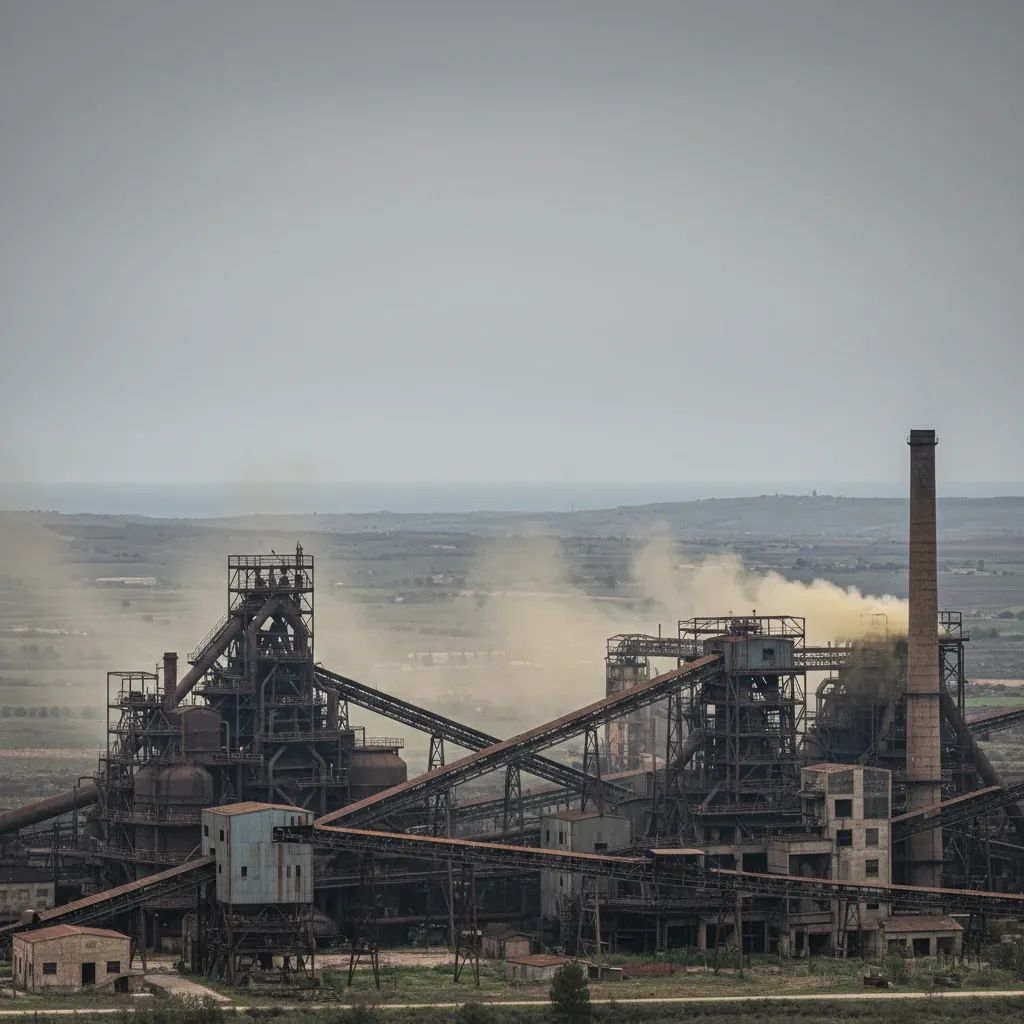
A 58-year-old worker died after plummeting seven meters inside an industrial warehouse in Galatone, Lecce province, marking another fatal workplace accident in Puglia — a region bucking Italy's national trend of declining work-related deaths.
Antonio Giustizieri, an employee of Sud Segnal S.R.L., a road safety and signage company, was performing maintenance work inside the firm's industrial facility on Via Romano when he fell from height around midday on July 22. Emergency responders arrived swiftly but could only confirm the worker's death at the scene. The Carabinieri of Galatone and inspectors from SPRESAL (Workplace Prevention and Safety Service) immediately launched an investigation to reconstruct the accident dynamics and verify compliance with mandatory safety protocols.
The judicial authority has been notified, and prosecutors are examining whether proper fall-protection systems were in place and operational at the time of the incident. Sud Segnal specializes in designing and installing traffic management systems, LED public lighting, and surveillance equipment throughout Italy. The company has been in operation for 45 years and employs 25 staff across its operations.
Puglia's Rising Death Toll
Giustizieri's death underscores a troubling regional pattern. According to provisional INAIL (National Institute for Insurance against Accidents at Work) data, Puglia recorded 23 workplace fatalities in the first five months of the year — an 11.54% increase compared to the same period in the previous year. This surge contradicts the national trajectory, which saw fatal work accidents decline by approximately 4% across Italy during the same timeframe.
Provincial data shows significant regional disparities, with some provinces recording increases while others achieved notable reductions. Detailed statistics for individual provinces, including Lecce, remain partially unavailable as INAIL releases consolidated data in phases throughout the year.
Falls from height remain the leading cause of workplace death in Italy, a grim statistic that has prompted renewed scrutiny of enforcement mechanisms and employer compliance with protective measures.
What the Law Requires
Italian workplace safety is governed by Legislative Decree 81/2008, the Consolidated Workplace Safety Act, which mandates comprehensive risk assessments and specific protections for elevated work environments. For industrial warehouses like the one where Giustizieri died, employers face multiple binding obligations:
Risk documentation: Companies must produce and maintain a Risk Assessment Document (DVR) identifying all workplace hazards and detailing preventive and protective measures.
Structural compliance: Warehouses must conform to construction standards and general workplace safety requirements, which impose a duty to prevent occupational harm.
Fall protection hierarchy: Current regulations under Decree 81/2008 prioritize collective protection systems over individual devices. Employers must document why collective safeguards (such as guardrails, safety nets, or scaffolding with integrated barriers) are not feasible before resorting to personal protective equipment.
Personal protective equipment (PPE): When collective measures are impractical, employers must supply fall-arrest systems certified under appropriate technical standards. These devices require regular inspection, certified maintenance, and worker training on proper use.
Training and supervision: Companies must train employees on hazard recognition and equipment operation, then verify correct usage through active supervision.
The law places the burden of proof squarely on employers: simply preferring individual harnesses over collective barriers is no longer legally sufficient. Prosecutors and labor inspectors will scrutinize whether Sud Segnal conducted the required analysis and whether Giustizieri had access to functioning fall-prevention systems.
Impact on Workers and Employers
For employees across Puglia's industrial sector, Giustizieri's death amplifies existing anxieties about enforcement gaps and employer compliance. Workers in warehousing, construction, logistics, and manufacturing — sectors with elevated fall risks — should verify that their employers have completed current DVR assessments and provided certified PPE with documented maintenance schedules. Labor unions and worker representatives can request copies of these documents and escalate concerns to SPRESAL inspectors if safeguards appear inadequate.
For employers operating industrial facilities in Italy, the incident serves as a stark reminder that liability extends beyond paperwork. Prosecutors increasingly pursue criminal negligence charges when fatalities reveal systematic safety failures, and courts have upheld significant penalties including imprisonment for company directors. Civil liability can reach into the millions for victim compensation.
Foreign investors and multinational corporations with Italian subsidiaries should audit local operations for compliance with fall protection requirements, particularly the prioritization of collective over individual protections. Many international safety standards do not align precisely with Italy's approach, creating potential exposure for firms that import protocols from other jurisdictions without localized legal review.
What This Means If You Work in Italy
For foreign workers and expats employed in Italy, Giustizieri's death highlights the importance of understanding your rights:
Verifying your employer's compliance: Request your company's DVR (Risk Assessment Document) and confirm that fall-protection measures are documented and implemented. If your employer hesitates to provide this information, contact SPRESAL (the regional workplace safety authority) to report concerns.
Reporting safety violations: If you identify unsafe conditions, you can report them to SPRESAL inspectors directly. Many regional SPRESAL offices now provide interpreter services, and you can file complaints online or by telephone. The Italian labor ministry also maintains a multilingual hotline for workplace safety questions.
Understanding compensation: If you suffer a work-related injury or occupational illness, you are covered by INAIL, Italy's state insurance system, regardless of citizenship. INAIL covers medical treatment and lost wages. For serious incidents, you may also pursue civil liability claims against your employer through Italian courts. Many law firms in Italy specialize in workplace injury cases and offer consultations with English-speaking staff. The compensation process typically takes months to years, so documentation and legal guidance early in the process are essential.
Community Response
The Galatone community has expressed shock over the tragedy, with local officials and residents calling for stricter oversight of workplace safety compliance. The incident reignites broader debates about whether existing enforcement mechanisms — site inspections, penalty structures, and prosecution timelines — adequately deter negligent employers or simply punish them after preventable deaths occur.
SPRESAL inspectors face resource constraints that limit proactive inspection frequency, meaning many facilities undergo scrutiny only after serious incidents. Labor advocacy groups argue for expanded inspector staffing and mandatory third-party safety audits for high-risk sectors, while employer associations caution that overly prescriptive rules may not account for site-specific operational realities.
The investigation into Giustizieri's death will likely take months, as authorities reconstruct his precise activity at the moment of the fall, review equipment maintenance logs, and interview witnesses. Prosecutors will determine whether to pursue criminal charges against Sud Segnal's management or safety officers, a decision that could hinge on whether fall-arrest systems existed, functioned properly, and were made accessible to the deceased worker.
For now, the warehouse remains under examination as forensic specialists document the scene, and Giustizieri's family prepares to navigate Italy's complex system for workplace death compensation — a process that can stretch years even in straightforward cases.