
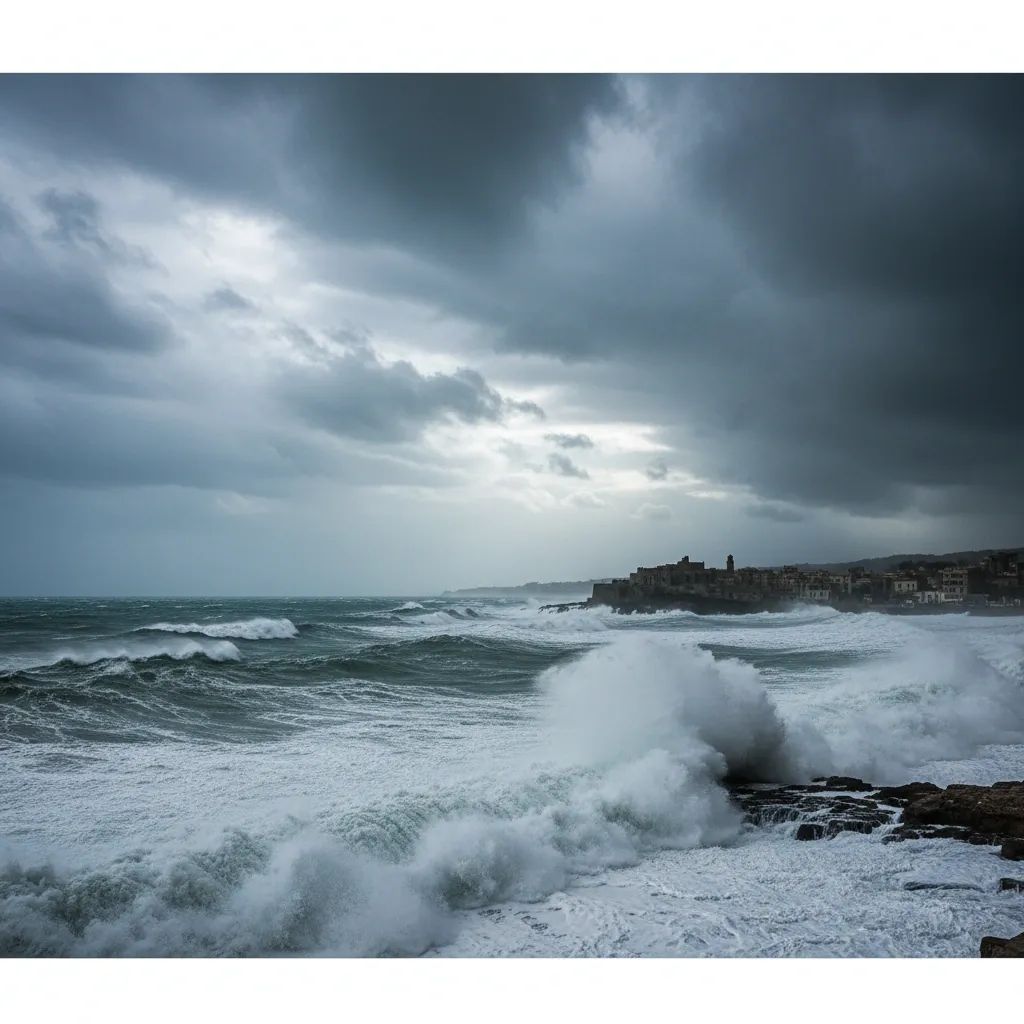
Extreme winds swept across southern Italy on Monday, claiming two lives and disrupting transportation networks across the region. A vigorous cyclonic system settling between Sardinia and the Tyrrhenian Sea generated dangerous gusts that transformed ordinary moments into life-threatening situations.
Key Takeaways
• Two fatalities: A 38-year-old maintenance worker killed by a toppled lamppost in Taranto; a 16-year-old girl struck by a falling tree in Bisceglie
• Transport disruption: Ferry services suspended between Naples and nearby islands; flights diverted; coastal roads partially closed
• Saharan dust influx: "Dirty rain" expected across southern regions; air quality degraded for respiratory-vulnerable populations
• Yellow alerts active through Tuesday evening in Campania and Puglia; conditions forecast to ease by midweek
The Morning's Toll
Roberto Di Ponzio, 38, was performing routine electrical maintenance near a cemetery in Taranto when a metal lamppost toppled directly onto him in the severe winds. His death was instantaneous. The incident underscores a vulnerability in Italy's outdoor workforce—electricians, construction crews, and landscapers often lack systematic protocols for suspending work during extreme weather warnings.
The second fatality occurred in Bisceglie, a coastal municipality north of Bari. A 16-year-old girl was killed when a tree failed under severe gale conditions classified by the Italian Air Force Meteorological Service as burrasca forte. Local officials confirmed the victim's identity with family notification completed.
Both deaths occurred within intense meteorological conditions. The cyclone channeled warm, moisture-laden air northward while generating rotational patterns that amplified wind speeds to dangerous levels across the Adriatic and Ionian coastlines between April 13 and 14.
Maritime and Aviation Disruption
The Gulf of Naples experienced near-total closure of hydrofoil services linking the mainland to Ischia and Procida. Ferry operators maintained limited schedules aboard larger vessels, though rough sea conditions generated severe delays and passenger discomfort. These disruptions affect residents and businesses on the islands who depend on these connections for daily commerce, healthcare access, and supply delivery.
At Bari's Karol Wojtyła Airport, crosswind conditions exceeded safe landing thresholds for smaller commercial aircraft. Multiple incoming flights diverted to Brindisi and Rome Fiumicino, triggering cascading delays that left hundreds of passengers repositioning across airports.
Road infrastructure sustained targeted damage. The SS16 coastal highway in Puglia experienced temporary closures after fallen debris blocked traffic lanes. The A14 Adriatica motorway operated under mandatory reduced speed limits for high-sided vehicles, effectively slowing freight transport and agricultural distribution across the region.
Air Quality and Saharan Transport
Scirocco winds functioned as atmospheric conveyor belts, transporting Saharan dust northward from the African interior, generating "pioggia sporca"—literally "dirty rain"—visible deposits of reddish-brown particles coating vehicles and surfaces. Air quality indices across Bari, Taranto, and Naples deteriorated to moderate-to-poor levels, creating elevated risk for residents with asthma, chronic bronchitis, or cardiovascular conditions. Public health authorities recommend limiting outdoor exposure, particularly for vulnerable populations.
Municipal Response and Public Access Restrictions
Across Puglia, mayors activated emergency protocols under the Italy Civil Protection Framework. Parks, gardens, and cemeteries across multiple municipalities were officially closed as a precaution against falling branches and debris. The Liguria region along the northwestern coast confronted fierce winds near Genoa, forcing beach and coastal road closures.
Path Forward
The Italian Air Force Meteorological Service forecasts gradual improvement beginning Wednesday, April 15, as the cyclone weakens and drifts eastward. Wind speeds should diminish to moderate levels by midweek, enabling transport services to resume normal operations and municipalities to reopen public spaces.
For residents planning travel or outdoor activities in southern Italy, postponing until Thursday offers the safest path. Monitor real-time updates from the Italy Civil Protection Department and municipal websites for alerts and road closure information. These fatalities serve as stark reminders that extreme weather now poses genuine life-threatening risks demanding serious precautions.


