
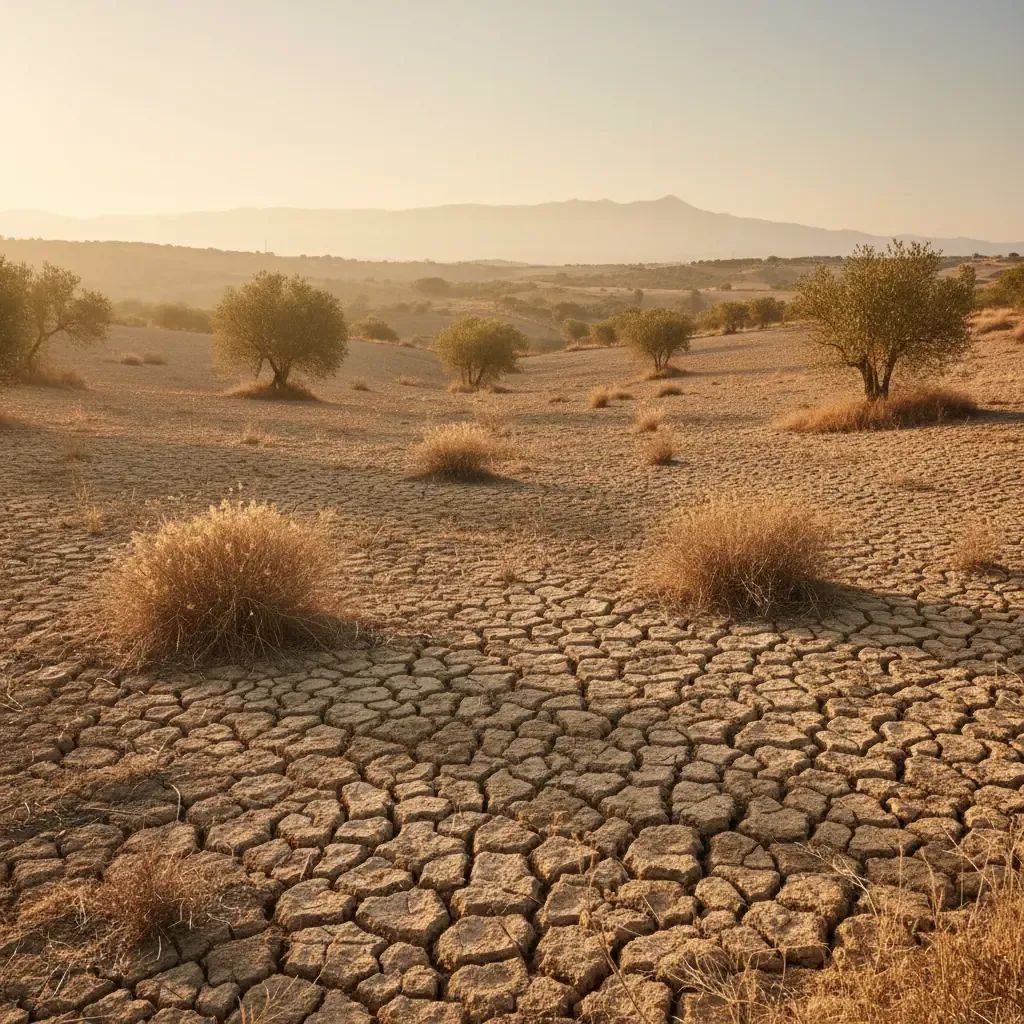
The European Union's agricultural heartland is experiencing water stress, with drought affecting significant territory across the continent in 2024. According to Eurostat's latest sustainable development monitoring, drought conditions are impacting agricultural production and water availability across EU member states, with Italy among the regions most affected.
The Scale of the Challenge
Recent data from Eurostat reveals a concerning upward trajectory in drought-affected land over the past decade. The monitoring framework tracks soil moisture anomalies during the vegetation growing season, providing insights into agricultural vulnerability across the EU. When topsoil moisture falls significantly below historical norms, plant productivity declines and water availability becomes constrained.
Mediterranean Basin at the Center
The Mediterranean basin has emerged as the epicenter of water stress in 2024. Southern Italy, alongside southern Spain, Greece, and Malta, has experienced prolonged precipitation deficits combined with elevated temperatures during critical growing seasons. These conditions have cascading effects across winter cereals, citrus groves, and nut orchards.
Coldiretti, Italy's leading agricultural association, reports that climate-driven agricultural challenges in 2024 have imposed significant costs on Italian farmers, with drought being a primary factor alongside other weather-related events.
Southern European regions have implemented various water management measures. Catalonia in Spain declared heightened alert status regarding water availability, while Portugal and Greece have issued advisories as reservoir levels remain below optimal levels. Italy has similarly taken measures to manage water resources during this period.
What This Means for Residents
For anyone living in Italy, water stress has visible implications for daily life and household expenses. Food prices may face upward pressure as agricultural productivity is affected across the EU. Water utilities have issued advisories urging conservation during peak periods. Property owners in drought-prone zones should monitor local municipal guidance on water use restrictions and building standards.
The Science Behind Drought Patterns
Eurostat's monitoring framework for UN Sustainable Development Goal 15—"Life on Land"—employs drought indicators that track soil moisture conditions during growing seasons. The European Drought Observatory, operated within the Joint Research Centre, uses satellite imagery and precipitation data to map real-time conditions.
Climatologists note that changing precipitation patterns—with intense downpours alternating with extended dry spells—create challenges for agricultural water management. Snowpack in the Alps has been diminishing, potentially affecting spring melt-water that supplies irrigation across northern regions.
Forest Cover as a Natural Resource
Forest extent provides an important counterbalance to hydrological stress. As of 2023, woodlands cover approximately 39% of the EU's land surface, serving as carbon sinks, water regulators, and biodiversity habitats. Italy's forest coverage stands at approximately 31.1%, positioning it near the median among EU member states.
The EU's forest strategy encourages member states to expand and restore forest areas, particularly in watershed regions, which can enhance groundwater recharge and moderate water flow patterns. Implementation of these initiatives continues across multiple years.
EU Policy Response
The EU's policy architecture for addressing water challenges includes frameworks such as the 2021 EU Adaptation Strategy, part of the broader Green Deal initiative. The Commission has established directives addressing industrial water use efficiency and wastewater treatment standards to enable resource reuse.
Agricultural support mechanisms through the Common Agricultural Policy provide crisis assistance to member states experiencing production challenges. These instruments have been mobilized to support farmers across affected regions.
Economic Context
Climate and weather-related challenges pose material economic considerations for the EU. Research indicates that such events have significant aggregate costs for the European economy, with agricultural, energy, and infrastructure sectors facing particular exposure.
For households and businesses in Italy, practical considerations include monitoring municipal water advisories, installing water-efficient fixtures where feasible, and considering insurance coverage for climate-related risks. Farmers are advised to engage with regional support programs and explore drought-resistant agricultural practices.
Looking Ahead
Early indicators for seasonal forecasting suggest continued monitoring will be necessary. The European Drought Observatory continues to provide real-time assessments of soil moisture and water conditions across the EU.
Conclusion
The 2024 drought situation represents an important data point in ongoing EU climate adaptation efforts. For Italy, water management and agricultural resilience remain priorities as the continent adjusts to evolving hydrological patterns. The EU's policy framework and financial support mechanisms offer avenues for adaptation, while residents and businesses should remain attentive to local water management guidance and preparedness measures.
Residents should stay informed through municipal advisories and prepare for a future in which water conservation and climate resilience play increasingly important roles in daily life and economic planning.


