
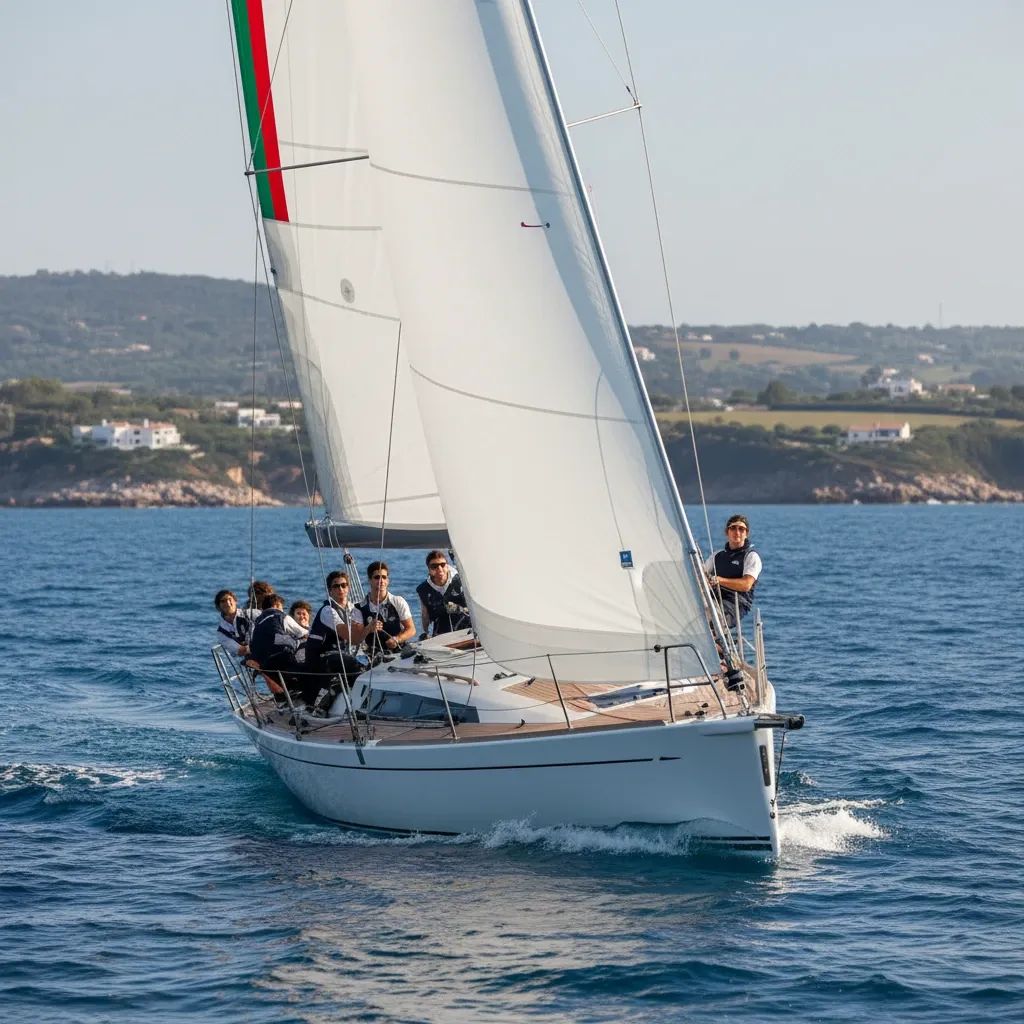
The Lega Navale Italiana has wrapped up its involvement in SIES Sail, a European Union-funded initiative that spent 15 months building a blueprint for making sailing instruction more inclusive and environmentally conscious across four nations. The project officially closed on 31 March 2026, leaving behind a digital academy, trainer networks, and a proven model for bringing nautical sports to communities far from the coast.
Why This Matters:
• Accessible training toolkit: The platform www.siessail.eu now hosts educational modules for all skill levels, from beginners to advanced sailors, plus instructor guidelines developed during the project.
• Environmental monitoring protocol: Italy's Ostia section coordinated 30 coaches and offshore sailors with the local Coast Guard to report pollution and marine risks in real time.
• Inland outreach: Simulators brought Optimist dinghy and windsurfing training to shopping malls, schools, and universities, giving children a risk-free introduction to the sport without needing access to open water.
Four Nations, One Curriculum
SIES Sail united sailing clubs and institutions from Slovenia (Jadralni Klub Ljubljana and the Association for Inclusive Culture), Italy (Lega Navale Italiana), Estonia (Aero Purjetajate Liit), and Serbia (Sailing Club Ada) between January 2025 and March 2026. The initiative centered on instructor training sessions where coaches compared teaching methods, operational contexts, and strategies for lowering barriers to entry in yacht clubs.
Rather than simply hosting exchange visits, the partnership developed formal guidelines for inclusive education programs, focusing on demographic diversity and adaptive equipment. Workshops tackled open sports culture and marine conservation, with several awareness campaigns timed to coincide with European Week of Sport 2025.
The Lega Navale Italiana's Ostia branch served as the Italian anchor, hosting international partners last spring and integrating SIES Sail activities into its 80-year institutional calendar. The Rome coastline location functioned as an open-air training laboratory, allowing the section to showcase its methods while absorbing best practices from the other three countries.
The Confiscated Boat Turned Training Vessel
One of the more striking elements of the Italian program involved Eros, a vessel seized from human trafficking operations and reassigned to the Lega Navale for public-interest missions. The so-called "boat of legality" took 120 young people—many from local community associations—out on the water during the project window, blending social inclusion with practical seamanship instruction.
A separate environmental workshop drew 125 young sailors and instructors, while the Coast Guard coordination protocol engaged roughly 30 offshore sailing members in a pilot monitoring system. Participants were trained to flag pollution incidents, navigation hazards, and ecosystem threats in the waters off Ostia, feeding data directly to the Capitaneria di Porto. The arrangement represents a scalable model for citizen science in coastal management, particularly in high-traffic leisure sailing zones.
What Remains Active: Resources for Italian Residents and Sailing Organizations
While the 15-month EU funding period has ended, several project elements remain active and accessible for Italian residents and sailing organizations. The SIESSail Academy platform (www.siessail.eu) continues to operate as a permanent digital resource, hosting modules on foundational maneuvers, advanced techniques, environmental stewardship, and onboard safety tailored for multiple generations and experience levels. The trained instructor network across the four partner countries remains connected and continues sharing methods and updating curricula.
The formal guidelines for inclusive education programs and adaptive equipment strategies are now permanent reference materials available to sailing clubs nationwide. However, some elements were project-specific: the simulator tours that visited shopping centers, federal offices, and university campuses during the 15-month window have concluded. Clubs interested in replicating the simulator strategy can access the documented methodology and equipment recommendations through the academy platform, but they would need to source or develop their own portable simulator infrastructure independently.
Similarly, the intensive Eros program activities with 120 young people occurred during the project timeline. The Lega Navale's Ostia section plans to continue the "boat of legality" program using the confiscated vessel for ongoing civic education and youth engagement, though at a different operational scale than during the formal EU project.
What This Means for Clubs and Instructors
The concrete legacy sits on the SIESSail Academy section of the project website. Modules cover foundational maneuvers, advanced techniques, environmental stewardship, and onboard safety, tailored for multiple generations and experience levels. The platform is designed to keep the instructor network active beyond the official project close, enabling clubs across the four countries to continue exchanging methods and updating curricula.
For Italian sailing sections, the guidelines offer a ready-made framework to design programs that accommodate participants with disabilities, economic constraints, or no prior maritime exposure. The simulator strategy—tested in non-coastal settings like shopping centers, federal offices, and university campuses during the project—proved effective at generating interest among children and students who might never have considered nautical sports. Clubs can access the full documentation of this approach through the academy platform and adapt it to their local contexts and resources.
Instructors who participated in the cross-border sessions now form a trained cadre capable of delivering standardized inclusive teaching across diverse operational environments. The shared pedagogical language also simplifies future EU funding applications for joint sailing initiatives, since the four partner organizations have documented collaboration history and aligned methodologies.
Scaling the Model Across Europe
While the official project timeline has closed, the network infrastructure remains in place. The partner clubs are already exploring follow-on proposals to expand the model to additional countries and integrate adaptive sailing equipment into mainstream yacht club inventories. The documented success of the simulator outreach strategy has drawn interest from school districts and municipal sports departments looking for low-cost, high-engagement introductions to water sports.
The environmental monitoring protocol piloted in Ostia could serve as a template for other Mediterranean sailing hubs, where leisure traffic is dense and marine ecosystems face mounting pressure. By turning club members into trained observers, the system distributes monitoring capacity without adding to Coast Guard budgets—a model that appeals to cash-strapped port authorities.
The Lega Navale's Ostia section plans to maintain the "boat of legality" program, having demonstrated measurable engagement with at-risk youth during the SIES Sail window. The vessel's symbolic weight—confiscated from criminal enterprise and repurposed for civic education—resonates with local associations and provides a narrative hook for recruiting participants who might not respond to conventional yacht club messaging.
Access Points for Residents
Instructors, club administrators, and education coordinators can access the full suite of materials at www.siessail.eu. The site includes downloadable lesson plans, equipment recommendations, risk assessment checklists, and video tutorials. Regional sailing federations in Slovenia, Estonia, and Serbia have already incorporated portions of the curriculum into their national instructor certification programs, ensuring the project's methods reach beyond the original four partner clubs.
For Italian residents interested in sailing instruction—whether as students or trainers—the Ostia section's experience offers a case study in how EU sport funding can yield tangible infrastructure. The combination of inclusive pedagogy, environmental engagement, and social outreach through confiscated assets demonstrates a multidimensional approach to nautical education that extends well beyond teaching knots and tacking maneuvers.
The project's closure marks the end of formal EU oversight, but the digital platform, trained instructor base, and established partnerships position the initiative for organic growth. Clubs seeking to replicate the model have a documented blueprint, while policymakers evaluating sport inclusion strategies now have 15 months of data from four countries showing what works—and what requires adaptation—when bringing sailing to underserved communities.


