
Italian Markets Close With Modest Movements as Middle East Tensions Escalate
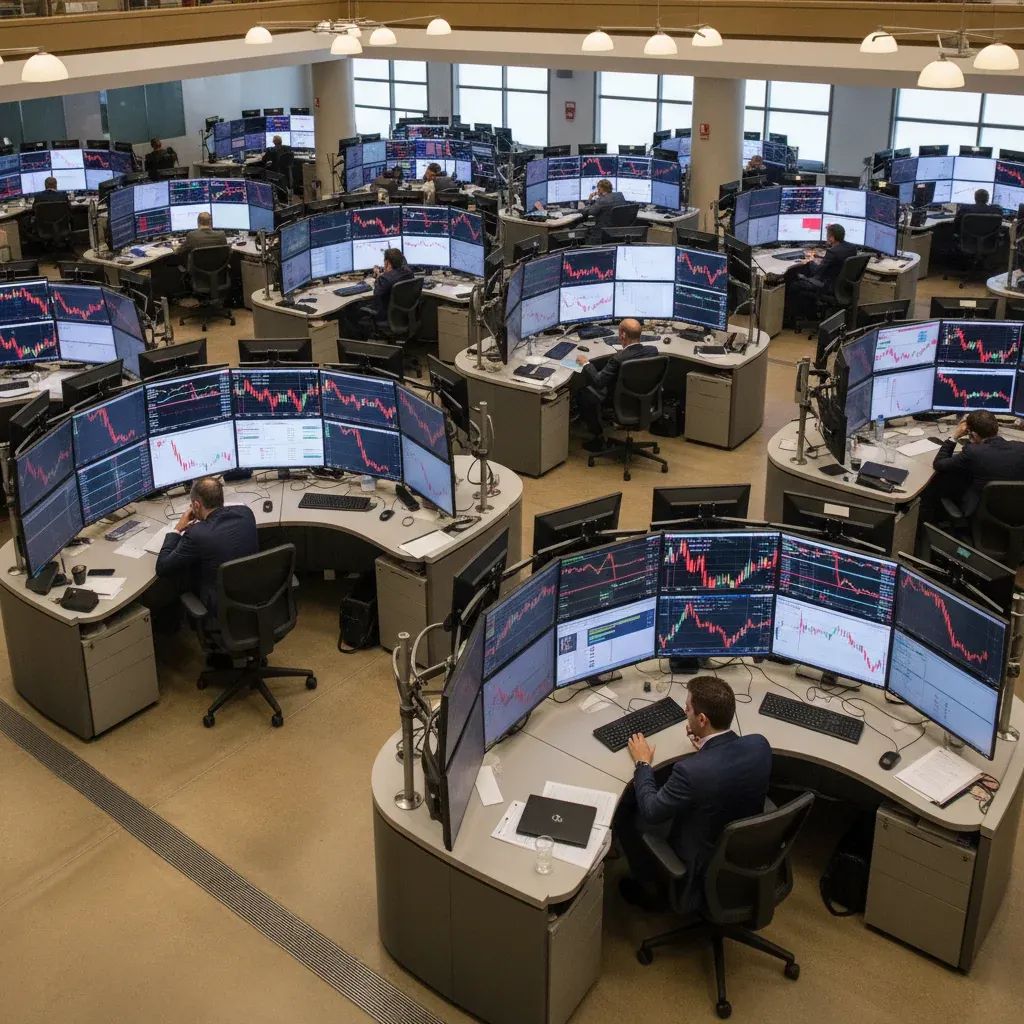
European markets closed Monday with slim gains and losses as traders absorbed rising tensions between the United States and Iran in the Persian Gulf. Milan's Piazza Affari tracked subdued continental performance, while Frankfurt's DAX edged up 0.06% and Paris's CAC 40 advanced 0.02%. London's FTSE 100 slipped 0.71%, dragged down by cyclical industrials and energy-sensitive sectors.
The muted market response masks a real concern for Italian residents: energy prices are climbing. Brent crude topped $90 per barrel—the highest level in a month—while European natural gas futures broke through €60 per megawatt-hour. For households and businesses in Italy, these increases will translate directly into higher electricity and heating bills in coming months.
Why This Matters for Italy
Italy imports over two-thirds of its energy needs, making the country particularly vulnerable to disruptions in the Strait of Hormuz, where approximately 20% of global crude oil and 25% of liquefied natural gas flow each day. Any sustained escalation in US-Iran tensions threatens to disrupt these critical supply routes and push energy costs further upward.
Energy-intensive industries—chemicals, pharmaceuticals, fertilizers, and logistics—are already bracing for margin pressure. Shipping rates on Asia-Europe routes have surged, and delivery times have stretched by 10 to 15 days, creating bottlenecks for manufacturers dependent on imported components and raw materials.
The European Central Bank held rates steady at its July meeting, but sustained energy price increases complicate efforts to bring inflation down. Eurozone inflation, expected to moderate toward 1.8%, may remain closer to 3% if supply disruptions persist.
Technology Sector Provides a Bright Spot
Even as geopolitical anxiety weighed on broader indices, Europe's technology sector posted gains, buoyed by momentum from Wall Street. Data center infrastructure and artificial intelligence applications drove the outperformance, standing in sharp contrast to the struggles of energy-sensitive industries like airlines and transport.
What Investors Should Monitor
The coming weeks will be critical. If diplomatic efforts succeed in de-escalating tensions and keeping the Strait of Hormuz open, markets may stabilize. If the standoff deepens, Europe—and Italy in particular—could face a supply shock with inflationary consequences extending well into 2027.
For now, market participants are watching three key indicators: crude oil prices, shipping rates through the Persian Gulf, and official statements from Washington and Tehran. Italian investors should monitor exposure to energy-intensive sectors and track how Italian energy prices evolve relative to European averages.


