
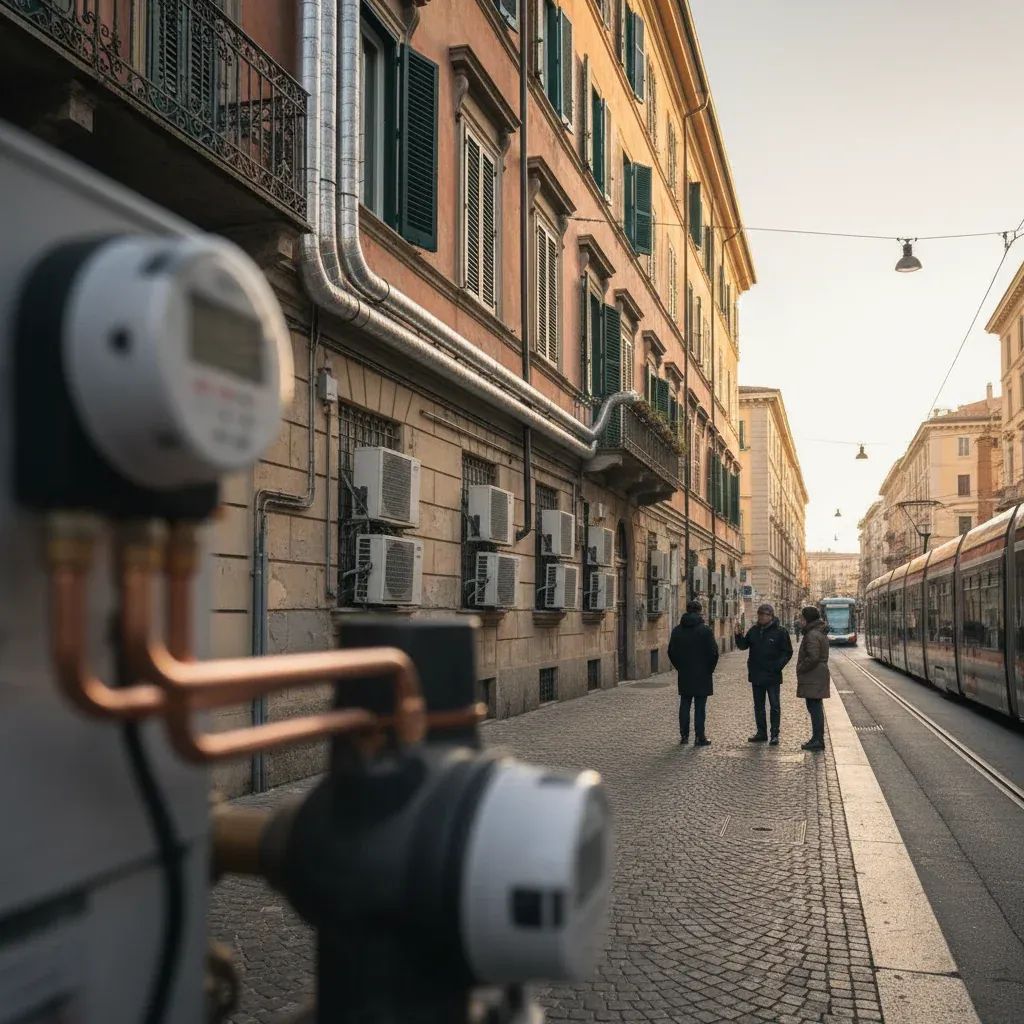
Italy's natural gas procurement costs are climbing sharply as benchmark European futures surged past €51 per megawatt-hour on the Amsterdam TTF exchange, a level not seen since late May and driven by twin supply disruptions.
Why This Matters
• Household impact: Current pricing trajectory could add approximately €121 annually to the average Italian household's gas bill and €45 to electricity costs, pushing total energy spending toward €2,593 per year.
• Industrial squeeze: Manufacturing and energy-intensive sectors face renewed margin pressure as wholesale gas costs jump 44.62% year-over-year.
• Market timing: Europe entered 2026 with 46 billion cubic meters in storage—30 billion cubic meters below 2024 levels—making the continent unusually vulnerable to price spikes.
• Forward outlook: Analysts project TTF rates could climb to €60/MWh if current geopolitical and production constraints persist.
What You Can Do Now
Italian residents should take these steps immediately:
Check your contract – Visit ARERA's comparison tool (www.arera.it) to review your current gas plan and compare fixed-rate options from major utilities like Eni, Enel, and A2A
Consider fixed-rate protection – Fixed-price agreements currently available at €58-62/MWh lock in costs through winter 2026-2027, potentially cheaper than variable rates if prices escalate further
Prepare for autumn billing cycle – ARERA adjusts residential tariffs quarterly based on TTF benchmarks; expect bill increases starting September-October 2026 if prices remain elevated
Invest in efficiency – Before the heating season begins, consider energy-saving improvements (insulation, efficient appliances) that reduce consumption and offset price increases
Dual Disruptions Drive Price Surge
The TTF June futures contract gained 5.58% in recent trading, settling at €51.22/MWh before climbing further to €51.44—a jump of 6.07%. That marks an 11.26% increase over the past month and continues an upward trajectory that began in early June when prices opened at €47.70/MWh.
Two distinct supply shocks are compounding pressure on global liquefied natural gas markets. In the Middle East, escalating military exchanges between Iran and Israel have raised concerns about disruptions to shipments transiting the Strait of Hormuz. That narrow maritime chokepoint handles roughly 20% of global LNG flows, including critical exports from Qatar, which supplies 45% of Italy's LNG imports.
Qatar has curtailed shipments following attacks on production facilities, and insurers have raised premiums for tankers navigating the Persian Gulf. The disruption has already reduced global LNG availability by an estimated 20%, forcing European buyers into direct competition with Asian utilities for spot cargoes.
Australian Strike Amplifies Supply Squeeze
Simultaneously, workers at Inpex Corporation's Ichthys LNG facility in northern Australia have launched industrial action, intensifying efforts for better working conditions. The Offshore Alliance—representing maritime, electrical, and general trade unions—is demanding improved pay, guaranteed full-time positions, and adherence to negotiated terms.
The Ichthys plant has a production capacity of 9.3 million tonnes per year, accounting for roughly 2% of global LNG output and 10% of Australia's total exports. Extended stoppages could push European gas prices 30-50% higher as buyers scramble for alternative supplies.
Historical precedent underscores the risk: a 76-day strike at Shell's Prelude platform in 2022 caused sustained volatility in Asian spot markets and ripple effects across Europe. With most Australian LNG contracted to Japanese, South Korean, and Taiwanese buyers, any diversion of those cargoes or delays in delivery will tighten the already constrained spot market on which Italy increasingly relies.
What This Means for Italian Consumers and Industry
For households, bill increases will materialize in quarterly energy bills adjusted to wholesale pricing. Italy's regulatory authority, ARERA, links residential gas tariffs to TTF benchmarks with a typical lag of one to two months. Sustained prices above €50/MWh through June and July will translate into higher charges starting in the autumn billing cycle (September-October 2026).
Regional impact: Northern regions like Lombardy, Veneto, and Emilia-Romagna—with colder winters and higher heating demand—will experience proportionally larger bill increases. Southern regions benefit from shorter heating seasons but remain exposed through electricity costs, since gas-fired power plants dominate Italy's generation mix.
Fixed-rate protection: Residents already locked into fixed-rate contracts through major utilities like Eni Plenitude, Enel X, and A2A Energy are insulated from these price spikes. Variable-rate customers should prioritize switching to fixed rates before September 2026, when ARERA implements tariff increases.
Industrial users—particularly in ceramics, glass, chemicals, and food processing concentrated in the Veneto and Lombardy manufacturing belts—face more direct exposure. Many large manufacturers purchase gas on quarterly or monthly contracts pegged to spot or near-term futures. A prolonged spike in TTF rates could force production curtailments or prompt renewed calls for government subsidies similar to those deployed during the 2022 energy crisis.
Italy's energy mix remains heavily reliant on natural gas, which accounts for approximately 42% of electricity generation. Under Europe's marginal pricing system, the most expensive fuel source—typically gas—sets the wholesale electricity price for all generators, meaning even renewable producers benefit from higher rates while consumers bear the full cost.
Italy's Diversification Strategy Under Pressure
The Italy Ministry of Energy has spent the past two years expanding LNG import capacity to reduce dependence on Russian pipeline gas. The country now operates five operational regasification terminals, including floating storage units at Piombino (Tuscany) and Ravenna (Emilia-Romagna), with additional capacity planned for the Adriatic coast.
Yet these investments offer limited insulation from global price swings. Italy imported 48 billion cubic meters of gas in 2025, with roughly 60% arriving as LNG from Qatar, Algeria, and the United States. When Qatari shipments falter or Australian production stalls, Italian buyers must compete in a global spot market where Asian utilities historically outbid European counterparts.
The European Commission has coordinated joint procurement agreements to improve bargaining power, and Italy participates in the EU Gas Platform designed to aggregate demand. However, these mechanisms function best in stable markets—not during acute supply shocks when cargo availability trumps price negotiation.
Government relief: The Italian government has not yet announced emergency support measures for this price spike, though officials are monitoring the situation. If prices exceed €60/MWh sustained over multiple months, relief packages similar to 2022-2023 (including reduced VAT on gas bills and direct subsidies to vulnerable households) may be considered.
Forward Market Signals and Where to Find Help
The July 2026 TTF futures contract is trading elevated levels, with analysts projecting sustained pricing through the summer refill season. Goldman Sachs has revised forecasts upward, while HSBC projects European gas prices will run significantly above pre-conflict estimates.
Where Italian residents can compare offers:
• ARERA's Comparison Tool (www.arera.it): Official portal comparing rates from all licensed suppliers
• Major utility providers: Eni Plenitude, Enel X, A2A Energy, Iren, Hera—all offering fixed-rate plans for 2026-2027 contracts
• Fixed-price agreements: Currently available at €58-62/MWh for winter delivery, higher than historical averages but potentially protective against further escalation
For businesses with significant gas exposure, this environment favors locking in forward contracts despite the premium. Fixed-price agreements for winter 2026-2027 delivery currently trade around €58-62/MWh, expensive by historical standards but potentially cheaper than spot exposure if geopolitical tensions escalate further.
Residential consumers should compare fixed-rate plans carefully, as spreads between variable and fixed tariffs have widened to 12-15% in some markets—meaning fixed rates cost more per unit now but provide budget certainty and protection.
Broader Economic Implications
Sustained energy price inflation complicates the European Central Bank's monetary policy calculus and threatens to erode real wage gains achieved through recent labor agreements. Italy's headline inflation rate could tick higher if energy costs feed through to transport and manufactured goods.
The Italian Banking Association noted that energy-intensive small and medium enterprises remain financially fragile after absorbing losses during the 2022-2023 crisis. A second wave of gas price shocks could trigger a rise in non-performing loans among industrial borrowers, particularly in the Veneto and Lombardy manufacturing belts.
On the positive side, Italy's renewable energy capacity continues expanding, with solar installations adding 6.2 gigawatts in 2025 and offshore wind projects advancing through permitting. Every megawatt of clean generation reduces marginal reliance on gas-fired power, gradually insulating the economy from fossil fuel volatility—though the transition timeline extends through the 2030s.


