
The European Union has broken through Hungary's months-long blockade to unlock both a €90 billion loan facility for Ukraine and a sweeping 20th round of economic sanctions targeting Russia's war machine. The dual breakthrough, confirmed by the EU Coreper (Committee of Permanent Representatives) on Tuesday, marks a significant escalation in Brussels' pressure campaign against Moscow and its most substantial financial commitment to Kyiv since the invasion began.
Why This Matters
• €90B lifeline unlocked: Ukraine gains access to Europe's largest single loan package, stabilizing state finances through at least 2027.
• Energy sector restrictions: A proposed total ban on maritime services for Russian crude oil is being coordinated with G7 partners and could significantly impact Moscow's export infrastructure.
• Shadow fleet crackdown: The EU has blacklisted an additional 46 vessels, bringing the total sanctioned tanker fleet to over 640 ships, directly targeting Russia's sanction-evasion network.
• First-ever anti-circumvention tool: Brussels will ban exports to Kyrgyzstan of sensitive dual-use goods, a precedent-setting move to restrict third-country rerouting schemes.
The Hungarian Veto Lifts
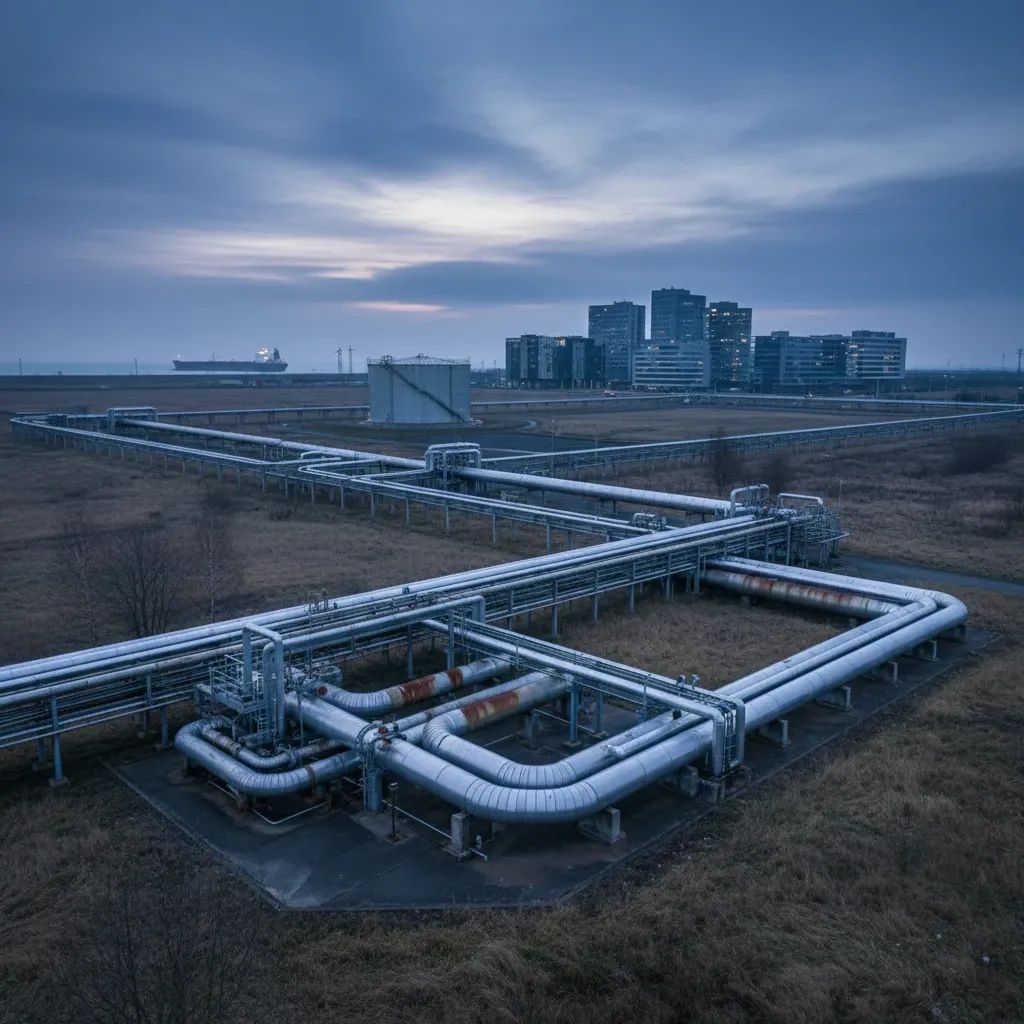
Budapest's reversal came hours after the Druzhba oil pipeline, a Soviet-era lifeline carrying Russian crude through Ukraine into Hungary and Slovakia, resumed operations following repairs. Prime Minister Viktor Orbán had used the disruption—caused by Russian bombardment of Ukrainian infrastructure—to block both the loan and sanctions package, accusing Kyiv of sabotage.
The Cypriot EU Presidency, which holds the rotating chair through June, confirmed the unblocking late Tuesday. A written procedure is now underway, with formal adoption by the Council of the European Union expected Wednesday afternoon. "The presidency worked tirelessly to ensure the EU continues to resolutely support Ukraine and exert pressure on Russia," a spokesman stated.
Slovakia, led by a government that has expressed skepticism toward sanctions, also withdrew its objections after the pipeline repairs.
What the 20th Sanctions Package Targets
Originally proposed by the European Commission on February 10—ahead of the fourth anniversary of Russia's full-scale invasion—this round represents a comprehensive attempt to restrict the Kremlin's ability to finance and sustain its military operations.
Energy Sector Measures
The centerpiece is a prohibition on all maritime services related to Russian crude oil and refined products, including insurance, brokerage, and technical assistance. If implemented, the measure would effectively end the G7's $60-per-barrel price cap mechanism introduced in December 2022, replacing it with a blanket service denial designed to reduce the commercial viability of Russian exports.
However, Brussels has delayed enforcement pending coordination with Washington, London, and Tokyo. The measure's success depends on simultaneous adoption across G7 jurisdictions to prevent sanction circumvention.
Additional energy measures include:
• Ban on services for Russian-flagged LNG tankers and icebreakers starting April 25, with foreign-owned vessels operating in Russian waters prohibited from January 1, 2027.
• Restrictions on LNG terminal services provided to entities more than 50% Russian-owned.
• Restrictions affecting three strategic ports: Murmansk and Tuapse in Russia, plus Karimun in Indonesia, which has been identified as a location for ship-to-ship transfers.
The package prohibits direct or indirect tanker sales to Russian entities, requiring all contracts to include clauses preventing resale or deployment in Russian waters.
Financial and Crypto Crackdown
Twenty additional regional Russian banks linked to the Kremlin's financial ecosystem now face asset freezes and transaction bans. For the first time, the EU explicitly targets cryptocurrency exchanges and platforms, aiming to close a loophole that has allowed Russian entities to move capital outside traditional banking channels.
Trade, Technology, and Anti-Circumvention
The sanctions introduce restrictions on trade in goods and services including industrial rubber, tractors, and cybersecurity consulting. The package covers metals, chemicals, and critical minerals.
The most novel element is the anti-circumvention mechanism, which prohibits exports of sensitive dual-use items—such as computer-controlled machinery and radio equipment—to jurisdictions with high rerouting risk. The EU has named Kyrgyzstan as the first country subject to this tool, following evidence that Bishkek has become a major transshipment hub for Western technology.
Military-Industrial Complex
The package targets individuals and entities associated with Russia's defense industry, including drone manufacturers and companies supplying explosive precursors. The EU also introduced intellectual property protection clauses shielding European firms from retaliatory Russian lawsuits filed in third-country courts.
What This Means for Residents
For Italy-based businesses with exposure to Russian markets, the new export controls require immediate compliance reviews. Companies trading in rubber, agricultural machinery, or cybersecurity services must verify that their supply chains do not route through blacklisted entities or jurisdictions. The Kyrgyzstan restrictions set a legal precedent that could extend to other Central Asian republics, Turkey, or Gulf states if Brussels detects systematic sanctions evasion.
Italian energy firms should monitor G7 coordination on the maritime services ban. If enacted, it could impact Mediterranean shipping lanes and insurance markets, as Lloyd's of London and European underwriters review coverage for vessels transporting Russian crude. Italy's position as a Mediterranean logistics hub means ports in Genoa, Trieste, and Gioia Tauro could see increased scrutiny for compliance with ship-tracking and tanker-ownership verification.
Financial institutions must update screening protocols to flag transactions involving the newly designated Russian banks and cryptocurrency platforms.
Russia's Economic Situation
The cumulative weight of 20 sanction rounds is visible in Moscow's fiscal data. The International Monetary Fund has projected Russia's GDP growth for 2026 at significantly reduced levels compared to 2024. The Russian Central Bank has indicated growth expectations have been revised downward from earlier forecasts.
Russia's federal budget deficit reached significant levels in 2025, the highest since the pandemic. To address fiscal pressures, the Kremlin raised VAT and introduced new levies on electronics. Oil and gas revenues—historically comprising half of federal income—have declined substantially.
Inflation remains elevated, while the central bank maintains elevated interest rates, affecting consumer spending and business investment. Labor shortages, exacerbated by wartime factors and emigration, have increased wage costs, compressing margins for non-defense industries.
To offset Western sanctions, Moscow has redirected oil exports to China and India, shifting trade patterns toward Asian markets.
The €90 Billion Ukraine Loan
Separately approved by Coreper, the €90B loan package represents the EU's largest single financial commitment to Ukraine. The facility will stabilize Kyiv's state finances through 2027, covering social spending, pensions, and essential services while allowing domestic tax revenues to fund defense operations.
The loan's structure uses common EU debt issuance, a mechanism previously reserved for pandemic recovery programs. Hungary's blockade had threatened to derail the arrangement, prompting EU High Representative Kaja Kallas to warn that Brussels might explore alternative financial arrangements.
Outlook and Enforcement
The written procedure concluding Wednesday will formalize both measures, enabling implementation by the European Commission. Member states will have 30 days to transpose the sanctions into national law, with compliance monitoring delegated to customs authorities and financial regulators.
The Cypriot presidency's success in breaking the deadlock sets the stage for ongoing EU coordination on Ukraine support and Russian sanctions. The 20th package represents Brussels' latest effort to restrict the financial and technological resources sustaining Russia's war effort.


