
Hungary has moved to veto the European Union's 20th sanctions package targeting Russia, creating fresh turbulence within the bloc over energy dependencies and geopolitical alignment. The decision, announced by Hungarian Foreign Minister Péter Szijjártó, directly ties Budapest's cooperation on sanctions to the resumption of Russian oil flows through Ukrainian territory—a tangible illustration of how energy dependency continues to shape Europe's political leverage even three years into the war.
Why This Matters:
• Hungary can single-handedly block EU sanctions, which require unanimous approval among all 27 member states.
• A separate financial support package to Ukraine is also affected by the standoff, potentially complicating Kyiv's planning.
• The dispute underscores persistent fractures within the EU over Russia policy, with energy security pitted against collective security commitments.
The Trigger: The Druzhba Pipeline and Energy Leverage
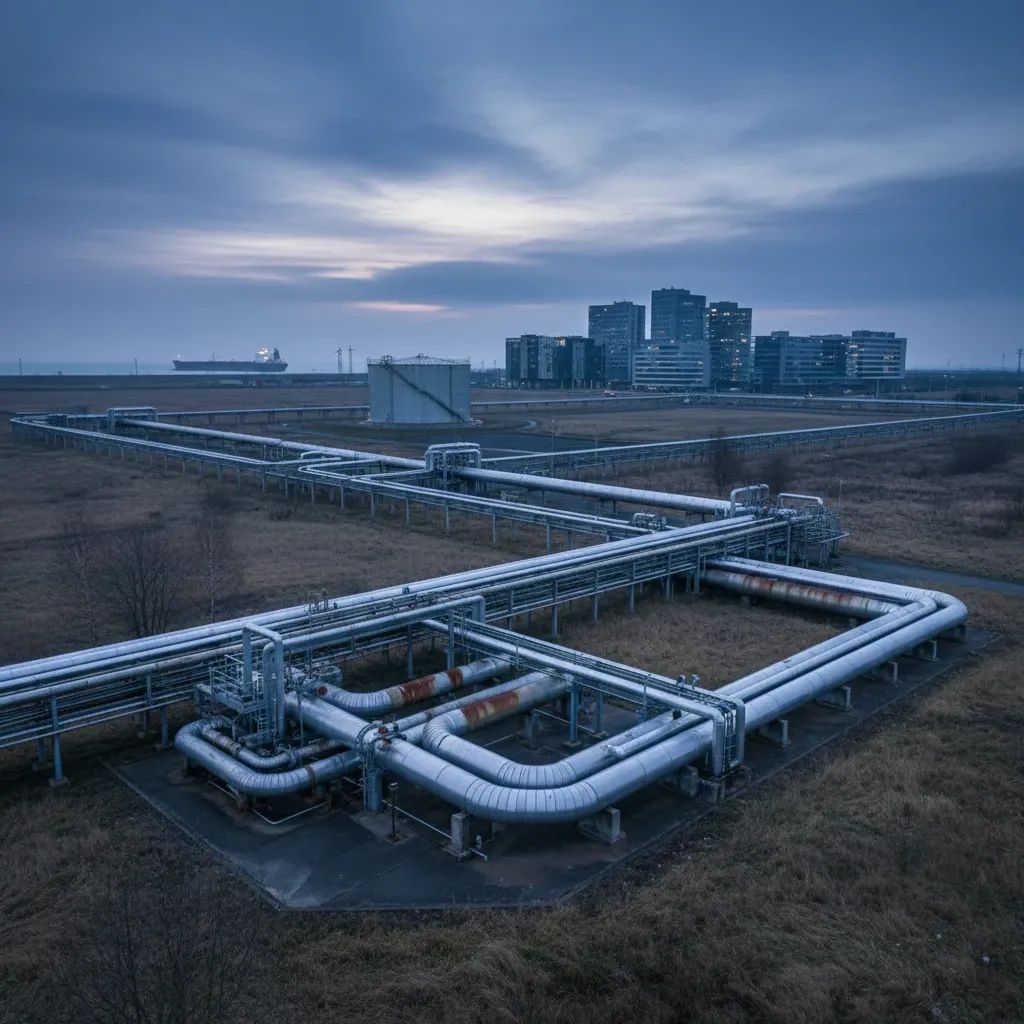
At the heart of the dispute lies the Druzhba pipeline, a major energy artery that channels Russian crude through Ukraine into Hungary and Slovakia. Since late January, the southern branch has been disrupted. Ukrainian authorities and Hungarian officials have diverging accounts: Kyiv cites Russian drone strikes on pumping infrastructure, while Budapest accuses Ukraine of deliberately stalling restoration to pressure Hungary on other EU matters.
Hungary and Slovakia are the only two EU states that secured carve-outs from the bloc's 2022 embargo on Russian crude, citing their landlocked geography and dependence on pipeline imports. Without direct access to maritime alternatives, both nations face immediate pressure. Slovakia has declared a state of concern over its oil supplies, while Hungary has requested options for alternative import routes.
Hungary's Position and EU Dynamics
Hungary's veto strategy appears designed to secure immediate relief for its domestic fuel market while extracting concessions from Brussels and Kyiv on energy policy. By framing the pipeline disruption as a critical issue, Hungarian officials have sought to build support from other Central European states concerned about energy security.
The standoff has created complications within the EU. While the bloc aims to maintain unified sanctions pressure on Russia, individual member states' asymmetric energy dependencies create leverage that can be exploited by both Moscow and other EU members. This tension highlights why energy diversification remains a critical EU priority.
Impact on Italy
For Italy, the situation carries indirect but noteworthy implications. As a major EU economy, Italy's government has consistently supported robust sanctions on Russia while advocating for energy diversification to protect European industry. Italy's Prime Minister Giorgia Meloni has emphasized the importance of maintaining EU unity on Russia policy.
Italian energy security depends less directly on Russian pipeline infrastructure than Central European nations, as Italy has greater access to maritime energy imports and liquefied natural gas alternatives. However, the broader uncertainty over EU sanctions policy and energy markets can influence Italian fuel prices and trade dynamics. Italian companies engaged in EU trade, particularly those in sectors affected by sanctions expansion, should monitor the situation's resolution.
Looking Ahead
Diplomats in Brussels indicate that negotiations are underway to resolve the impasse. Possible paths forward include addressing the Druzhba pipeline's operational status, securing guarantees on future energy transit, or finding alternative arrangements for affected member states.
The deeper question remains: how can the EU sustain unified foreign policy when member states face different energy exposures? The resolution of this dispute will likely shape how the EU approaches future consensus-based decisions on Russia policy and energy security coordination.
For now, the sanctions package and related decisions remain subject to the ongoing dispute, underscoring the continued intersection of energy infrastructure, geopolitical strategy, and European unity.


