
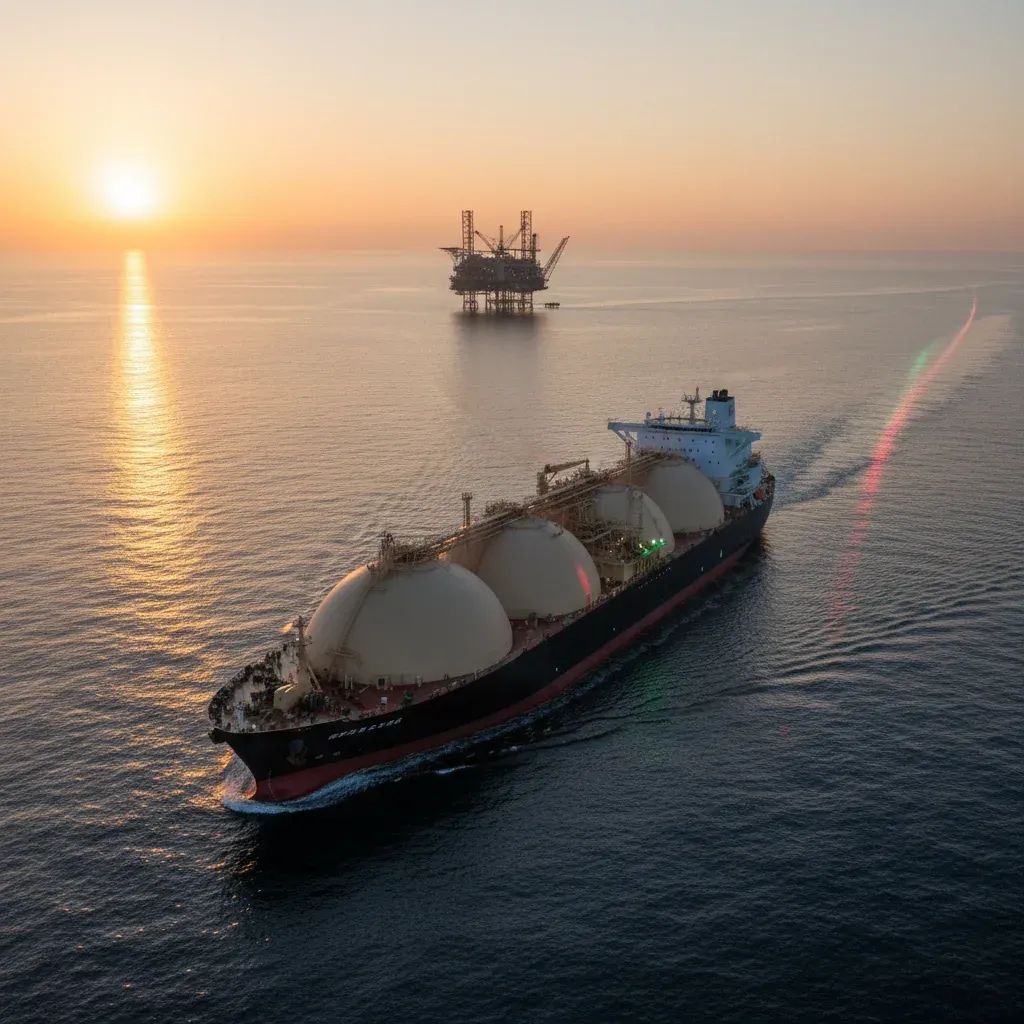
Italy-based energy giant Eni has successfully tapped the European bond market for €2 billion, marking the latest in a series of aggressive capital-raising moves this month that underline the company's determination to maintain one of the lowest leverage ratios in the sector while funding its dual strategy of traditional hydrocarbon production and green transition projects.
Why This Matters
• Investor appetite is strong: The two fixed-rate Eurobond tranches attracted over €7 billion in orders, more than 3.5 times the amount offered, signaling robust confidence in Eni's creditworthiness.
• Returns locked in: The 5-year bond offers a 3.5% annual coupon, while the 9-year tranche pays 4%—rates that reflect the broader European interest rate environment where Italian 10-year sovereign yields hover near 4%.
• Strategic timing: This placement follows another $3 billion dollar-denominated issuance earlier in May, bringing Eni's total May capital raise to roughly €4.7 billion equivalent—capital earmarked for general corporate needs across upstream oil and gas, renewable energy expansion, and biofuels.
What Eni Raised and How
The Italy-based revenue-generating multinational structured the offering into two distinct instruments under its Euro Medium Term Note program, both priced on May 18. The shorter-dated tranche—€750 million maturing May 26, 2031—was sold at a re-offer price of 99.465%, delivering a 3.5% yearly coupon. The larger portion, €1.25 billion due May 26, 2035, came at 98.922% with a 4% coupon.
Both securities will trade on Borsa Italiana and the Luxembourg Stock Exchange, providing liquidity for institutional holders primarily based in the United Kingdom, Germany, Italy, and France. The geographic spread of demand highlights Eni's standing as a pan-European credit anchor, even as energy sector fundamentals remain volatile.
Institutional investors snapped up the bonds, driving total order books to more than €7 billion—a clear vote of confidence in Eni's balance sheet discipline. The company maintains a target gearing ratio between 10% and 15%, among the most conservative in its peer group, which includes Shell, TotalEnergies, and BP.
Strategic Context: Funding the Dual Energy Model
Eni's capital-raising blitz in May is no accident. The company is executing a 2026-2030 Strategic Plan that envisions average annual investments of less than €6 billion—down roughly €2 billion from the prior plan—while generating cumulative Cash Flow From Operations of around €71 billion and Free Cash Flow exceeding €40 billion over the five-year horizon.
The bond proceeds are destined for general corporate purposes, a designation that gives management flexibility to allocate capital across business lines. In practice, that means funding both legacy upstream oil and gas projects—where Eni forecasts 3-4% annual production growth—and accelerating expansion in its two transition-focused satellites: Plenitude (renewables and retail power) and Enilive (sustainable mobility and biofuels).
Plenitude, Eni's retail energy and renewables arm, is on track to quadruple installed renewable capacity to 15 gigawatts by 2030. The unit recently announced a €1.5 billion non-proportional capital increase and plans to deconsolidate from Eni's books, unlocking additional growth capital. Meanwhile, Enilive is targeting €2.5 billion in EBITDA by 2028, rising to €3 billion by 2030, driven by biofuels production and charging infrastructure buildout.
Critics, however, note that unlike "green bonds" whose proceeds are ring-fenced for environmental projects, Eni's general-purpose issuances can theoretically fund fossil fuel activities. Although the company has leaned into sustainability-linked bonds—where coupon adjustments hinge on hitting decarbonization targets—observers point out that these goals can be met through carbon credit purchases rather than operational emissions cuts. A new EU Green Bond Regulation took effect in late 2024, tightening rules and requiring issuers to invest proceeds exclusively in taxonomy-aligned activities.
How Eni's Yields Compare in the European Energy Space
May 2026 was an active month across the European oil major bond complex. Eni's 5-year and 9-year euro tranches offer 3.5% and 4% respectively, while the company's earlier $3 billion dollar issuance featured a 5.25% coupon for 10-year paper and 6% for 30-year notes. That dollar pricing reflects both currency risk and the longer tenor.
TotalEnergies had paper maturing in May with a 4.5% coupon, and another tranche yielding roughly 2.02% as of late April, priced at 97.31 euros. Shell had a 2.875% issue maturing May 2026 and a September 2026 note yielding around 3.94%. Direct apples-to-apples comparisons are tricky given differing maturities, currencies, and credit structures, but Eni's new Eurobonds sit comfortably in the mid-range, reflecting its solid investment-grade rating and the broader European rate backdrop—where 10-year Bunds yielded 3.19% and Italian BTPs around 3.97% in mid-May.
What This Means for Residents and Investors
For Italy-based investors, Eni's bonds represent a relatively secure fixed-income play backed by a strategic national asset with diversified revenue streams. The 3.5% to 4% coupons offer a modest premium over sovereign Italian debt, compensating for corporate credit risk while benefiting from Eni's quasi-sovereign profile.
For local employees and suppliers, the sustained capital deployment signals Eni's commitment to maintaining operational scale across both legacy and emerging business lines. The company's low leverage and disciplined capital allocation reduce refinancing risk and support long-term business continuity—key considerations in an industry buffeted by commodity price swings and regulatory shifts.
For residents concerned about the energy transition, the bond issuance underscores the financial heft required to simultaneously run profitable hydrocarbon operations and scale up renewables. While general-purpose proceeds give Eni flexibility, the company's stated trajectory—four-fold renewables expansion and double-digit EBITDA growth in biofuels—depends on delivering measurable results to maintain investor confidence and meet tightening EU sustainability standards.
Timing and Market Reception
The May 18 pricing came amid a rising rate environment across Europe, with sovereign yields climbing through the month. Eni's ability to attract 3.5x oversubscription despite tightening conditions speaks to institutional appetite for high-quality corporate credit in the energy sector. It also reflects strategic timing: the company secured funding before potential further rate hikes and ahead of the summer lull in primary issuance.
Both tranches were authorized by Eni's Board of Directors on April 2, 2026, part of a broader liability management and capital structure optimization effort that includes January's €1 billion perpetual hybrid bond and the early-May dollar issuance.
Altogether, Eni has raised roughly €4.7 billion equivalent in May alone—capital that will flow through the organization over the coming quarters, supporting upstream exploration in Africa and the Mediterranean, renewable project development across Europe, and biofuel refinery expansions. The company's disciplined approach to gearing and its diversified investor base—spanning the UK, Germany, France, and Italy—position it to weather commodity volatility and regulatory headwinds as Europe's energy landscape continues its long, uneven transition.


